When people launch aggressive parasite cleanses—loading up on wormwood, black walnut, cloves, and Rife frequencies—they often hit a wall of symptoms: brain fog, fatigue, skin eruptions, joint pain. The assumption is "Herxheimer reaction, keep pushing through." But here's the rub: those symptoms aren't just parasite die-off. They're Phase I liver detoxification without adequate Phase II support, causing oxidized toxins to recirculate instead of being eliminated. The parasite protocol isn't failing because the parasites aren't dying—it's failing because the liver can't process the metabolic wreckage left behind.
Liver biotransformation happens in two distinct phases, and most people only know about Phase I.
Phase I detoxification involves cytochrome P450 (CYP450) enzymes that oxidize, reduce, or hydrolyze toxins—adding oxygen or removing hydrogen to make fat-soluble compounds more water-soluble. After all, this is essential for processing parasite metabolites (ammonia, acetaldehyde, aldehydes), heavy metals, pesticides, and pharmaceutical drugs.
But here's the catch: Phase I often creates MORE toxic intermediates than the original compound. Oxidation generates free radicals and reactive metabolites that, if not immediately conjugated, damage cellular structures.
Phase II detoxification is where neutralization happens.
Phase II enzymes add a molecule—glutathione, sulfate, glucuronide, glycine, or taurine—to the oxidized toxin, making it water-soluble and ready for excretion through bile or urine. This conjugation step is what actually eliminates the toxin from the body. Without adequate Phase II capacity, those oxidized intermediates from Phase I recirculate through enterohepatic circulation (liver → bile → intestine → bloodstream → liver), amplifying toxicity.
The Phase I bottleneck is the root cause of most parasite cleanse failures. CYP450 enzymes are upregulated by many antiparasitic herbs (wormwood, oregano oil, garlic), meaning Phase I accelerates. But if Phase II pathways are nutrient-depleted—low glutathione, insufficient sulfur amino acids, inadequate B-vitamins for methylation—the oxidized byproducts pile up faster than they can be conjugated.
The result: "Herxheimer reaction" symptoms that are actually Phase I overload, not die-off.
Let's break down the five major Phase II pathways:
1. Glutathione Conjugation (GST enzymes): Glutathione (GSH) is the master antioxidant and primary detox molecule for heavy metals, pesticides, and parasite metabolites. Glutathione S-transferases (GST enzymes) attach glutathione to toxins, neutralizing them. Parasites produce ammonia and acetaldehyde during metabolism; without adequate glutathione, these accumulate and cause neurotoxicity. Glutathione is synthesized from three amino acids: glutamine, cysteine, and glycine. Precursors include N-acetylcysteine (NAC), alpha-lipoic acid, and selenium.
2. Glucuronidation (UDP-glucuronosyltransferases): This pathway conjugates glucuronic acid to toxins, particularly hormones (estrogen, testosterone), bilirubin (from red blood cell breakdown), and drugs. Parasite die-off increases bilirubin load as damaged red blood cells are processed. Insufficient glucuronidation causes bilirubin backup, leading to jaundice-like symptoms. Cofactors include B-vitamins and magnesium.
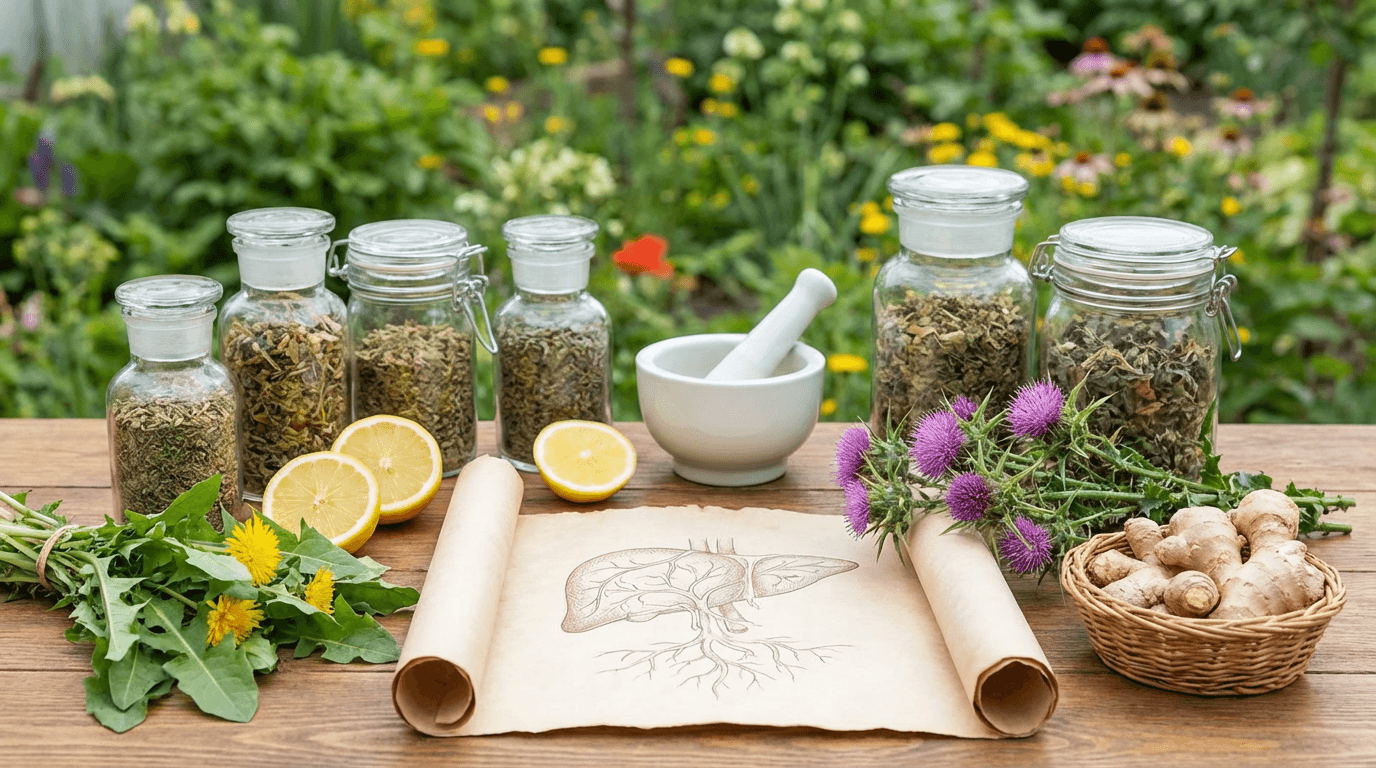
3. Sulfation (sulfotransferases): Sulfation attaches sulfate groups to phenols, steroids, and neurotransmitters. This pathway is critical for processing parasite-released phenolic compounds and bile acid metabolism. Sulfation requires sulfur-containing amino acids (methionine, cysteine, taurine) and molybdenum. Cruciferous vegetables (broccoli, kale) provide sulforaphane, which induces Phase II sulfation enzymes.
4. Amino Acid Conjugation (glycine, taurine): Glycine and taurine conjugate with bile acids and benzoate compounds. Parasites disrupt bile flow (especially liver flukes), causing bile acid accumulation. Glycine conjugation neutralizes these acids for excretion. Taurine also supports bile production and fat digestion, essential for eliminating fat-soluble parasite metabolites. Supplementation: glycine powder (5-10g/day), taurine (500-1000mg/day).
5. Methylation: Methylation transfers a methyl group (CH₃) to toxins like arsenic, histamine, and estrogens, making them excretable. This pathway requires B-vitamins (B6, B12, B15, folate) and SAMe (S-adenosylmethionine). Parasites often trigger histamine release, causing allergic-type reactions; without adequate methylation, histamine accumulates. Genetic SNPs (MTHFR, COMT) can impair methylation, making some people more vulnerable to toxin buildup during parasite cleanses.
The nutrient cofactor deficit is where most cleanses fail. Glutathione precursors (NAC, glycine, glutamine), B-vitamins (B6, B12, B15, B17, folate), magnesium, sulfur amino acids, and selenium are all consumed rapidly during detoxification. If these aren't replenished, Phase II pathways slow or stall. The parasite cleanse becomes a self-inflicted toxic crisis.
Coffee enemas deserve special mention here, despite their controversial reputation. Research shows coffee enemas increase glutathione S-transferase (GST) activity in the liver by 600-700%. Caffeine and palmitic acid in coffee, absorbed through the hemorrhoidal vein and portal circulation, directly stimulate GST enzyme production. This isn't pseudoscience—it's documented biochemistry. Coffee enemas, when used during intensive parasite protocols, accelerate Phase II conjugation, reducing recirculation of toxins.
The terrain theory connection is critical: parasite cleanses don't just kill parasites—they release everything the parasite was storing (heavy metals, mycotoxins, bacterial endotoxins). If the liver is already burdened (fatty liver, sluggish bile flow, nutrient deficiency), adding parasite die-off without Phase II support overwhelms the system. The terrain approach prioritizes liver optimization BEFORE aggressive antiparasitic interventions.
Practical protocol timing looks like this: Phase 1 (2-4 weeks pre-cleanse): Support Phase II pathways with NAC (600-1200mg/day), glycine (5-10g/day), magnesium glycinate (400-600mg/day), B-complex, selenium (200mcg/day), cruciferous vegetables, and binders (activated charcoal, bentonite clay, chlorella) to capture conjugated toxins in the gut. Consider coffee enemas 2-3x/week to boost GST activity.
Phase 2 (Parasite cleanse): Introduce antiparasitic herbs (wormwood, black walnut, cloves, oregano oil) and/or Rife frequencies while maintaining Phase II support. Monitor symptoms—if brain fog, fatigue, or rashes escalate, slow the cleanse and increase binders. The goal is controlled die-off, not toxic overload.
Phase 3 (Post-cleanse): Continue Phase II support for 2-4 weeks after antiparasitic interventions end. Parasite eggs and dormant larvae may hatch, requiring sustained detox capacity. Maintain binders to prevent toxin reabsorption.
Platforms like ForbiddenFood.tv emphasize metabolic health as the foundation for detoxification. If mitochondria are dysfunctional (low ATP), cells can't power Phase II enzyme activity. If bile flow is sluggish (thick, stagnant bile), conjugated toxins can't exit the liver. If gut motility is slow (constipation), toxins sit in the intestine and reabsorb. Terrain optimization—mitochondrial support, bile flow stimulation (bitters, apricot seed, ox bile, taurine), gut motility (magnesium, fiber, hydration)—makes the difference between a successful cleanse and a toxic disaster.
The Herxheimer redefinition is essential: true Herxheimer is temporary inflammation from endotoxin release as pathogens die. But prolonged, severe symptoms during a cleanse indicate Phase I/Phase II imbalance, not "healing crisis." Pushing through without addressing the detox bottleneck causes liver damage, mitochondrial burnout, and chronic fatigue. Smart protocols pause, support Phase II, then resume.
For those integrating parasite protocols with frequency devices (like HealthHarmonic.com's multi-frequency systems), the same principle applies: frequencies accelerate pathogen die-off, which increases detox burden. Without Phase II support, frequency therapy can trigger the same toxic overload as herbal cleanses. The research-first approach demands: identify the bottleneck (glutathione depletion, methylation impairment, bile stagnation), address it BEFORE intensifying pathogen elimination, and monitor symptoms as real-time feedback.
Phase II liver detoxification isn't optional—it's the rate-limiting step in any detox protocol. Parasites are the trigger, but liver capacity determines the outcome. Master Phase II, and parasite cleanses become transformative. Ignore it, and even the most potent antiparasitic arsenal becomes a pathway to chronic toxicity.
1. Zanger, U.M. & Schwab, M. (2013). Cytochrome P450 enzymes in drug metabolism: regulation of gene expression, enzyme activities, and impact of genetic variation. Pharmacology & Therapeutics, 138(1), 103-141. https://pubmed.ncbi.nlm.nih.gov/23333322/
2. Eaton, D.L. & Bammler, T.K. (1999). Concise review of the glutathione S-transferases and their significance to toxicology. Toxicological Sciences, 49(2), 156-164. https://pubmed.ncbi.nlm.nih.gov/10416260/
3. Kaplowitz, N. (1981). The importance of hepatic glutathione. Yale Journal of Biology and Medicine, 54(6), 497-502. https://pubmed.ncbi.nlm.nih.gov/7342494/
4. Miners, J.O. & Mackenzie, P.I. (1991). Drug glucuronidation in humans. Pharmacology & Therapeutics, 51(3), 347-369. https://pubmed.ncbi.nlm.nih.gov/1792239/
5. Josephy, P.D. (2010). Genetic variation in human glutathione transferase enzymes: significance for pharmacology and toxicology. In: Drug Metabolism Handbook. https://pmc.ncbi.nlm.nih.gov/articles/PMC2958679/
6. Danyelle M Townsend, Kenneth D Tew, Haim Tapiero (2003), The importance of glutathione in human disease Biomed Pharmacother. May-Jun;57(3-4):145-55.
https://pubmed.ncbi.nlm.nih.gov/12818476/
7. Ketterer, B. (1988). Protective role of glutathione and glutathione transferases in mutagenesis and carcinogenesis. Mutation Research, 202(2), 343-358. https://pubmed.ncbi.nlm.nih.gov/3057366/


0 Comments
Join the conversation
Be the first to comment
Share your thoughts above.