
The Tick Agenda: From Lyme Vaccines to Alpha-Gal Meat Allergies—How Manufactured Fear Drives the New Pharma Gold Rush |
As mysterious tick boxes appear in rural America, the media ramps up hysteria about Lyme disease 'surges' AND suddenly we're hearing about meat allergies from tick bites. It's not coincidence—it's coordinated. |
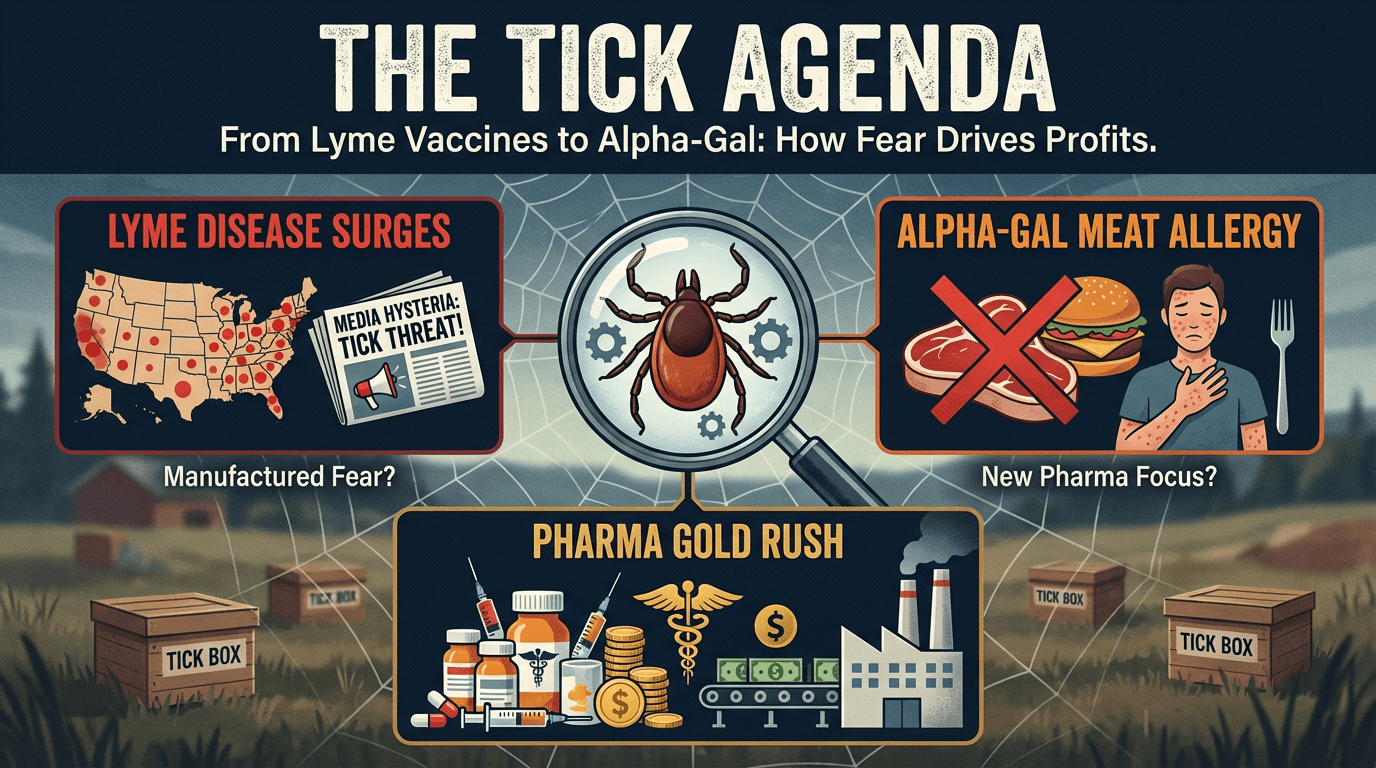
You've seen the headlines. "Lyme disease cases skyrocketing." "Tick populations exploding." "A ticking time bomb." And now, right on cue, a new threat: "Meat allergies spreading across America from tick bites." The fear is being dialed up to eleven on multiple channels simultaneously. But they don't tell you what's really happening - or why the timing is so convenient for the pharmaceutical companies and food industry players sitting on new products they've been quietly developing.
Valneva's VLA15 vaccine - now partnered with Pfizer, because of course it just completed Phase 3 trials. They claim more than 70% efficacy against Lyme disease. Fast Track FDA designation secured back in 2017. Regulatory submissions are being planned as we speak. And suddenly, out of nowhere, we're being told tick-borne diseases are an urgent public health crisis requiring immediate intervention.
Meanwhile, the same media outlets warning about Lyme are simultaneously pushing stories about Alpha-gal syndrome - a "meat allergy" supposedly triggered by Lone Star tick bites. The narrative? Ticks aren't just giving you Lyme anymore; they're making you allergic to beef, pork, and lamb. The solution? Well, they're working on that. Funny how that works, right?
The Alpha-Gal Con: Meat Allergy or Manufactured Crisis?
Here's what they're not telling you about Alpha-gal syndrome. The condition was essentially unknown before 2009. Then, suddenly, cases started appearing in the southeastern United States - conveniently right where the Lone Star tick is most prevalent. The story goes like this: the tick bites you, you develop antibodies to galactose-alpha-1,3-galactose (a sugar found in mammal meat), and suddenly you can't eat beef without going into anaphylactic shock.
But let's ask some obvious questions. Humans have been getting bitten by ticks for millennia. The Lone Star tick has been around forever. Why is this "meat allergy" suddenly epidemic now? Why did it emerge just as the plant-based meat industry was preparing major product launches? Why are the same media outlets promoting Beyond Meat and Impossible Burger simultaneously pushing fear about meat allergies?
The CDC claims thousands of Alpha-gal cases have been identified - but they don't tell you there's no standardized diagnostic test, no confirmatory criteria, and that the "syndrome" is diagnosed based entirely on self-reported symptoms and IgE antibody tests that are notoriously unreliable. The same medical establishment that dismisses genuine chronic Lyme disease as "post-treatment Lyme disease syndrome" is suddenly eager to diagnose Alpha-gal based on vague symptom reports and questionable lab work.
Keep in mind what's at stake here. The global plant-based meat market is projected to hit $85 billion by 2030. The billionaire class - Bill Gates, Jeff Bezos, Richard Branson - have invested billions in synthetic meat companies. They need demand for their products. What better way to create demand than convincing people that natural meat might kill them?
The playbook is almost too obvious. First, introduce a "novel" health threat tied to traditional food. Second, use media saturation to create fear. Third, offer the solution - synthetic meat, new allergy medications, diagnostic testing services. Fourth, capture regulatory agencies to legitimize the threat and the solution. We've seen this movie before.
The Fear Factory: Manufacturing Demand on Multiple Fronts
Look at the media coverage pattern. In 2017, Natural News reported on the "aggressive fear push" happening just as Valneva's Lyme vaccine entered clinical trials. The headlines were warning about a "ticking time bomb" and claiming tick populations were out of control. Sound familiar? It's the exact same narrative being recycled now that multiple commercial products are ready for market.
But now they've added a second track: the Alpha-gal meat allergy scare. Suddenly every outdoor enthusiast is at risk of becoming permanently allergic to steak. The coverage emphasizes the "mystery" of the syndrome - the fact that reactions can be delayed hours after eating, making it hard to diagnose. How convenient. A disease with no consistent presentation, no reliable test, and symptoms that could be attributed to dozens of other conditions.
Here's how the playbook works: First, inflate the threat. Use broad diagnostic criteria to maximize case counts. Report "estimated" Lyme cases instead of confirmed - 476,000 "diagnosed and treated" sounds much scarier than actual laboratory-confirmed numbers. For Alpha-gal, use antibody tests with high false positive rates and diagnose based on self-reported symptoms without confirmation.
Second, emphasize worst-case scenarios. Focus on the small percentage of Lyme patients who develop long-term symptoms while downplaying the fact that most recover completely with simple antibiotics. For Alpha-gal, highlight the rare cases of severe anaphylaxis while ignoring that most people who test "positive" never experience significant reactions.
Third - and this is where it gets interesting - introduce mysterious new elements that suggest the problem is getting worse through unnatural means. Enter the stories about boxes of ticks being found in rural areas. Social media posts showing containers of ticks allegedly discovered on farms and in wilderness areas. Reports of ticks behaving strangely, appearing in regions where they weren't previously found.
Are these tick box stories real? I kinda doubt it but will continue to investigate and will report more on that if it is substantiated. What I can say is that the timing is suspicious as hell. Right when vaccines and synthetic meat products are ready for market, suddenly there are stories suggesting someone might be intentionally spreading ticks? Whether these stories are true or fabricated, they serve the same purpose: ramping up fear to drive acceptance of commercial "solutions."
Keep in mind the documented history of biological research at Plum Island. We know the government maintained tick colonies for research. We know deer were known to swim to Connecticut from the island. We know the disease emerged just miles from a facility doing secret bioweapon research including weaponizing animal diseases. The FBI carted away 80 boxes of Tesla's research, so why is it so hard to believe there might be boxes of ticks being moved around? The psyop can go deeper than you think!
The Vaccine Safety Questions They're Not Answering
The VLA15 trials showed "no safety concerns identified at time of analysis." But they don't tell you that long-term safety data doesn't exist yet. Vaccine trials typically follow subjects for months, not years. Autoimmune reactions - the same problem that killed the previous Lyme vaccine - can take years to manifest.
The OspA protein targeted by VLA15 is the same protein that caused problems with Lymerix, the first Lyme vaccine that was pulled from the market in 2002. Some researchers believe molecular mimicry between OspA and human tissues could trigger autoimmune responses. The previous vaccine was associated with treatment-resistant Lyme arthritis in some patients—meaning the vaccine may have actually made the disease worse in certain people.
Valneva and Pfizer claim their formulation is different, that they've solved the problems that plagued Lymerix. But they would say that, wouldn't they?
There's a lot of money at stake - potentially billions in annual revenue if they can get this vaccine mandated or widely adopted. And given the regulatory capture at the FDA - the same FDA that approved Vioxx, thalidomide, and countless other disasters - we're supposed to trust their safety assurances?
Phase 3 trials showed more than 70% efficacy - but they don't tell you that fewer than anticipated Lyme disease cases were accrued during the study period. The predetermined statistical criterion wasn't even met in the first analysis. They had to move the goalposts and use a second pre-specified analysis to claim success. If a supplement company tried this kind of statistical manipulation, the FDA would shut them down. But for pharmaceutical companies, it's just business as usual.
The Bigger Picture: Why Ticks, Why Now?
Ask yourself: why the sudden urgency around tick-borne diseases? The bacteria have been around for decades. Tick populations fluctuate naturally. Why is 2026 the year we suddenly need a vaccine for Lyme and new protocols for Alpha-gal?
Follow the money. Pfizer's COVID vaccine revenue is declining as the pandemic fades from memory. They need new blockbuster products. The Lyme vaccine market could be worth $1-2 billion annually. Meanwhile, the plant-based meat industry needs to overcome consumer resistance to synthetic foods. What better way than convincing people that natural meat might trigger life-threatening allergies?
The National Bio and Agro-Defense Facility in Manhattan, Kansas is scheduled to replace Plum Island by 2028. The old facility is being decommissioned. What records will survive the transition? What secrets will be buried? The timing of the vaccine rollout - just as the facility that may have created the problem is being closed - should raise eyebrows even among those who dismiss conspiracy theories.
We've seen this movie before. The criminal governments use disease for power grabs depriving humans of freedoms and liberty. COVID was the trial run: manufacture fear, censor dissent, rush experimental products to market, grant legal immunity to manufacturers, and demonize anyone who asks questions. They learned that fear works. And now they're applying those lessons to ticks - both the Lyme vaccine push and the Alpha-gal meat allergy narrative.
The same media outlets that called COVID skeptics "conspiracy theorists" are now pushing tick hysteria without questioning the financial incentives behind the narrative. The same fact-checkers who labeled lab-leak questions as "misinformation" are now uncritically reporting pharma press releases about vaccine safety and meat allergy "epidemics." It's almost like the entire system is captured by pharmaceutical and food industry interests, right?
What You Can Do
If you're concerned about tick-borne diseases, there are proven strategies that don't require experimental vaccines or giving up natural meat. Prevention works: wear protective clothing in tick-infested areas, use natural repellents like cedar oil on clothing, perform tick checks after outdoor activities, and remove attached ticks promptly with proper technique.
If you develop Lyme symptoms - especially the characteristic bull's-eye rash, fever, and flu-like symptoms - early antibiotic treatment can highly effective. The claim that Lyme disease is difficult to treat is largely based on the subset of patients who go undiagnosed for months or years. Caught early, it's usually a simple two-week course of doxycycline. Yes, antibiotics are very toxic and often leave people in worse shape when overused, but for acute Lyme they remain the standard of care.
For chronic Lyme symptoms that persist after treatment, the medical establishment offers little help - the same establishment now pushing vaccines, keep in mind. Alternative approaches including herbal protocols, biofilm disruption, Rife frequency therapy, and mitochondrial support have helped many patients. HealthHarmonic.com offers frequency-based wellness tools that address the terrain issues underlying chronic illness.
As for Alpha-gal (we do have frequencies for that) - before accepting a diagnosis that requires you to give up meat, get multiple opinions. The IgE tests are unreliable. Many people with "positive" tests eat meat regularly without reactions. The "syndrome" has no consistent diagnostic criteria. Don't let a single questionable test strip you of dietary freedom and push you toward synthetic alternatives pushed by billionaires who want you eating their lab-grown products. At the same time it is important to be cautious if you're prone to anaphylaxis.
Most importantly: question the narrative. When you see fear-based headlines about ticks - whether Lyme or Alpha-gal - ask who benefits. When you hear calls for mass vaccination or dietary restriction based on vague threats, remember the history of manufactured crises and the industries that profit from them. The truth about the tick agenda - like all suppressed knowledge - will emerge eventually. Because it always does.
"Conspiracy" theory has been getting shorter and shorter as they mostly get proven true. The tick box stories may or may not be substantiated, so hard to tell with the advanced AI image models. The Plum Island origin theory may never be fully proven. The Alpha-gal meat allergy narrative may turn out to be as overblown as the swine flu panic. But what we can see clearly is the pharmaceutical and food industries following the exact same playbook they used for COVID: create fear, manufacture demand, and profit from the solution. Don't let them use your fear against you.
References
1. Valneva SE. Lyme Disease Vaccine Candidate LB6V (VLA15) - Clinical Development Program. Valneva R&D Pipeline. 2024. https://valneva.com/research-development/lyme-disease/
2. Ghadge SK, et al. Immunogenicity and safety of an 18-month booster dose of the VLA15 Lyme borreliosis vaccine candidate after primary immunisation in healthy adults in the USA: results of the booster phase of a randomised, controlled, phase 2 trial. Lancet Infectious Diseases. 2024 Nov;24(11):1275-1286. PMID: 39029481.
3. Commins SP, et al. The relevance of tick bites to the production of IgE antibodies to the mammalian oligosaccharide galactose-alpha-1,3-galactose. Journal of Allergy and Clinical Immunology. 2011;127(5):1286-1293. PMID: 21453959.
4. Steinke JW, et al. The alpha-gal story: lessons learned from connecting the dots. Journal of Allergy and Clinical Immunology. 2015;135(3):589-596. PMID: 25747720.
5. Nigrovic LE, Thompson KM. The Lyme vaccine: a cautionary tale. Epidemiology and Infection. 2007;135(1):1-8. PMID: 16893489. https://pubmed.ncbi.nlm.nih.gov/16893489/
6. Seltzer EG, Shapiro ED. Misdiagnosis of Lyme disease: when not to order serologic tests. Pediatric Infectious Disease Journal. 1996;15(9):762-763. PMID: 8878216. https://pubmed.ncbi.nlm.nih.gov/8878216/
7. Wilson JM, et al. Investigation into the α-Gal syndrome: characteristics of 261 children and adults reporting allergic reactions to mammalian meat. Journal of Allergy and Clinical Immunology: In Practice. 2019;7(7):2348-2358. PMID: 30940532. https://pubmed.ncbi.nlm.nih.gov/30940532/
|




0 Comments
Join the conversation
Be the first to comment
Share your thoughts above.