
The Cancer Gene Pioneer Who Spent 30 Years Arguing It's the Chromosomes, Not the Genes |
Peter Duesberg co-discovered the first oncogene, then spent decades arguing that scrambled chromosomes, not mutated genes, cause cancer. Modern genomics is making him hard to ignore. |
My father is a mainstream doctor. Like most doctors he likely believes in the gene-mutation theory of cancer because that is what medical school taught, and what every textbook has said for decades, and what the National Cancer Institute had been telling the public since Nixon declared war on the disease in 1971. I believed it too at one time. The story was clean: you accumulate mutations in a handful of critical genes (oncogenes, tumor suppressors), the mutations pile up over decades, and one day a cell crosses the line and becomes malignant. It made sense. It still makes sense, if you do not look too closely at the evidence, never mind the failed drug molecules created based on this viewpoint, most of which have been funded by your tax dollars and are considered more toxic than effective by many researchers.
On the other hand, Peter Duesberg did look closely. And what he found bothered him enough to spend the last three decades of his life arguing that the entire framework was wrong.
If the name sounds familiar, it should. Duesberg (1936–2026) was not some fringe figure who wandered in from the alternative-health circuit. He was a professor of molecular biology at UC Berkeley, a member of the National Academy of Sciences, and the co-discoverer, with Peter Vogt in 1970, of the very first oncogene, v-src (1). That discovery helped launch the entire field of cancer genetics. The man who helped build the gene-mutation paradigm then became its most persistent internal critic.
His argument, reduced to its simplest form: cancer is not caused by a few gene mutations. It is caused by aneuploidy: an abnormal number of chromosomes that destabilizes thousands of genes at once.
What Aneuploidy Actually Is
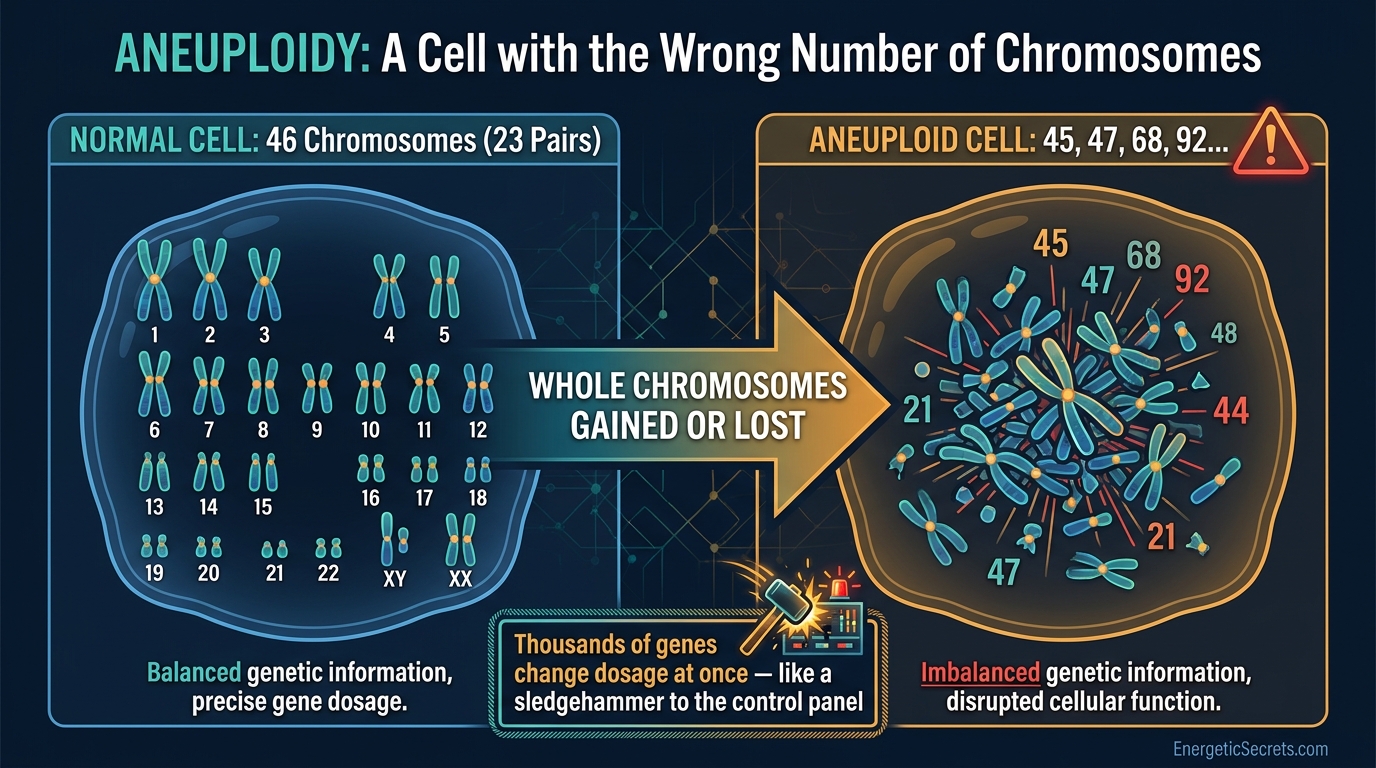
Every normal human cell carries 46 chromosomes: 23 pairs. That number is not arbitrary. It is the result of billions of years of evolutionary fine-tuning, and when it changes, things go wrong in ways that are hard to overstate.
Aneuploidy means a cell has gained or lost whole chromosomes. Instead of 46, it might have 45, or 47, or 68, or 92. The effect is not like flipping a single switch. It is more like taking a sledgehammer to the control panel. Thousands of genes are suddenly present in the wrong dosage: too many copies of some, too few of others. The cell's entire biochemical balance is thrown off.
Duesberg's core insight was that this kind of wholesale genomic disruption looks a lot more like cancer than a handful of point mutations ever could. After all, cancer cells do not just grow a little faster. They change shape. They ignore signals to stop dividing. They evade the immune system. They metastasize to distant organs. They develop resistance to drugs they have never encountered. That is not the behavior of a cell with one or two broken switches. It is the behavior of a cell whose entire operating system has been scrambled.
The Theory That Started in 1914
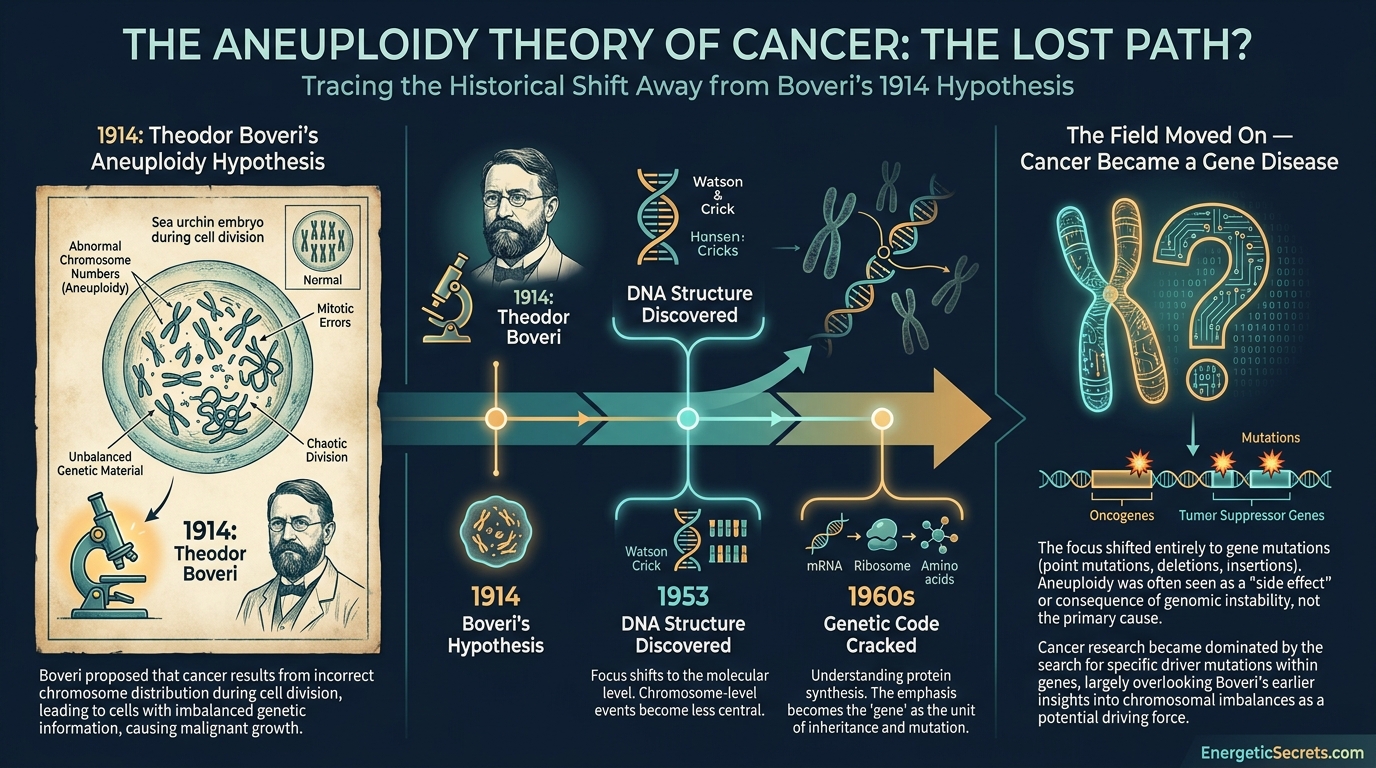
Duesberg was not the first to propose this. The aneuploidy theory of cancer was first laid out in 1914 by a German biologist named Theodor Boveri, who observed that sea urchin embryos with abnormal chromosome numbers developed into chaotic, tumor-like growths (2). Boveri proposed, with remarkable prescience, that an abnormal chromosome constitution was the primary cause of malignant tumors.
He was working before anyone knew what DNA was. He could see chromosomes under a microscope, and he could see that cancer cells had the wrong number of them, but he could not explain the mechanism. When the structure of DNA was discovered in 1953 and the genetic code was cracked in the 1960s, the field moved on. Cancer became a gene disease. Boveri's chromosomes were relegated to a historical footnote.
Duesberg spent his career trying to pull them back out.
The Case Duesberg Built
Between 1998 and 2018, Duesberg and his collaborators published a series of papers that built the aneuploidy case from multiple angles. They were not small studies in obscure journals. Several appeared in the Proceedings of the National Academy of Sciences, one of the most prestigious scientific venues in the world.
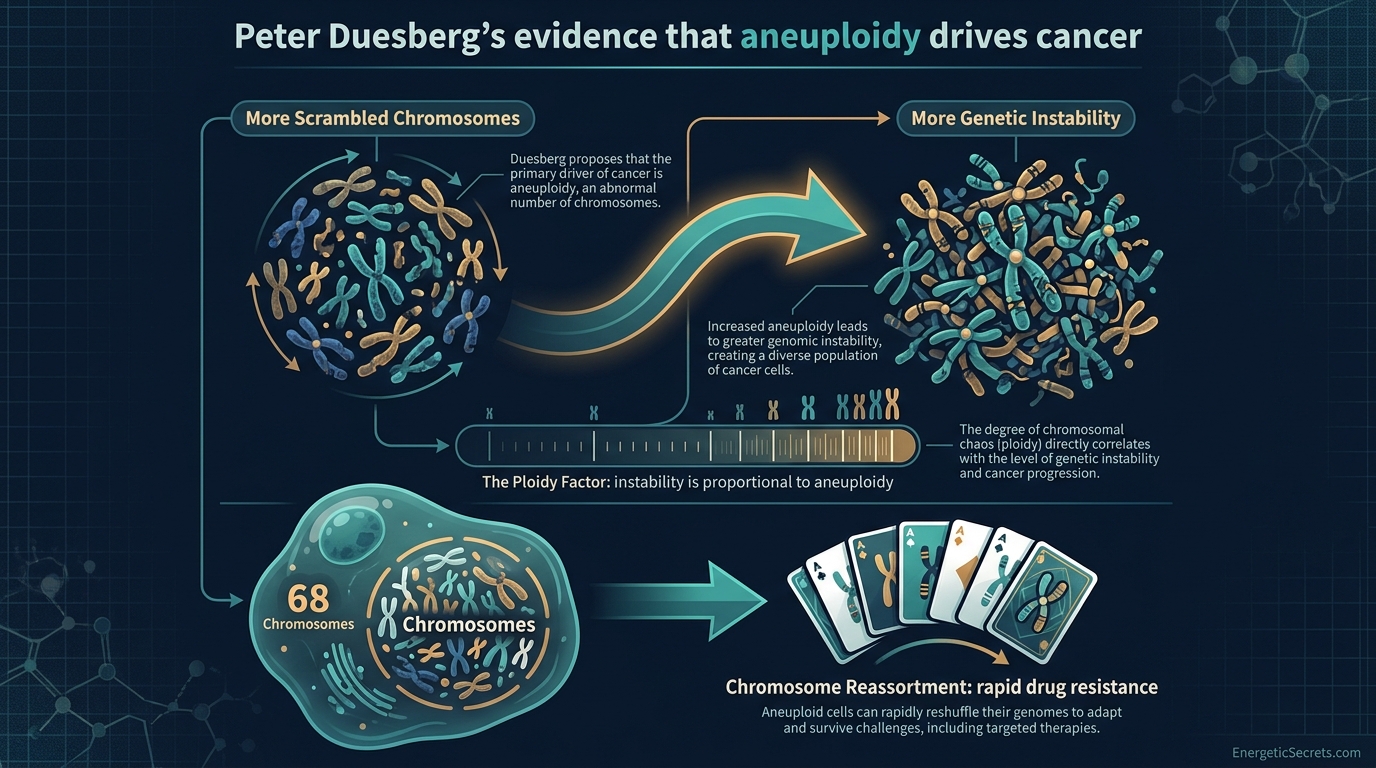
In 1998, his lab showed that the degree of genetic instability in cancer cells is directly proportional to their degree of aneuploidy, a finding he called "the ploidy factor" (3). The more scrambled the chromosome count, the more unstable the genome. That correlation is exactly what you would expect if aneuploidy were the driver, not the passenger.
In 2000, he proposed that aneuploidy is "the somatic mutation that makes cancer a species of its own" (4). The idea was provocative: cancer cells, with their wildly altered karyotypes, are not just broken versions of normal cells. They are a new kind of cellular organism, one that evolves by chromosome reassortment rather than by gene mutation. The same year, he argued that the rapid emergence of drug resistance in cancer (the reason chemotherapy stops working) is explained by chromosome reassortments catalyzed by aneuploidy, not by conventional gene mutation (5). A cell with 68 chromosomes can shuffle its genetic deck in ways a cell with 46 cannot.
In 2005, he published a comprehensive synthesis titled "The chromosomal basis of cancer" (6). The paper laid out the case systematically: aneuploidy explains why many carcinogens are not mutagenic (they damage the spindle apparatus that separates chromosomes during cell division, not DNA itself), why cancers have long latencies (aneuploidy must accumulate to a threshold), why cancer phenotypes are nonselective (thousands of genes are affected simultaneously), and why cancer cells are immortal (the chromosomal chaos keeps generating new variants).
Keep in mind, Duesberg was not arguing that gene mutations play no role. His own obituary in the journal Leukemia, written by his long-time collaborator Rüdiger Hehlmann, notes that Duesberg "saw a connection between oncogenes and aneuploidy": chronic myeloid leukemia, for example, involves both the BCR-ABL oncogene and progressive aneuploidy as the disease advances (1). The question was which came first, and which mattered more.
The Quiet Revolution
Then something interesting happened. Beginning around 2007, researchers who had no connection to Duesberg, and no stake in his broader controversies, started systematically studying aneuploidy using modern genetic tools. And what they found made the chromosomal theory a lot harder to dismiss.
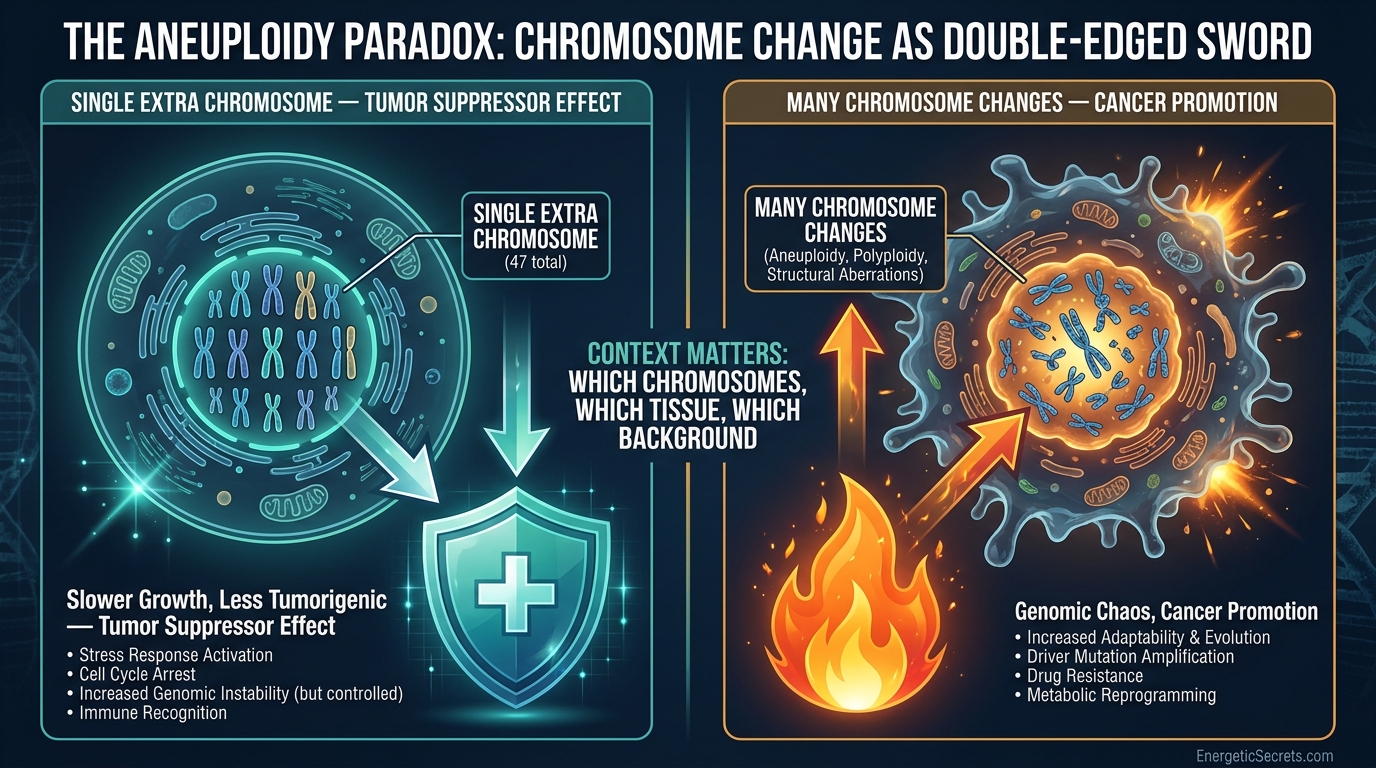
The Amon lab at MIT created yeast strains carrying single extra chromosomes and showed that aneuploidy causes a stereotypical stress response: proteotoxic stress, altered metabolism, and a proliferation defect, and this happened regardless of which chromosome was duplicated (7). The following year, they extended the finding to mammalian cells, showing that aneuploid mouse cells with single extra chromosomes proliferate more slowly and have a metabolic disadvantage, but also that some aneuploid lines spontaneously immortalize (8). Aneuploidy, it seemed, could both suppress and promote tumorigenesis, depending on context.
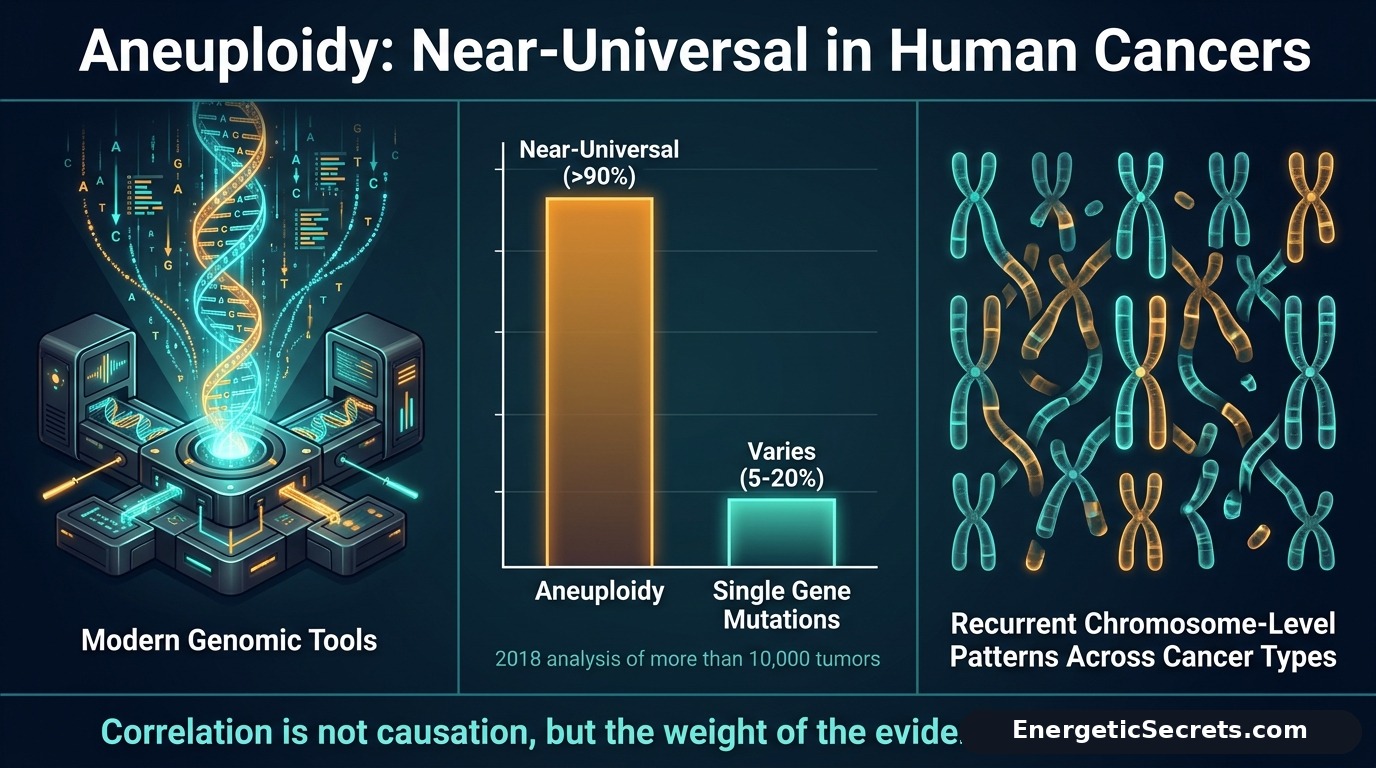
The big data arrived in the 2010s. A 2018 analysis of more than 10,000 human tumors from The Cancer Genome Atlas found that aneuploidy is pervasive, correlates with tumor type and stage, and that specific chromosome-arm-level aneuploidies are recurrent across cancer types (9). A landmark 2010 study of 3,131 cancer specimens found that the most common alterations are large-scale chromosomal changes: whole-arm and whole-chromosome events, not focal gene-level mutations (10). A 2020 Nature paper analyzing 1,421 tumor samples across 394 patients found that karyotype evolution follows reproducible, ordered patterns, not random chaos (11). If aneuploidy were merely noise, you would not see patterns that repeat across patients and cancer types.
Of course, none of this proves that aneuploidy causes cancer. Correlation is not causation, and the field is careful about that distinction. But the weight of the correlative evidence has become hard to ignore. Aneuploidy is a near-universal characteristic of human cancers, present in the vast majority of tumor genomes analyzed (9). When something is that universal, you have to at least ask whether it is the fire or just the smoke.
The Paradox That Makes the Story Interesting
Here is where it gets genuinely interesting, and where a less honest writer would smooth over the complication. The strongest argument against the simple "aneuploidy causes cancer" narrative comes from the very researchers who revived the field.
In 2017, the Amon lab did something elegant: they experimentally introduced single extra chromosomes into mammalian cells and watched what happened. The result was striking: the cells proliferated more slowly and were less tumorigenic in mouse models (12). Single-chromosome gains, it turned out, commonly function as tumor suppressors, not promoters.
This is the "aneuploidy paradox," first articulated by Sheltzer and Amon in 2011 (13): aneuploidy reduces cellular fitness in normal cells, yet aneuploidy is nearly universal in cancer. The resolution, most researchers now believe, involves context. The same chromosome gain can be oncogenic in one tissue and neutral or even suppressive in another (14). Aneuploidy is not a simple on-off switch. It is a state that creates both costs and opportunities, and whether a cell tips toward cancer depends on which specific chromosomes are gained or lost, in which tissue, against which genetic background.
My background adds the metabolic background which even further complicates this question, but more on that later.
I do not know the answer to the puzzle, and neither does anyone else. But it sure seems like the question itself (how aneuploidy shapes cancer, rather than whether it does) is where the productive research is heading along with it's intersection with the metabolic theory of cancer.
Why This Matters Beyond the Lab
You might reasonably ask why a reader of EnergeticSecrets should care about a scientific debate over chromosome counts. The answer has to do with how we think about what causes cancer in the first place.
If cancer is caused by gene mutations, then prevention means avoiding mutagens: chemicals that damage DNA. But many known carcinogens (polycyclic aromatic hydrocarbons, X-rays, and alkylating agents) are not strongly mutagenic in standard assays. Duesberg's lab argued that these substances function instead as aneuploidogens: they damage the mitotic spindle, the cellular machinery that separates chromosomes during division, causing whole chromosomes to be misdistributed (15). If that is correct, then our entire framework for identifying and regulating carcinogens may be missing a major category of risk.
There is also the question of early detection. Aneuploidy has been found in preneoplastic lesions (abnormal tissue that has not yet become cancerous) in both animal models and human studies (16,17). If aneuploidy is an early event rather than a late consequence, it could serve as a warning signal long before a tumor becomes clinically detectable.
Suffice it to say, the aneuploidy theory does not mean conventional cancer treatment is useless, and it does not mean gene mutations are irrelevant. What it means is that the story is more complicated than the textbook version, and that a theory dismissed for decades is now generating productive research from labs that have no ideological stake in Duesberg's broader views.
In 2007, Scientific American took the unusual step of publishing an article by Duesberg on his aneuploidy theory. In an editorial explaining their decision, the editors wrote (and I am quoting this from the historical record, as the original article is no longer online) that "as wrong as Duesberg surely is about HIV, there is at least a chance that he is significantly right about cancer" (18). That one sentence captures the strange arc of Duesberg's career better than anything I could write: a scientist whose most controversial positions made him easy to dismiss, but whose core insight about chromosomes and cancer may yet prove to be ahead of its time.
That said, my personal opinion is much aligned with Duesberg's on HIV and from my perspective the fact that he was "canceled" and largely blacklisted out of peer-reviewed journals after taking his stance against the HIV-AIDS hypothesis does not scare me away from his work. Anyone who has read "The Real Anthony Fauci" might concur with this assessment.
Duesberg died in January 2026 at the age of 89. His obituary in Leukemia notes that "aneuploidy moved from specialty research to mainstream" and that "currently no leukemia is diagnosed anymore without karyotyping" (1). The man who spent decades as a heretic lived long enough to see the field come partway toward him.
Personally I see the future of cancer research, if we want it to be successful, as a merging of aneuploidy and metabolic cancer theories into a full working mechanism of the evolution of cancer. The problem this future faces is that there appears to be more profit for pharma in the genetic cancer model, after all cancer drugs can make a lot of money without curing much at all.
To be clear, I am not going to tell you the aneuploidy theory is proven. It is not. The question of whether aneuploidy is cause or consequence remains open, and the smartest researchers in the field are careful to say so. But I will tell you this: when a theory that was dismissed for a century keeps generating testable predictions that keep getting confirmed by independent labs using modern tools, it deserves more than a footnote. It deserves a serious look.
Disclaimer: I am not a health professional of any kind and make no medical claims. I am just a researcher who likes to dig deep on effective methods to keep them from being lost to the dust bin of history. And I like to write about what I learn. So please do your own research. Nothing in this article should be considered medical advice. None of the statements have been evaluated by the FDA. Not intended to diagnose, treat, cure or prevent any disease. If you have a medical condition seek professional help. References
1. Hehlmann R. Prof. Peter Duesberg — Molecular Biologist par excellence. 2 December, 1936–13 January, 2026. Leukemia (2026). https://www.nature.com/articles/s41375-026-02891-9
2. Boveri T. Concerning the origin of malignant tumours. Translated and annotated by Henry Harris. Journal of Cell Science 121(Suppl 1):1–84 (2008). PMID: 18089652
3. Duesberg P, Rausch C, Rasnick D, Hehlmann R. Genetic instability of cancer cells is proportional to their degree of aneuploidy. Proc Natl Acad Sci USA 95(23):13692–13697 (1998). PMID: 9811862
4. Duesberg P, Rasnick D. Aneuploidy, the somatic mutation that makes cancer a species of its own. Cell Motility and the Cytoskeleton 47(2):81–107 (2000). PMID: 11013390
5. Duesberg P, Stindl R, Hehlmann R. Explaining the high mutation rates of cancer cells to drug and multidrug resistance by chromosome reassortments that are catalyzed by aneuploidy. Proc Natl Acad Sci USA 97(26):14295–14300 (2000). PMID: 11121035
6. Duesberg P, Li R, Fabarius A, Hehlmann R. The chromosomal basis of cancer. Cellular Oncology 27:293–318 (2005). PMID: 16373963
7. Torres EM, Sokolsky T, Tucker CM, Chan LY, Boselli M, et al. Effects of aneuploidy on cellular physiology and cell division in haploid yeast. Science 317(5840):916–924 (2007). PMID: 17702937
8. Williams BR, Prabhu VR, Hunter KE, Glazier CM, Whittaker CA, et al. Aneuploidy affects proliferation and spontaneous immortalization in mammalian cells. Science 322(5902):703–709 (2008). PMID: 18974345
9. Taylor AM, Shih J, Ha G, Gao GF, Zhang X, et al. Genomic and Functional Approaches to Understanding Cancer Aneuploidy. Cancer Cell 33(4):676–689.e3 (2018). PMID: 29622463
10. Beroukhim R, Mermel CH, Porter D, Wei G, Raychaudhuri S, et al. The landscape of somatic copy-number alteration across human cancers. Nature 463(7283):899–905 (2010). PMID: 20164920
11. Watkins TBK, Lim EL, Petkovic M, Elizalde S, Birkbak NJ, et al. Pervasive chromosomal instability and karyotype order in tumour evolution. Nature 587(7832):126–132 (2020). PMID: 32879494
12. Sheltzer JM, Ko JH, Replogle JM, Habibe Burgos NC, Chung ES, et al. Single-chromosome Gains Commonly Function as Tumor Suppressors. Cancer Cell 31(2):240–255 (2017). PMID: 28089890
13. Sheltzer JM, Amon A. The aneuploidy paradox: costs and benefits of an incorrect karyotype. Trends in Genetics 27(11):446–453 (2011). PMID: 21872963
14. Sack LM, Davoli T, Li MZ, Li Y, Xu Q, et al. Profound Tissue Specificity in Proliferation Control Underlies Cancer Drivers and Aneuploidy Patterns. Cell 173(2):499–514.e23 (2018). PMID: 29576454
15. Duesberg lab research summary, UC Berkeley. https://mcb.berkeley.edu/labs/duesberg/pages/research.html
16. Aldaz CM, Conti CJ, Klein-Szanto AJ, Slaga TJ. Progressive dysplasia and aneuploidy are hallmarks of mouse skin papillomas: relevance to malignancy. Proc Natl Acad Sci USA 84(7):2029–2032 (1987). PMID: 3104907
17. Crowell RE, Gilliland FD, Temes RT, Harms HJ, Neft RE, et al. Detection of trisomy 7 in nonmalignant bronchial epithelium from lung cancer patients and individuals at risk for lung cancer. Cancer Epidemiology, Biomarkers & Prevention 5(8):631–637 (1996). PMID: 8824366
18. Wikipedia, "Peter Duesberg" (citing Scientific American editorial, 2007). https://en.wikipedia.org/wiki/Peter_Duesberg
|

7 Comments
Join the conversation
I'll be honest the aneuploidy paradox section lost me a little. So extra chromosomes can suppress tumors AND cause them depending on context? I get that biology is complicated but that feels like a hard thing to ever build a treatment around.
The part about carcinogens damaging the spindle apparatus instead of DNA directly is what got me. If we've been screening for the wrong mechanism this whole time that's a pretty significant problem for how we regulate chemicals.
Duesberg co-discovered the first oncogene and then spent 30 years arguing oncogenes weren't the main story. That takes guts regardless of whether you agree with him.
The Scientific American editorial line is wild to me. So they basically said he's wrong about HIV but might be onto something huge with cancer and then just moved on. That sentence deserved its own article.
Interesting read but I'd pump the brakes a little. Saying pharma profits from the genetic model so aneuploidy gets ignored is a leap. Lots of researchers work on chromosome instability and they're not exactly outsiders anymore based on what this article itself says.
My mom went through three rounds of chemo and each time it stopped working after a few months. The part about chromosome shuffling causing drug resistance actually explains what we watched happen in real time. Nobody ever explained it that way to us.
Boveri figured this out in 1914 and the field just moved on because DNA was shinier. That's how science actually works sometimes and it's frustrating.