
B15 Pangamic Acid: The Forgotten Nutrient of Methylation |
Fifty years of Soviet research on pangamic acid sits unread in PubMed while Western science dismissed it as a phantom. The biochemistry it pointed toward may have been more significant than anyone realized. |

B15 Pangamic Acid: The Forgotten Nutrient
You may have noticed I write quite a bit about some of the nutrients that mainstream medicine has tried to bury, and one of them keeps coming up in my research: pangamic acid, or what is sometimes still called vitamin B15. The story of this compound is one of the stranger chapters in nutritional science (and that is saying something, given how many strange chapters there are), and I think it deserves a closer look.
My father is a mainstream doctor, and I can tell you exactly how a compound like pangamic acid gets treated in that world: it gets a one-line dismissal in a lecture, if it gets mentioned at all, and nobody goes back to check whether the dismissal held up. That is not a knock on him personally, in fact he has come around on a number of subjects seeing how pharma biased the system has become. But this is how the training works. You learn what is approved, you learn what is "myth," and you rarely get pointed at the actual foreign-language literature to judge for yourself.
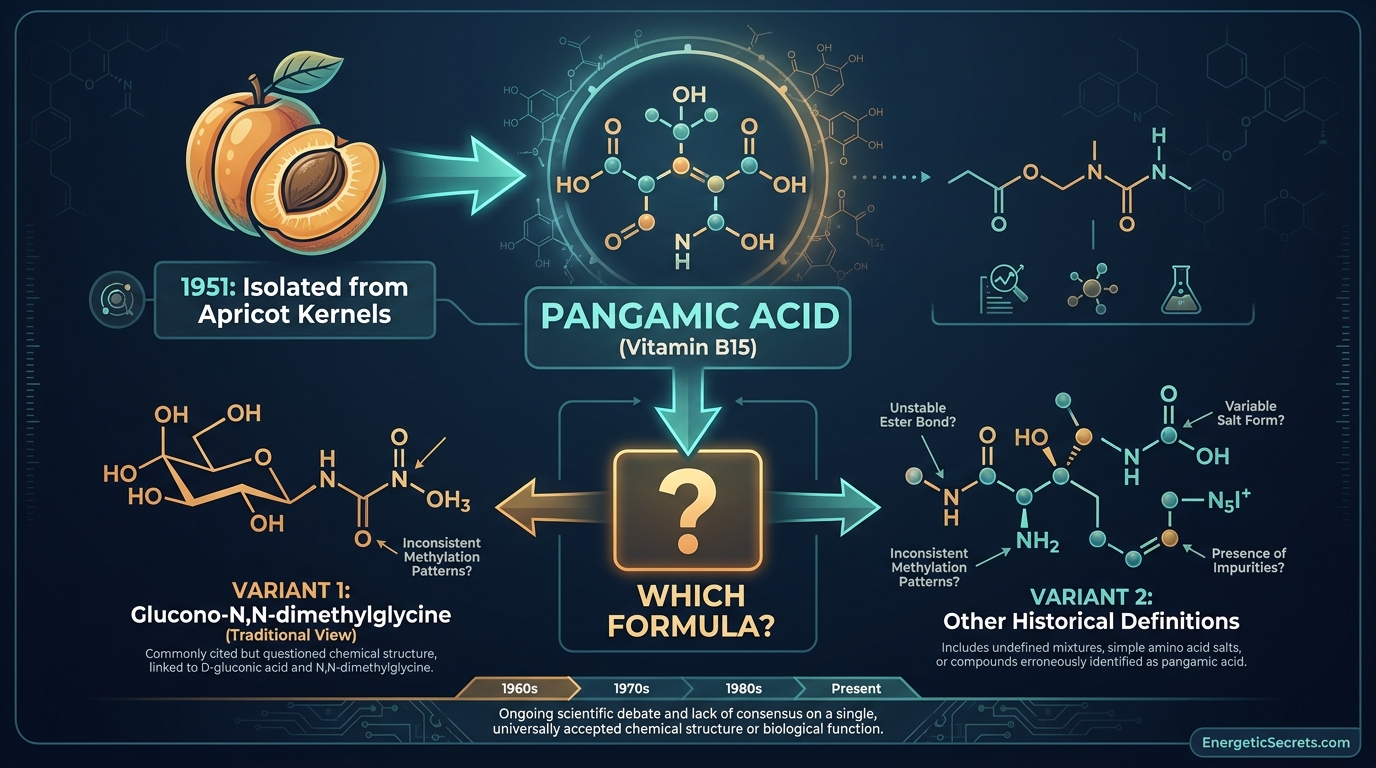
In 1951, a father-son research team, Ernst T. Krebs Sr. and Ernst T. Krebs Jr., isolated a compound from apricot kernels (another one separate from amygdalin) and named it pangamic acid, from the Greek "pan" (universal) and "gamic" (seed). This is the same Krebs family later associated with amygdalin (B17) research. They believed they had discovered a new water-soluble B vitamin, one they called B15, essential for cellular respiration and methyl group donation.
Now, what happened next is where things get interesting. I don't know for certain why the Soviet literature never crossed over into Western review, and I want to be upfront that I am asking a question here rather than stating a proven cause. But it sure seems like a body of real, indexed research simply never got read by the people writing the American verdict on pangamic acid.
Over the following three decades, Soviet and Eastern Bloc researchers published dozens of studies on pangamic acid. They investigated its effects on athletic performance, heart muscle metabolism, liver protection, and mitochondrial energy production. Real studies, in real journals, with real data. The American medical establishment, meanwhile, declared it a phantom. The FDA stated flatly that no evidence supported its claimed benefits (2). Leading nutrition scientists called it a "myth" and a "phantom" (3, 4). Case closed, as far as they were concerned.
Fifty years later, the Soviet research sits in PubMed: real, indexed, and largely unread by Western reviewers. The question is not whether pangamic acid is a vitamin. It is not, and the Krebs team themselves eventually acknowledged that. The question is whether an entire body of research was dismissed too quickly, and whether the biochemistry it pointed toward (methyl group donation, mitochondrial support, oxygen utilization) deserves closer attention than it has received.
I think it was. Let me show you why.
A Compound Without an Identity
Before we look at what the research actually found, you have to understand the single biggest problem that has plagued pangamic acid from the beginning. And it is a doozy: nobody agrees on what it actually is.
When Canadian researchers analyzed commercial pangamic acid preparations in 1966, they found wildly varying compositions. Some products contained dimethylglycine (DMG), a simple methyl donor. Others contained diisopropylamine dichloroacetate (DADA), a synthetic compound with documented pharmacological activity. Still others were calcium pangamate, the calcium salt form used in most Soviet studies. And some were mixtures of calcium gluconate and glycine with no pangamic acid at all (5). I mean, you cannot make this stuff up.
This was not a minor labeling issue. It meant that when a Soviet researcher reported benefits from "pangamic acid" and a Western researcher found none, they may literally have been testing different compounds. An Italian research team identified DADA as the pharmacologically active component in many preparations as early as 1958 (6). A 1999 chemical analysis confirmed that commercial products still contained mixtures of compounds with varying biological activities (7). Decades later, and the same problem persisted.
The thing is, this chemical ambiguity is not a weakness of the pangamic acid story. It IS the story. The research was real. The interest was genuine. But the lack of chemical standardization made the entire literature nearly impossible to replicate, and that failure of standardization, more than any single negative trial, is what buried pangamic acid. After all, how do you replicate a study when you do not even know what was in the vial?
What the Soviets Found: Sports Medicine and Mitochondrial Mechanisms
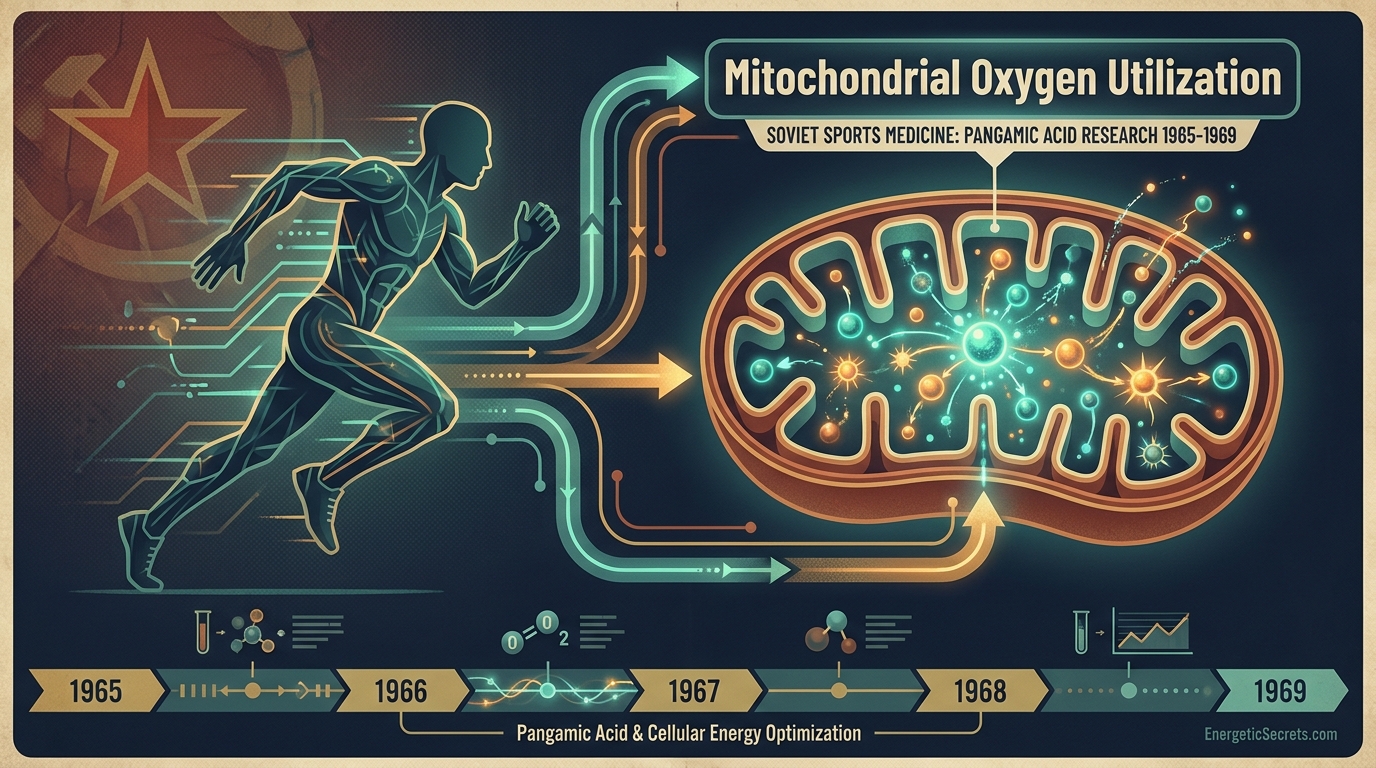
From the mid-1960s through the early 1970s, Soviet researchers led by N.N. Iakovlev and colleagues published a concentrated series of studies examining pangamic acid's effects on exercise metabolism, muscle biochemistry, and cardiovascular function. These studies appeared in journals like Voprosy Pitaniia (Problems of Nutrition) and Ukrainskii Biokhimicheskii Zhurnal (Ukrainian Biochemical Journal): all indexed in PubMed, all in Russian, and rarely cited in the Western literature that later dismissed pangamic acid.
The research cluster is substantial. In 1966, El'kina and Iakovlev analyzed pangamic acid's influence on carbohydrate-phosphorus metabolism during muscular activity, one of the earliest Soviet sports-medicine investigations of B15 (8). The following year, Karpukhina and colleagues compared pangamic acid to methionine and calcium gluconate-glycine combinations, measuring biochemical changes in the blood of athletes during physical exercise (9). They were not just asking "does it work?" They were asking "which component is doing the work?" That is a level of scientific rigor you do not often see in supplement research, even today.
That same year, Samodonova and Iakovlev published what may be the most directly relevant study: an examination of whether pangamic acid improved the efficiency of experimental training (10). Leshkevich and Kolomeitseva, also in 1967, investigated how pangamic acid affected lipid metabolism during muscular exertion, directly relevant to the proposed mechanism of improved fat utilization during exercise (11).
The research kept deepening. In 1968, Krasnova studied pangamic acid's effects on biochemical changes in the blood and tissues of aging organisms during muscular exertion and rest, uniquely combining the sports medicine and anti-aging angles (12). In 1969, Samodanova returned to examine how prolonged pangamic acid administration affected muscle chemistry and cholesterol metabolism during physical work (13). These were not one-off pilot studies. This was a sustained, multi-year research program.
The Mitochondrial Connection
The most mechanistically significant Soviet finding came from Lenkova in 1969, who directly examined pangamic acid's effect on oxidative phosphorylation in skeletal muscle mitochondria (14). This is the core proposed mechanism: if pangamic acid could enhance the efficiency of mitochondrial energy production, it would explain the reported improvements in exercise tolerance, oxygen utilization, and recovery. In plain terms: the Soviets were asking whether this compound could make your cells' energy factories run better.
A companion study by Kechkhashvili and Kometiani, also in 1969, tracked the distribution of injected pangamic acid through the body and examined its effects on oxidative metabolism in brain tissue (15). Like several of the older Soviet papers in this cluster, no indexed abstract is available for it, so I am reporting what the study set out to examine rather than a confirmed result. However, I did get ahold of some, as yet untranslated Russian documents on pangamic acid so more on this in the future.
These mitochondrial findings matter because they connect pangamic acid to a biochemical pathway that modern science understands far better than the Soviet researchers did. Methyl group donation, the transfer of single-carbon methyl groups between molecules, is documented to be involved in DNA methylation, certain neurotransmitter synthesis pathways, and mitochondrial function (35, 36, 38).
The Soviet researchers may have been observing real methyl-donor effects without having the biochemical framework to fully explain them. That is my hypothesis, not an established finding: they may have been seeing something real, without yet having the vocabulary to describe it.
Of course, that is the generous interpretation. I do not know for certain that this is what was happening, and neither does anyone else. But it sure seems like the pieces fit together in a way that deserves more than a shrug and a dismissal.
The Heart and the Liver: Cardiovascular and Hepatoprotective Research
The Soviet interest in pangamic acid extended well beyond sports performance. A parallel research track examined its effects on the cardiovascular system and the liver, and the findings here are just as interesting.
In 1965, Iakovlev, Vol'nov, and Leshkevich published a study examining pangamic acid's effects on myocardial metabolism and ECG readings during muscular activity, combining the cardiovascular and exercise angles in a single investigation (16).
Two years later, Sokolov examined pangamic acid's effect on experimentally induced myocarditis (heart muscle inflammation) in rabbits (17). Neither original paper has an indexed abstract available for review, so I can tell you what each study examined; I cannot independently confirm the strength of the reported effects without the full text.
The liver protection research was equally extensive. In 1964, Udalov and Sokolova demonstrated a preventive effect of vitamin B15 against experimentally induced fatty liver, and notably, this study was translated and published in a US journal (Federation Proceedings), giving it unusual Western visibility for Soviet research (18).
A Bulgarian study by Mitkov in 1967 examined pangamic acid's effect on alcohol-induced fatty liver, directly relevant to the detoxification and liver-protection narrative (19).
Abdullaev, also in 1967, studied the synthetic analogue DADA in experimental toxic chronic hepatitis, connecting the hepatic protection findings to the specific active component identified in many pangamic acid preparations (20).
Shamrai and Selezneva published two companion studies in 1969 examining pangamic acid's effects on oxidative enzyme activity and mitochondrial energy metabolism in the liver during toxic hepatitis, providing cellular-level mechanistic evidence (21, 22).
The cardiovascular research continued into the 1970s and 1980s. Rastopchin published clinical experience using pangamic acid in patients with cerebral arteriosclerosis accompanied by mental disorders in 1970 (23), and followed up in 1984 with a study specifically measuring calcium pangamate's effect on the cholesterol atherogenicity index in the same patient population (24). Polish researchers independently studied pangamic acid in hyperlipidemia patients, publishing findings in 1972 and 1976 (25, 26).
The pattern across these studies is worth noting: heart, liver, brain, and blood lipids were all investigated in independent labs across multiple countries. That breadth of independent inquiry is notable on its own, whatever any single study's findings turned out to be. When the same compound draws sustained attention from multiple research groups in multiple countries over decades, that is a signal worth taking seriously.
The Western Response: Negative Trials and a Closed Door
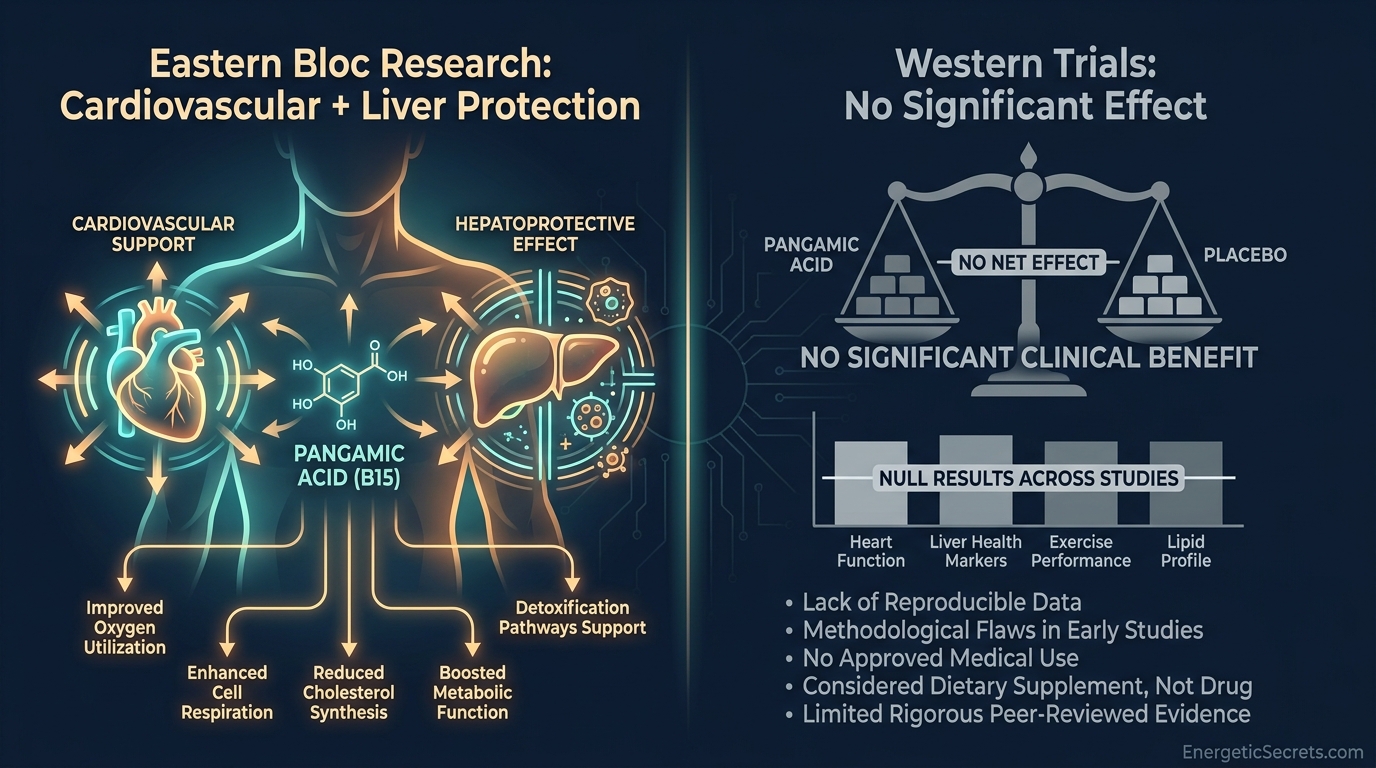
When Western researchers finally attempted to replicate the Soviet findings on athletic performance in the early 1980s, the results were largely negative, and the door closed quickly.
Girandola, Wiswell, and Bulbulian studied metabolic responses to exercise after pangamic acid ingestion in 1980 and found no significant effects on metabolic parameters (27). In 1982, Gray and Titlow published the most-cited Western negative study: a controlled clinical trial concluding that pangamic acid did not improve maximal treadmill performance (28). The same authors published a review in The Physician and Sportsmedicine titled "B15: Myth or Miracle?" that framed the question for a clinical sports medicine audience and concluded the evidence for ergogenic benefit was lacking (29).
Dohm, Debnath, and Frisell tested commercial pangamic acid preparations in exercised rats the same year and found no beneficial effects on exercise performance or metabolic parameters (30).
Now, these negative findings are real and must be taken seriously. I am not going to sit here and pretend they do not exist. But they come with an important caveat that is almost never discussed: the Western trials used commercial pangamic acid preparations of uncertain and variable composition.
Given what we know about the chemical identity problem, that different "pangamic acid" products contained entirely different compounds, a negative result from one commercial preparation tells us almost nothing about what the Soviet researchers were actually studying. You cannot replicate a study when you do not know what compound was in the vial.
Keep in mind, this is not me making excuses for a failed supplement. This is basic scientific methodology. If you test "pangamic acid" but your product is mostly calcium gluconate and glycine, you have not tested pangamic acid at all. You have tested a calcium-gluconate-glycine mixture and found it does not improve treadmill performance. That is a valid finding about that particular mixture. It is not a valid finding about the compound the Soviets spent two decades studying.
The Critics and the Safety Question
The most prominent American critic of pangamic acid was Dr. Victor Herbert, a hematologist and nutrition researcher who published a comprehensive critique in the American Journal of Clinical Nutrition in 1979. Herbert argued that pangamic acid was not a vitamin, had no proven benefits, and that some formulations contained potentially dangerous compounds (1).
Herbert and colleagues followed up with specific toxicity studies. They reported that dichloroacetate (DCA), found in some pangamic acid formulations, showed mutagenic (mutating or modifying DNA) activity in the Ames test (31). They also reported that DMG showed mutagenic activity when mixed with nitrite in laboratory conditions, raising concerns about DMG-based formulations in the presence of dietary nitrites (32). Further testing of DADA (the synthetic component in some preparations) also found mutagenic activity (33).
These findings deserve careful attention, but they also require context. The mutagenicity findings were formulation-specific: DADA-containing products, not all pangamic acid preparations. The DMG-nitrite interaction was observed in vitro and may not reflect what happens in the body. And the Ames test, while a standard screening tool, is not a clinical toxicity finding. It is a bacterial assay. Useful, but not the final word.
The FDA's position, stated in its 1978 Drug Bulletin, was that no evidence supported pangamic acid's claimed benefits (2). A 1980 JAMA article carried the blunt headline "Vitamin B15: whatever it is, it won't help" (34). Swiss and German reviewers published papers with titles like "Autopsy of a Phantom" and questioned whether pangamic acid even existed as a defined chemical entity (3, 4).
The critics were not wrong about the chemical identity problem. They were right. But being right about the identity problem is not the same as being right about the biology. And the biology, as it turns out, was pointing somewhere real.
The Modern Context: DMG, Betaine, and What the Soviets May Have Been Seeing
While "pangamic acid" as a term has largely disappeared from the scientific literature, the biochemistry of its proposed active components has advanced considerably. And that biochemistry suggests the Soviet researchers may have been observing something real, even if they lacked the framework to fully explain it.
Dimethylglycine (DMG), the compound most commonly sold as "pangamic acid" or "B15" in modern supplements, is a simple methyl donor. When the body metabolizes betaine (trimethylglycine), it strips off one methyl group and produces DMG. That methyl group is then available for hundreds of metabolic reactions, including the synthesis of methionine, creatine, and DNA. In plain terms: your body already runs a methyl-donor economy, and DMG is one of the currencies.
Betaine itself has documented roles in methyl group metabolism and has shown ergogenic (performance enhancing) benefits in some modern exercise studies (35, 36). DMG was studied for cardiorespiratory effects in exercising horses in 1989, with researchers examining its impact on lactate production and cardiovascular function (37).
A 1971 Polish study directly demonstrated pangamic acid's participation in methyl group synthesis for methionine and B12-related corrinoid compounds, providing a biochemical mechanism that aligns with modern understanding of one-carbon metabolism (38).
The modern B15 supplement label often lists several compounds beyond DMG: inositol, trimethylglycine (TMG, also called betaine), and calcium gluconate. Each has a plausible connection to the pangamic acid story.
Inositol appears in many B15 formulations as a complementary nutrient; it plays a role in cell signaling, and myo-inositol supplementation has been studied specifically for gestational diabetes prevention (39), which is a narrower and different claim than general metabolic support, so I want to be precise rather than overstate it.
TMG is a methyl donor in its own right: when the body metabolizes it, TMG donates one methyl group and becomes DMG, placing both compounds on the same one-carbon pathway (35, 36). Calcium gluconate appeared in early commercial preparations as a carrier or filler, and at least one Soviet study directly compared pangamic acid to a calcium gluconate-glycine combination to determine which component was producing the observed effects (5, 9).
The presence of these four compounds under a single "B15" label is not evidence of deception. It is the same chemical identity problem in a different form: without a standardized definition of pangamic acid, manufacturers have filled the gap with related nutrients that share plausible biochemical connections to the original research.
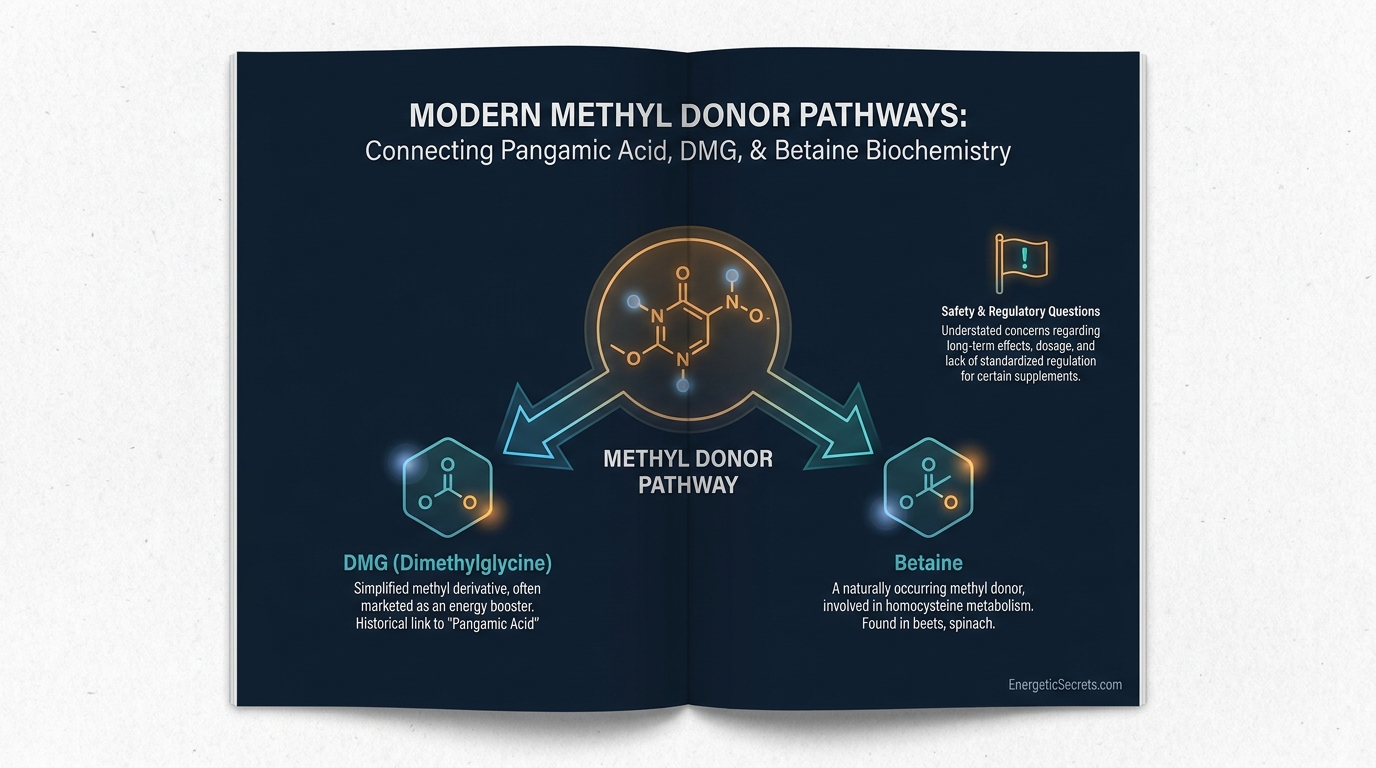
The connection is not proof that pangamic acid "works." But it provides a plausible biochemical context that the original researchers lacked. The Soviet studies on mitochondrial oxidative phosphorylation, lipid metabolism during exercise, and hepatic protection all describe effects that are consistent with enhanced methyl group availability and improved mitochondrial function. The Western negative trials, which used commercial preparations of unknown composition, do not refute this mechanism. They simply failed to test it under controlled conditions.
What This Means Today
Pangamic acid occupies an unusual position: a compound with a substantial research literature that almost nobody has read, studied in a research tradition that Western science dismissed, pointing toward biochemical mechanisms that modern science has since validated in related compounds.
The chemical identity problem is real and remains unresolved. No regulatory body recognizes pangamic acid as a vitamin, and in its 1978 Drug Bulletin the FDA stated there was no evidence supporting its claimed benefits (2).
The mutagenicity concerns about specific formulations, particularly DADA-containing products, should not be dismissed. And the Western negative trials, whatever their methodological limitations, found no ergogenic benefit.
But the Soviet research is also real. Dozens of PubMed-indexed studies spanning three decades, from multiple research groups across the USSR, Poland, Bulgaria, and Italy, do not constitute a collective hallucination. The mitochondrial, cardiovascular, and hepatic findings are consistent enough across studies to suggest that something was being observed, even if the chemical identity of "pangamic acid" was too poorly defined to say exactly what.
The most honest conclusion may be that pangamic acid was an early, messy exploration of methyl donor biochemistry, a scientific dead end that pointed toward something real. The research was published in languages Western scientists did not read, in journals they did not subscribe to, using compounds they could not standardize. It was easier to dismiss the whole thing than to disentangle it.
That dismissal may have been premature. Not because pangamic acid is a miracle nutrient (it is not), but because the questions the Soviet researchers were asking about mitochondrial function, methyl group metabolism, and oxygen utilization are the same questions that drive cutting-edge longevity and performance research today. They were asking the right questions. They just did not have the tools to answer them.
Suffice it to say, the mainstream narrative around B15 is another case of "nothing to see here" when there was, in fact, quite a lot to see. The Krebs family, whatever you think of their other work, opened a door that deserved to stay open. It got slammed shut instead.
In closing, I hope this gave you some jumping-off points to research further. The pangamic acid story is one of those rabbit holes that gets deeper the more you dig, and I suspect we have not heard the last of it.
Please share this with anyone you feel would benefit from reading it. What do you think, have you ever come across B15 or DMG in your own supplement research? Because of our deep research into amygdalin and it being a companion nutrient of sorts we do carry a B15 product at HealthHarmonic.com
Also, one place where you can dig deeper down this rabbit hole is inside my free online course ForbiddenFood.tv where I do have an additional report on pangamic acid research.
Share your thoughts in the comments below. And as usual, you can find more deep dives like this one at EnergeticSecrets.com.
Disclaimer: I am not a health professional of any kind and make no medical claims. Please do your own research. Nothing in this article should be considered medical advice. None of the statements have been evaluated by the FDA. Not intended to diagnose, treat, cure or prevent any disease. If you have a medical condition seek professional help.
1. Herbert V. "Pangamic acid ('vitamin B15')." American Journal of Clinical Nutrition, 1979; 32(7): 1534-40. PMID 377937
2. "FDA notes lack of evidence on pangamic acid claims." FDA Drug Bulletin, 1978; 8(6): 38. PMID 720793
3. Moesch H. "Autopsy of a phantom: pangamic acid, alias vitamin B15." Schweizerische Zeitschrift für Sportmedizin, 1983; 31(2): 45-51. PMID 6612306
4. Riemschneider R, Quelle G. "Existence of 'pangamic acid' alias 'vitamin B15'?" Fortschritte der Medizin, 1984; 102(12): 339-41. PMID 6714908
5. French WN, Levi L. "Pangamic acid (vitamin B15, pangametin, sopangamine): Its composition and determination in pharmaceutical dosage forms." Canadian Medical Association Journal, 1966; 94(22): 1185-7. PMID 5295884
6. Bertelli A, Casentini S. "Dichloroacetate of diisopropylammonium as molecule responsible for several pharmacological activities attributed to the so-called pangamic acid." Bollettino della Società Italiana di Biologia Sperimentale, 1958; 34(22): 1532-4. PMID 13607850
7. Schneider D, Helwig V, Staniek K, Nohl H, Elstner EF. "Studies on the chemical identity and biological functions of pangamic acid." Arzneimittelforschung, 1999; 49(4): 335-43. PMID 10337453
8. El'kina OA, Iakovlev NN. "An analysis of the influence exerted by pangamic acid (vitamin B15) on the carbohydrate-phosphorus metabolism in muscle activity." Voprosy Pitaniia, 1966; 25(3): 7-11. PMID 6003582
9. Karpukhina IuL, Oreshchenko NI, Stoliarova NA. "The effect of pangamic acid, methionine and of combinations of calcium gluconate and glycine on biochemical changes in the blood of sportsmen performing physical exercises." Voprosy Pitaniia, 1967; 26(1): 3-6. PMID 5611442
10. Samodonova GI, Iakovlev NN. "Effect of pangamic acid (vitamin B15) on the efficiency of experimental training." Ukrainskii Biokhimicheskii Zhurnal, 1967; 39(2): 196-203. PMID 4301703
11. Leshkevich LG, Kolomeitseva VI. "An analysis of the effect of pangamic acid on lipid metabolism during muscular efforts." Voprosy Pitaniia, 1967; 26(1): 7-12. PMID 4180658
12. Krasnova AF. "Effect of pangamic acid on biochemical changes in the blood and tissues of aging organisms during muscular exertion and rest." Voprosy Pitaniia, 1968; 27(6): 7-12. PMID 4312644
13. Samodanova GI. "Mechanism of the effect of physical work on cholesterol metabolism. Effect of prolonged administration of pangamic acid (vitamin B15) on muscle chemism." Ukrainskii Biokhimicheskii Zhurnal, 1969; 41(3): 269-75. PMID 4311165
14. Lenkova RI. "Effect of pangamic acid on oxidative phosphorylation in skeletal muscle mitochondria." Tsitologiia, 1969; 11(11): 1427-33. PMID 4246090
15. Kechkhashvili AL, Kometiani PA. "Distribution of injected pangamic acid (vitamin B15) in the organism and its effect on oxidative metabolism of the brain." Voprosy Meditsinskoi Khimii, 1969; 15(1): 60-4. PMID 5822032
16. Iakovlev NN, Vol'nov NI, Leshkevich LG. "Effect of pangamic acid, methionine and a mixture of gluconate and glycine on the metabolism in the myocardium and on the ECG during muscular activity." Ukrainskii Biokhimicheskii Zhurnal, 1965; 37(5): 818-35. PMID 5877773
17. Sokolov MV. "Effect of pangamic acid on experimental myocarditis in rabbits." Kardiologiia, 1967; 7(12): 123-4. PMID 5615108
18. Udalov YF, Sokolova MM. "Preventive effect of vitamin B15 in experimental fatty infiltration of liver." Federation Proceedings Translation Supplement, 1964; 23: 863-4. PMID 14196950
19. Mitkov D. "The effect of pangamic acid on fatty liver in experimental alcohol intoxication." Folia Medica (Plovdiv), 1967; 9(3): 180-4. PMID 4971684
20. Abdullaev NKh. "The effect of diisopropyl-ammonium dichloroacetate, a pangamic acid synthetic analogue (vitamin B15), on some metabolic indices in experimental toxic chronic hepatitis." Voprosy Pitaniia, 1967; 26(2): 57-62. PMID 5610989
21. Shamrai EF, Selezneva AK. "Effect of galascorbin and pangamic acid on activity of oxidative enzymes of liver mitochondria of rats in experimental toxic hepatitis." Voprosy Meditsinskoi Khimii, 1969; 15(5): 512-7. PMID 4391655
22. Shamrai EF, Selezneva AK. "Effect of galascorbin and pangamic acid on some indices of energy metabolism of mitochondria of livers from rats with experimental toxic hepatitis." Ukrainskii Biokhimicheskii Zhurnal, 1969; 41(3): 241-5. PMID 5354668
23. Rastopchin IP. "Experience with the use of pangamic acid (vitamin B-15) in arteriosclerosis of the vessels of the brain with mental disorders." Zhurnal Nevropatologii i Psikhiatrii Imeni S.S. Korsakova, 1970; 70(2): 264-7. PMID 5439840
24. Rastopchin IP. "Effect of calcium pangamate on the cholesterol index of atherogenicity in cerebral arteriosclerosis patients." Zhurnal Nevropatologii i Psikhiatrii Imeni S.S. Korsakova, 1984; 84(7): 1020-3. PMID 6475410
25. Bogdanska-Czarnyszewicz, Czaplicki S, Michajlik A. "Effect of pangamic acid (Calgam) in type II hyperlipidemia." Polski Tygodnik Lekarski, 1972; 27(51): 2032-5. PMID 4653721
26. Czaplicki S, Michajlik A, Sulek K. "Use of pangamic acid in hyperlipidemia." Polski Tygodnik Lekarski, 1976; 31(11): 451-2. PMID 1272928
27. Girandola RN, Wiswell RA, Bulbulian R. "Effects of pangamic acid (B-15) ingestion on metabolic response to exercise." Biochemical Medicine, 1980; 24(2): 218-22. PMID 7458926
28. Gray ME, Titlow LW. "The effect of pangamic acid on maximal treadmill performance." Medicine and Science in Sports and Exercise, 1982; 14(6): 424-7. PMID 7162387
29. Gray ME, Titlow LW. "B15: Myth or Miracle?" The Physician and Sportsmedicine, 1982; 10(1): 107-112. PMID 29267114
30. Dohm GL, Debnath S, Frisell WR. "Effects of commercial preparations of pangamic acid (B15) on exercised rats." Biochemical Medicine, 1982; 28(1): 77-82. PMID 7150274
31. Herbert V, Gardner A, Colman N. "Mutagenicity of dichloroacetate, an ingredient of some formulations of pangamic acid (trade-named 'vitamin B15')." American Journal of Clinical Nutrition, 1980; 33(6): 1179-82. PMID 6992558
32. Colman N, Herbert V, Gardner A, Gelernt M. "Mutagenicity of dimethylglycine when mixed with nitrite: possible significance in human use of pangamates." Proceedings of the Society for Experimental Biology and Medicine, 1980; 164(1): 9-12. PMID 6154952
33. Gelernt MD, Herbert V. "Mutagenicity of diisopropylamine dichloroacetate, the 'active constituent' of vitamin B15 (pangamic acid)." Nutrition and Cancer, 1982; 3(3): 129-33. PMID 6752894
34. Check WA. "Vitamin B15: whatever it is, it won't help." JAMA, 1980; 243(24): 2473, 2480. PMID 7382025
35. Lever M, Slow S. "The clinical significance of betaine, an osmolyte with a key role in methyl group metabolism." Clinical Biochemistry, 2010; 43(9): 732-44. PMID 20346934
36. Cholewa JM, Guimaraes-Ferreira L, Zanchi NE. "Effects of betaine on performance and body composition: a review of recent findings and potential mechanisms." Amino Acids, 2014; 46(8): 1785-93. PMID 24760587
37. Rose RJ, Schlierf HA, Knight PK, Plummer C, Davis M, Ray SP. "Effects of N,N-dimethylglycine on cardiorespiratory function and lactate production in thoroughbred horses performing incremental treadmill exercise." Veterinary Record, 1989; 125(10): 268-71. PMID 2477938
38. Skupin J, Giec A, Jaszewski B, Jankowska E. "Participation of pangamic acid (vitamin B15) in synthesis of methyl group of methionine and biosynthesis of corrinoids." Bulletin de l'Academie Polonaise des Sciences, Serie des Sciences Biologiques, 1971; 19(9): 563-8. PMID 5133295
39. Factor PA, Corpuz H. "The Efficacy and Safety of Myo-inositol Supplementation for the Prevention of Gestational Diabetes Mellitus in Overweight and Obese Pregnant Women: A Systematic Review and Meta-Analysis." Journal of the ASEAN Federation of Endocrine Societies, 2023; 38(2): 102-112. PMID 38045667 |




7 Comments
Join the conversation
The bit about Soviet research sitting in PubMed indexed and largely unread is what got me. It is not like it was hidden. It just was not in English and nobody bothered. That is a huge problem for science in general, not just this one compound.
Just to clarify, you can tap the links on the pubmed references and see. They are "indexed" on pubmed but there's not really anything to see in old indexing like that, not even the Russian text is there and no abstracts so it is a bit inaccessible but I do have some old Russian docs that I'll be working on translating.
The JAMA headline alone, whatever it is it won't help, pretty much says everything about how the establishment handles anything outside its own sandbox. They had not even figured out what was in the vial yet and already writing it off.
My husband has been taking DMG for about two years for heart support. His cardiologist had never heard of it. Now I understand a little better why there is basically no information from his doctor on this stuff. Going to share this with him tonight.
Interesting read but I want to be honest, the part about the Soviets spending decades on this and then Western researchers testing completely different compounds and calling it a replication, that is a pretty serious methodological problem. I work in a lab and that would not fly today. Good article for raising the question though.
I had no idea the Krebs family was involved in both the B17 amygdalin research AND this. That connection alone makes me want to dig deeper. No wonder the mainstream wanted to bury the whole thing.
To be clear this is a different Krebs family than what the "Krebs Cycle" was named after. I know this has generated a lot of confusion but it is the same Krebs family that did a lot of the early research and formulations of amygdalin.