
Phytoplankton: He Grew It for Shellfish, Intuitively Started Eating It & Healed Himself |
Faster recovery between sessions, power that holds when you are tired, more oxygen in every heartbeat, and stronger sperm numbers in the fertility trial |
Where Part 1 left off
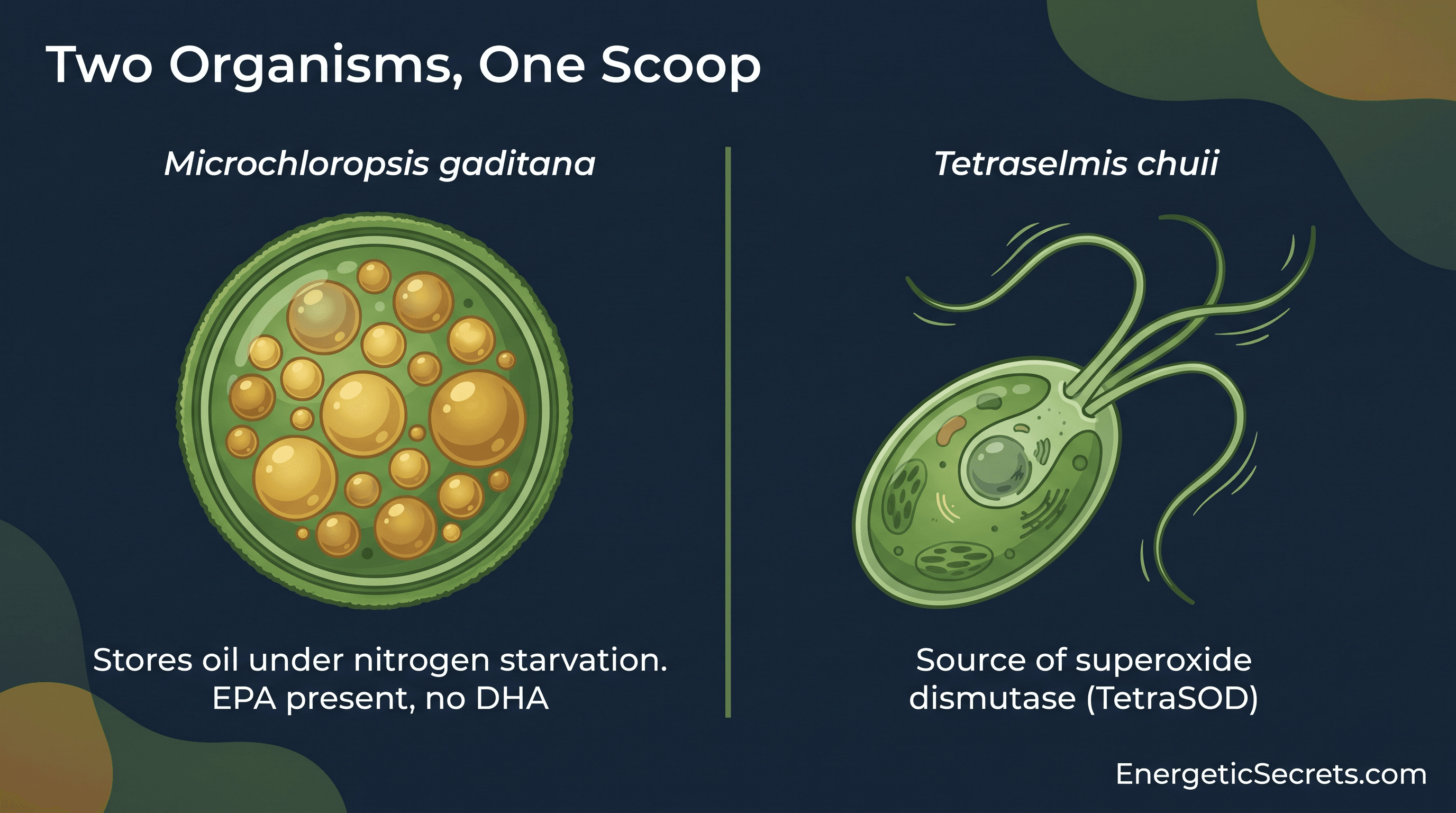
Part 1 followed René Quinton's seawater from a reported dog experiment to the modern trials, and it promised one organism in particular. That organism is Microchloropsis gaditana, a single-celled alga that drifts in the sea and is also cultivated in tanks originally for shellfish cultivation before it's discovery as a potent nutritional food for human consumption. I will call it gaditana from here on (a name I will untangle shortly).
This strain of phytoplankton came into my world after seeing the story of Tom Harper, a man who was cultivating phytoplankton for shellfish farming. When he got cancer he intuitively started scooping phytoplankton out of the cultivation vats and something rather magic happened. This started a decades long refinement of the cultivation process this time for human consumption.
The Gaditana strain became a focus for selective breeding due to it's strong breeding characteristics and potent therapeutic benefits, quick response to nutrients and fast maturity. You'll see later on in this article how packed with nutrients this is and why this strain has proven to be so potent and effective even at such small doses.
A note on where I am coming from, because it changes how you read everything after it. I am not a neutral reviewer of these algae. I have taken them for about ten years, I have shared them with people who came back with good reports on acute problems, and my cat has eaten them for years and is thriving. None of that is a clinical trial, and I will not dress it up as one. It is the lived record, and where the published record is thin and the lived record is not, I will say so plainly. That contrast is the honesty of this piece, and it points toward the product rather than away from it.
The human side is thinner than the animal side, and I will say exactly how thin where it comes up, because hiding it would not do you any favors. But “thin” is not the same word as “negative.” The genus has one genuine double-blind, placebo-controlled human trial. It tested an extracted oil from a Nannochloropsis alga whose species the paper never names, and two of its four authors work for the oil's maker. No human trial exists on gaditana itself (a PubMed search on November 2, 2026 returned no published human trial of Nannochloropsis gaditana supplementation). What that means is not that the alga failed anything. It means this organism is early in its human history, the way a good ingredient is before the trials catch up to the animal and cell work that already exists. That work is substantial and consistent, and the human work is early and small. That is the normal position of a real ingredient, not a warning label.
The second ingredient in one of the two products is a different alga, Tetraselmis chuii. It is a second well-studied organism with its own record, and it gets its own section near the end, kept separate so no result is ever blurred.
What the cell is
Gaditana belongs to the eustigmatophytes, a less familiar group of single-celled algae. Until 2015 it was Nannochloropsis gaditana, a name L. M. Lubián gave it in 1982 (1). This is the name I always knew it by. The epithet comes from Gades, the Roman name for Cádiz (I can't confirm the exact wording of the original description). In 2015 Fawley, Jameson and Fawley moved it into a new genus, Microchloropsis (2). The type species of that genus is Microchloropsis salina, so gaditana is a member of the genus and not its namesake.
That leaves a search problem. Nearly all the composition and fish-farming work predates 2015 and sits under the old name (which is how a reader ends up thinking there is less research than there is). I treat the two names as one organism and say which name a paper used when it matters.
Why running out of nitrogen turns the cell into an oil tank
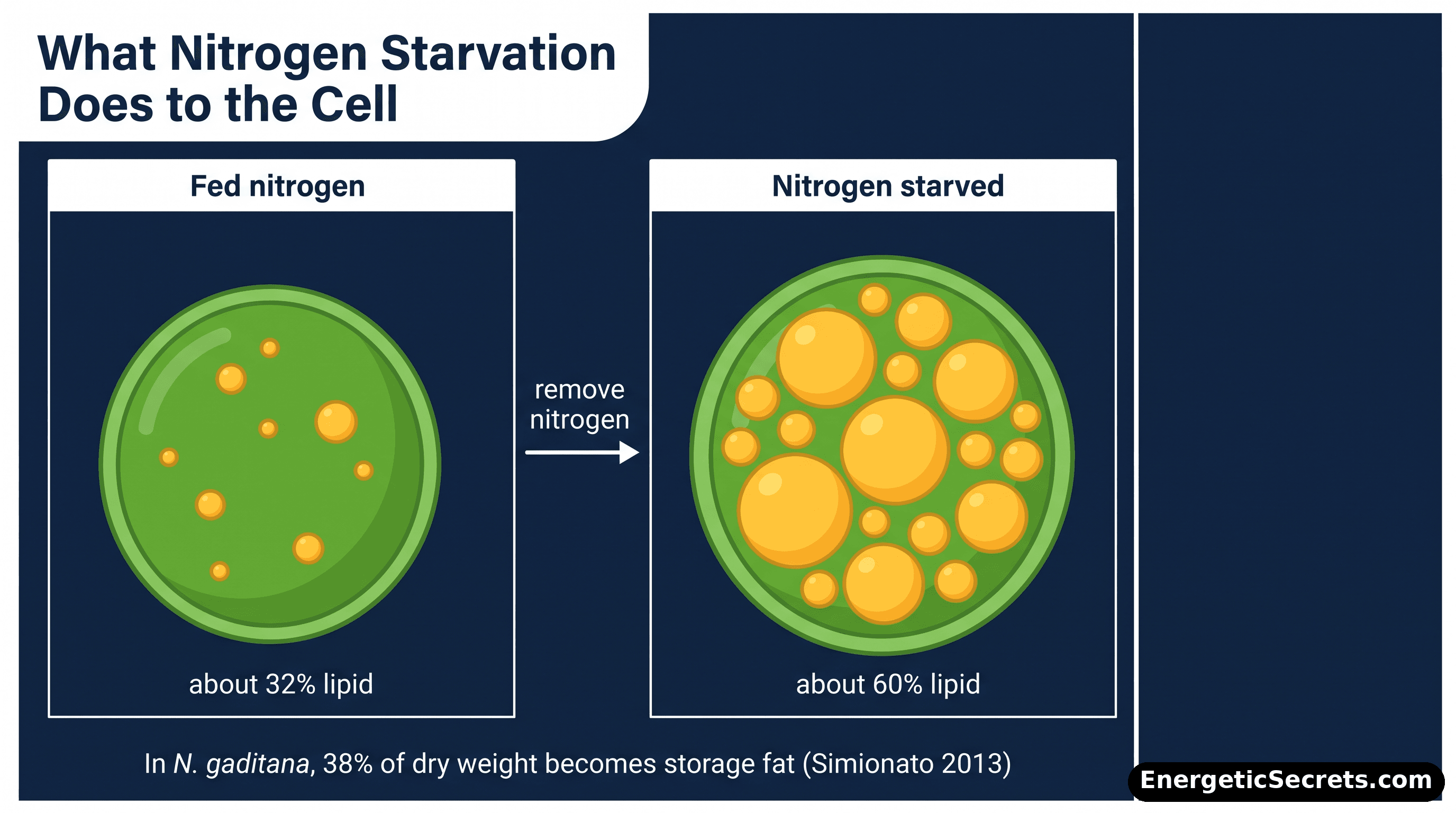
Fed plenty of nitrogen, the nutrient it needs to build protein, this cell grows and divides. Take the nitrogen away and it stops dividing and packs away fat, which makes it oleaginous, meaning oil-storing. A Nannochloropsis strain studied by Rodolfi and colleagues in 2009 held about thirty-two percent lipid (fat, in plain words) by dry weight when well fed and reached sixty percent after nitrogen starvation (3). That strain is a Nannochloropsis species the paper does not call gaditana, so I take it as the picture for the genus, and like every composition figure here it belongs to one strain under one set of culture conditions.
The gaditana-specific work came from Simionato and colleagues in 2013 (4). They starved Nannochloropsis gaditana of nitrogen and watched it build triacylglycerol from scratch (the storage form of fat, the same family of molecule that sits in your own fat cells). About thirty-eight percent of the dry weight ended up as that storage fat. The oil is a survival reserve packed away when growth is blocked, and a grower can switch it on by controlling the feed.
An omega-3 profile with a gap in it, and a pigment fingerprint
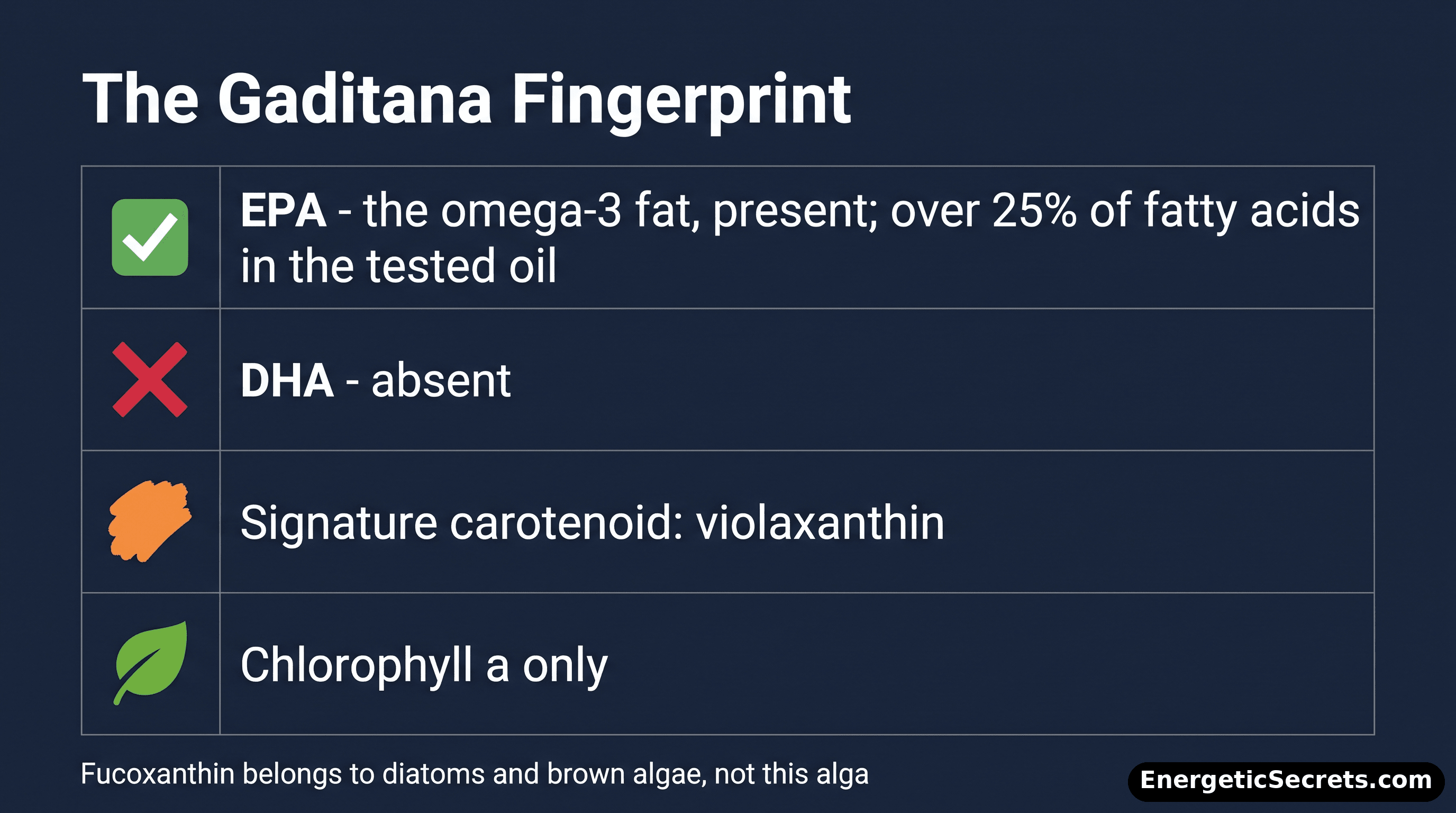
The stored fat leans toward EPA (eicosapentaenoic acid, the omega-3 fat people associate with fish oil), and a 2025 review by Navalho and colleagues describes the genus as accumulating polyunsaturated fats, especially EPA (5). The oil in the one human trial carried more than twenty-five percent EPA among its fatty acids and no DHA, according to Rao and colleagues in 2020 (6). DHA (docosahexaenoic acid, EPA's usual partner in fish oil) is missing, so this is a real difference from fish oil.
The pigments work as a fingerprint anyone can check. This alga makes chlorophyll a and no other chlorophyll, which is typical of its group. Its signature yellow-orange pigment is violaxanthin, a xanthophyll (one of the carotenoids, the family that colors carrots and egg yolks).
Lima and colleagues in 2021 grew Nannochloropsis gaditana under flashing LED light and found lutein, beta-carotene, violaxanthin and neoxanthin (7). Culetu and colleagues in 2026 compared five microalgae and picked out violaxanthin as the signature of Nannochloropsis oculata, a relative (8). Cecchin and colleagues in 2022 found that the original gaditana strain makes canthaxanthin, with only traces of astaxanthin (9).
One pigment does not belong on that list, and that is fucoxanthin. It is the golden-brown pigment of diatoms and brown seaweeds, and Culetu's comparison found it in the diatom Phaeodactylum tricornutum (8). A seller who lists fucoxanthin for this alga has borrowed another organism's chemistry (a half-minute search will show it).
Composition is where a label usually goes quiet, so here are real numbers. Nacer and colleagues analyzed gaditana biomass in 2020 and reported about 28 grams of protein, 18.4 grams of fat and 45 grams of carbohydrate per 100 grams of dry matter (11). Those numbers come from one strain grown under one set of culture conditions, and the nitrogen section showed how far culture conditions can move a composition, so read it as one measured example and not a universal profile. That same group also ran the diabetes study further down, which is where the composition stops being a table and starts doing something.
Vitamins need a correction rather than a number. Ljubic and colleagues in 2021 showed that ultraviolet B light raises vitamin D3 in selected microalgae, but the Nannochloropsis work underneath that finding used Nannochloropsis oceanica, a different species (10). The gaditana vitamin D3 result is real, and it comes from salmon, later in this article.
The wall between the powder and the gut
The cell wall of gaditana is real, and it is a serious piece of engineering. Scholz and colleagues took apart the wall of the reference strain in 2014 and found two layers (12). The inner wall is cellulose (the tough fiber that stiffens plant stems) and makes up roughly three quarters of the wall's mass. Over it sits algaenan, a waxy polymer with cross-linked chains. That structure is tough enough that the authors describe it as a barrier to extracting oil from the cell industrially, which is a statement about processing, not about digestion. I want to keep those two apart, because the supplement shelf runs them together.
Now the part the shelf gets wrong in both directions. Nobody has put gaditana itself through a human digestion model, and I looked (a PubMed search on November 2, 2026 came up empty), so anything either way is an inference. The closest measurements come from its close relative Nannochloropsis oculata, and they point one way. Cavonius and colleagues ran intact cells through a standard laboratory digestion model in 2016 and reported that neither the protein nor the lipid inside them was reachable by the digestive enzymes they used (13). Wild and colleagues, measuring sixteen commercial microalgae products in 2018, got a crude protein digestibility of about 54 percent for non-disrupted Nannochloropsis against 84 percent for cell-disrupted Chlorella (14). Those two numbers are the reason the breaking step exists, and it is also why the drying method matters more than the wall does. That is a sister species in a dish, and it is the best evidence that exists rather than the last word.
So what happens to the powder itself? Here I can only tell you what is known and what is claimed. The freeze-drying step is what opens the cell. It leaves microfractures across the cell wall, so the nutrients inside are reachable without a separate breaking step, and that is the mechanism by which the powder is absorbed. What I can tell you is what ten years of taking it has done for me and for the people and animals I have shared it with, which is a great deal. Both belong here: the measurement nobody has made, and the result I have lived with. If the wall were as absolute a barrier as the shelf copy implies, that lived record would not look the way it does.
How a culture becomes a powder
None of this is wild harvest. Rodolfi's group grew their strain in closed flat-panel photobioreactors (transparent tanks that let sunlight in and keep contamination out), twenty liters indoors and 110 liters outdoors (3). They projected more than ninety kilograms of oil per hectare per day (a hectare is about two and a half acres) in a two-phase process: grow fast with plenty of nitrogen, then starve the culture so the cells load up with oil. It was a pilot on one strain, so I read it as proof the oil switch scales and nothing more.
Navalho and colleagues write that the genus is "mainly marketed as a feed ingredient in aquaculture" (5), so the human supplement is a side street off the main road but it has been refined in the last decade and is now cultivated in a pristine facility in Spain for human consumption.
What fish, sheep and cells in dishes have shown
Most of the real evidence on this alga comes from animals. Ferreira and colleagues in 2009 enriched rotifers (tiny animals that serve as the first live food for fish larvae) with Nannochloropsis gaditana, and the rotifers roughly doubled their dry weight, protein, fat and carbohydrate and carried more EPA up the food chain (15). Díaz and colleagues in 2025 fed Atlantic salmon spray-dried Microchloropsis gaditana for forty-nine days (16). Fillet EPA plus DPA (a second omega-3 fat) rose twenty-three percent, fillet vitamin D3 rose 106 percent, and serum activity against Piscirickettsia salmonis, a bacterial pathogen of farmed salmon, rose about eighty-six percent. That is the gaditana vitamin D3 result I promised, in fish.
Two shorter studies. Mavrommatis and colleagues in 2026 fed lactating ewes the marine microorganism Schizochytrium, alone or with Nannochloropsis gaditana, and the milk carried more EPA without losing yield (17). Rohra-Benítez and colleagues in 2026 fed gilthead seabream a blend of Microchloropsis gaditana and spirulina, and the hydrolyzed form (broken down in a processing step) shifted the gut microbes and lowered two inflammation-related metabolites (18). That was a blend, so I cannot credit gaditana alone.
One seabass study is easy to misfile, and I leave it out on purpose. Mota and colleagues in 2023 fed European seabass a commercial blend that included Nannochloropsis oceanica, a different species, with Chlorella and seaweeds (19). It cannot count as gaditana evidence. In cells rather than animals, González-Arceo and colleagues in 2025 treated mouse fat-cell precursors (a standard lab line called 3T3-L1) with a protein-rich extract of Microchloropsis gaditana (20). Maturing cells stored less triglyceride and their development into fat cells was suppressed, though mature fat cells did not respond. Researchers call that anti-adipogenic. It is a dish result, and I draw no conclusion for a person from it.
More from rats, and more cells in dishes
The strongest extra gaditana evidence is a rat study, and the mechanism comes first. High blood sugar tends to bring inflammation and oxidative stress (damage from reactive oxygen, which cells counter with defensive enzymes). Nacer and colleagues made male Wistar rats diabetic with streptozotocin (a drug that destroys insulin-producing cells) and fed them a diet that was 10 percent gaditana for two months (11). Against untreated diabetic rats, the gaditana-fed rats had blood glucose of 2.44 grams per liter instead of 4.41, HbA1c (glycated hemoglobin, a measure of average blood sugar) of 9.6 percent instead of 10.7, triglycerides of 1.94 instead of 2.28 grams per liter, and cholesterol of 2.02 instead of 2.43. TNF-α and IL-6 (inflammatory signaling proteins) were significantly lower. In liver tissue, MDA (a breakdown product of oxidized fat) fell from 3.30 to 2.15 micromoles per gram, while catalase rose from 46.53 to 57.26 units per gram, superoxide dismutase from 1.61 to 2.37 and glutathione from 2.56 to 3.56. Liver and kidney markers moved toward the healthy rats' values.
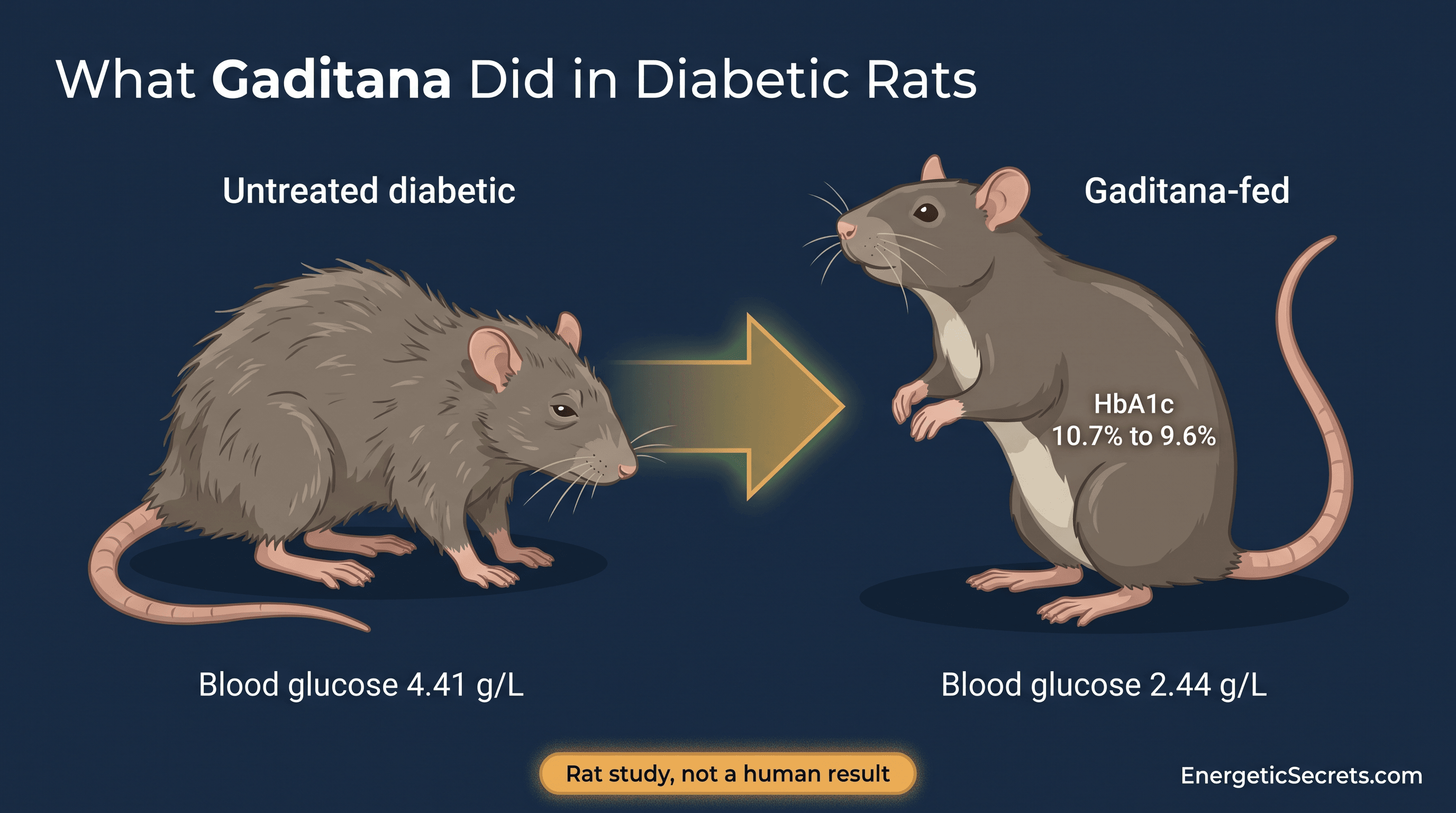
Now the limits. The treated rats were still far from healthy: glucose of 2.44 against 1.17 in healthy controls, and HbA1c of 9.6 percent against 4.4 (11). This is one rat study, one strain grown in several closed photobioreactors at one site, no human data. A diet that is a tenth algae is not a scoop, and I draw no conclusion about diabetes in a person from it but would say considering how damaging streptozotocin is to these rats any improvement in these markers is still impressive.
Martínez and colleagues in 2022 fed rats a diet that was 20 percent gaditana and also tested extracts from biomass with treated or untreated cell walls (21). Liver antioxidant activity rose, and hepatic fat content fell significantly while the change in plasma triglycerides did not reach significance; the extracts also slowed cancer cell growth in a dish.
Five more papers are cell studies only, reported as laboratory findings and nothing more. Three used cancer cell lines. Carrasco-Reinado and colleagues in 2021 found a gaditana compound that slowed Caco-2 colon and HepG2 liver cancer cells (22). Ávila-Román and colleagues in 2016 found that 15-HEPE, an oxylipin (an oxidized fat molecule) from gaditana, was toxic to UACC-62 melanoma and HT-29 colon cells (23). While that was one isolated molecule, not whole algae, a molecule that is toxic to cancer cell lines is a positive attribute to be sure. Additionally Castejón and Marko in 2022 found a lipid extract toxic to HCT-116 colon cancer cells while sparing nontumorigenic HCEC-1CT cells (24).
The other two are not about cancer. González-Arceo and colleagues in 2023 showed that protein-rich extracts of three algae prevented palmitic-acid-induced triglyceride buildup in AML-12 liver cells, gaditana the most effective (25); that is a different cell model from the 2025 fat-cell paper above. Letsiou and colleagues in 2017 found that a gaditana extract protected human skin cells from hydrogen peroxide stress and raised the antioxidant genes GPX1 and SOD1, alongside changes in other stress-response genes (26). Some may weigh that one lower because PubMed does not index it, and two authors work for Fitoplancton Marino, the maker of TetraSOD but having seen the benefits of these products for the last decade it comes across as just another rather simple petri dish study.
The one human trial, and whose it is
Rao and colleagues in 2020 ran a double-blind, randomized, placebo-controlled trial (neither participants nor staff knew who got the real oil) in 120 healthy adults for twelve weeks at one gram a day (6). The product was AlmegaPL, a polar-lipid-rich oil from a Nannochloropsis alga, with EPA above twenty-five percent of its fatty acids and no DHA. The Omega-3 Index (the share of EPA and DHA in red blood cell membranes) rose from 4.96 to 5.75, and blood EPA rose from 0.82 percent to 1.27 percent. VLDL cholesterol (the particles that carry fat through the blood) fell twenty-five percent, which drove a drop in total cholesterol against placebo, with no rise in LDL.
To be clear, this was an oil, not a powder of whole cells. The paper names only the genus, so I cannot tell you it was gaditana. Two of the four authors work for Qualitas Health, the company behind the oil. An industry-sponsored trial is a disclosure, not a scandal. The trial supports one narrow statement: an extracted Nannochloropsis oil raised blood EPA in healthy adults over three months. It does not name gaditana and it did not test the powder, so I treat it as the nearest published neighbor rather than proof of the powder. The absence of a gaditana human trial is a fact about where the research is, not a verdict on the alga.
A second organism: Tetraselmis chuii and our TetraSOD
Everything above is about gaditana. This section is about the second organism in the Plus scoop, and it deserves to be met on its own terms. TetraSOD is a patented growth preservation process for a freeze-dried biomass of Tetraselmis chuii, a cultivated marine microalga in a different genus, and its claim to fame is superoxide dismutase, an enzyme that disarms superoxide, a reactive form of oxygen. It's important to understand that the TetraSOD branding is a specific process that boosts the SOD production before harvest and that's not the same as what you'd get from another brand of Tetraselmis chuii.
The 25 milligrams in our TetraSOD product is this organism, and the rest of the serving is gaditana. Having taken the TetraSOD product on it's own for years (in previous formulations) I consider it a mitochondrial powerhouse but that's just my own personal experience. TetraSOD takes longer to grow and the yield is much smaller which is why it costs so much but it is very unique in it's boosting of Superoxide Dismutase, unmatched really by any other product.
The safety work is the best-built piece here, which is exactly where you want the strongest data to sit. Mantecón and colleagues in 2019 fed rats the freeze-dried alga for 90 days under OECD guideline 408 (the standard repeated-dose toxicity protocol) at up to 2,500 milligrams per kilogram per day and saw no treatment-related deaths or changes in blood, organs or tissue (27). That is a clean safety finding, and it says nothing about benefit, which is as it should be; its job is to establish the no-observed-effect level, and it does. Its lead author works for Fitoplancton Marino, the maker, which I note as transparency rather than as a strike against the data.
The antioxidant case is where the mechanism lives. Gil-Cardoso and colleagues in 2022 fed rats a cafeteria diet (a junk-food diet that induces metabolic syndrome) for eight weeks with the alga at 0.17 to 17 milligrams per kilogram per day (28). Liver glutathione peroxidase and glutathione rose and several plasma markers of oxidation and inflammation shifted. That is the superoxide dismutase story in action: the alga appears to support the body's own antioxidant defenses in an animal model. It is an animal study, and four of its seven authors work for Fitoplancton Marino, which I note and move on.
The human work comes from one group studying Oceanix, a Lonza product made from this same species, and the papers carry a Lonza conflict of interest, which I note up front and then read the results on their own. All three name the species, though the abstracts sometimes withhold it. Sharp and colleagues in 2020 gave people 25 milligrams a day of Oceanix for 14 days (29). The paper identifies the alga as Tetraselmis chuii (marketed as Oceanix, or OCX), and it has a published erratum (Nutrients 2022;14(3):408). After cross-training, the Oceanix group kept squat-jump power and isometric strength better than placebo and had lower creatine kinase (CK, a blood marker of muscle damage). Two more papers followed: Sharp and colleagues in 2021 in Physical Activity and Nutrition writes “Oceanix®, Tetraselmis chuii” (30) and followed 22 people, in whom placebo takers lost isometric rate of force development (how fast you can build force) and salivary IgA (an immune marker) while Oceanix takers did not; the third, in the International Journal of Sports Medicine, names Tetraselmis chuii (Oceanix) and reported better perceived recovery after five weeks of deliberate overreaching (31). Taken together, that is a small but consistent human signal for exercise recovery. One honest caveat: Oceanix is Lonza's preparation and TetraSOD is Fitoplancton Marino's, and I found nothing showing the two match in potency or composition, so the results transfer in kind, not in dose.
Toro and colleagues in 2020 gave 32 amateur soccer players 25 milligrams of TetraSOD a day for thirty days, double-blind and against a placebo group taking 200 milligrams of lactose powder (32). Heart rate fell, and oxygen pulse, VO2max (the top rate at which the body can use oxygen) and hemoglobin all rose. That is a clean result on a small daily dose: a measured improvement in aerobic and hematological markers over a month, with no negative effects reported and every biochemical value staying inside normal range. The algae came from Fitoplancton Marino, the maker.
The most striking result is the semen trial, and it comes with the caveat that matters most. Corral and colleagues in 2023 gave 40 men with idiopathic infertility 25 or 250 milligrams a day of TetraSOD for 90 days (33). At three months, the 250 milligram arm finished with a semen volume of 3.09 milliliters against 2.45 in the 25 milligram arm, a sperm concentration of 17.16 million per milliliter against 11.63, a total sperm number of 52.75 million against 28.17, and progressive motility of 32.85 percent against 26.10. The paper's percentage increases of 34.93, 86.16, 137.6 and 25.86 percent are that arm's changes versus its own starting values, not the gap between the two arms, and the share of normally shaped sperm did not change.
While one can say there is no placebo group in this semen study, and that is true, the participant's sperm were tested at the beginning before the TetraSOD intervention. The paper also lists that as its own first limitation, and it makes the result promising rather than proven: both arms got the active ingredient, so the size of the improvement could be inflated by chance or time. The abstract says double-blind while the methods say single-blind, there were 20 men per arm, PubMed does not index this article, and the funder and four authors are the manufacturer. None of that makes the numbers fake. It makes them a pilot, and a pilot worth repeating at the 250 milligram dose, which is ten times the level of TetraSOD in one serving of our product.
The same freeze-drying step applies to the TetraSOD biomass, so the cell wall is microfractured here too and no separate breaking step is needed. That is the mechanism the wall section describes, and it applies to both organisms in the scoop.
So this section rests on a clean 90-day rat safety study, animal data on antioxidant defenses, small but consistent exercise-recovery studies on a Lonza product made from the same species, a soccer study, and a semen pilot whose most striking result is also its least controlled. That is a promising ingredient with a few known flaws: real superoxide dismutase biology, early human work, and a few papers whose flaws a careful reader should know. Nothing in it says anything negative about gaditana, and nothing in the gaditana sections is about it. Two distinct organisms, both showing some early positive evidence in studies, while anecdotal results have stacked up for the last decade.
Why take Marine Phytoplankton?
In closing, the picture is a good one. Gaditana's mechanism holds up: a cell that stores oil when starved of nitrogen, an EPA-heavy fat profile without DHA, a pigment set anchored by violaxanthin, and a wall between the powder and the gut. The cultivation record is real. The animal and cell record is substantial and consistent, from diabetic rats to fish to dish studies on liver, fat, skin and cancer cells, all of it laboratory findings rather than treatments. The human record is early, which is the normal state of a good ingredient before the trials catch up. And next to all of it sits the thing no citation quite captures: ten years of taking it myself, in my own body and in the lives of people and animals I care about (my cat, most notably), with results that keep me taking it.
The TetraSOD is a second organism with real superoxide dismutase biology, a clean safety record and genuinely promising early human work, a few papers shy of conclusive but none of it discouraging. Two cultivated algae, each with its own evidence, sharing a scoop the way they share a grower. That is the product, and I have no hesitation recommending that the people I care about look at it.
Which Strain Should You Get?
Two products come out of this alga. LiveMineral Gaditana is Microchloropsis gaditana on its own, one strain, nothing added. TetraSOD Plus Gaditana is the same gaditana with 25 milligrams of TetraSOD per serving, the Tetraselmis chuii ingredient covered above. Both are cultivated in Spain and processed in the United States. If I was in a dire health situation where I needed fast results, I'd jump right to the TetraSOD product but the Gaditana is my solid base that won't let you down.
LiveMineral.com has both: LiveMineral Gaditana and TetraSOD Plus Gaditana. For the introduction, use code LM-PHYTO15 for 15% off at LiveMineral.com, and the 30-day money-back guarantee stands behind it.
Disclaimer: I am not a health professional of any kind and make no medical claims. I am just a researcher who likes to dig deep on effective methods to keep them from being lost to the dust bin of history. And I like to write about what I learn. So please do your own research. Nothing in this article should be considered medical advice. None of the statements have been evaluated by the FDA. Not intended to diagnose, treat, cure or prevent any disease. If you have a medical condition seek professional help.
References
1. Lubián LM. Nannochloropsis gaditana spec. nov., una nueva Eustigmatophyceae marina. Lazaroa. 1982;4:287–293. revistas.ucm.es.
2. Fawley MW, Jameson I, Fawley KP. The phylogeny of the genus Nannochloropsis (Monodopsidaceae, Eustigmatophyceae), with descriptions of N. australis sp. nov. and Microchloropsis gen. nov. Phycologia. 2015;54(5):545–552. doi:10.2216/15-60.1.
3. Rodolfi L, Chini Zittelli G, Bassi N, Padovani G, Biondi N, Bonini G, Tredici MR. Microalgae for oil: strain selection, induction of lipid synthesis and outdoor mass cultivation in a low-cost photobioreactor. Biotechnol Bioeng. 2009;102(1):100–112. doi:10.1002/bit.22033. PMID 18683258.
4. Simionato D, Block MA, La Rocca N, Jouhet J, Maréchal E, Finazzi G, Morosinotto T. The response of Nannochloropsis gaditana to nitrogen starvation includes de novo biosynthesis of triacylglycerols, a decrease of chloroplast galactolipids, and reorganization of the photosynthetic apparatus. Eukaryot Cell. 2013;12(5):665–676. doi:10.1128/ec.00363-12. PMID 23457191.
5. Navalho S, Ferrer-Ledo N, Barbosa MJ, Varela J. Nannochloropsis Lipids and Polyunsaturated Fatty Acids: Potential Applications and Strain Improvement. Mar Drugs. 2025;23(3):128. doi:10.3390/md23030128. PMID 40137314.
6. Rao A, Briskey D, Nalley JO, Ganuza E. Omega-3 Eicosapentaenoic Acid (EPA) Rich Extract from the Microalga Nannochloropsis Decreases Cholesterol in Healthy Individuals: A Double-Blind, Randomized, Placebo-Controlled, Three-Month Supplementation Study. Nutrients. 2020;12(6):1869. doi:10.3390/nu12061869. PMID 32585854.
7. Lima S, Schulze PSC, Schüler LM, Rautenberger R, Morales-Sánchez D, Santos TF, Pereira H, Varela JCS, Scargiali F, Wijffels RH, Kiron V. Flashing light emitting diodes (LEDs) induce proteins, polyunsaturated fatty acids and pigments in three microalgae. J Biotechnol. 2021;325:15–24. doi:10.1016/j.jbiotec.2020.11.019. PMID 33245925.
8. Culetu A, Kreische M, Schweikert T, Henze A, Sagu ST. Unveiling the bioactive potential of microalgae: Integrative analysis of nutritional composition and peptidomic signatures. Food Chem. 2026;506:148081. doi:10.1016/j.foodchem.2026.148081. PMID 41616454.
9. Cecchin M, Cazzaniga S, Martini F, Paltrinieri S, Bossi S, Maffei ME, Ballottari M. Astaxanthin and eicosapentaenoic acid production by S4, a new mutant strain of Nannochloropsis gaditana. Microb Cell Fact. 2022;21(1):117. doi:10.1186/s12934-022-01847-9. PMID 35710482.
10. Ljubic A, Thulesen ET, Jacobsen C, Jakobsen J. UVB exposure stimulates production of vitamin D3 in selected microalgae. Algal Research. 2021;59:102472. doi:10.1016/j.algal.2021.102472.
11. Nacer W, Baba Ahmed FZ, Merzouk H, Benyagoub O, Bouanane S. Evaluation of the anti-inflammatory and antioxidant effects of the microalgae Nannochloropsis gaditana in streptozotocin-induced diabetic rats. J Diabetes Metab Disord. 2020;19(2):1483–1490. doi:10.1007/s40200-020-00681-3. PMID 33553035.
12. Scholz MJ, Weiss TL, Jinkerson RE, Jing J, Roth R, Goodenough U, Posewitz MC, Gerken HG. Ultrastructure and composition of the Nannochloropsis gaditana cell wall. Eukaryot Cell. 2014;13(11):1450–1464. doi:10.1128/ec.00183-14. PMID 25239976.
13. Cavonius LR, Albers E, Undeland I. In vitro bioaccessibility of proteins and lipids of pH-shift processed Nannochloropsis oculata microalga. Food Funct. 2016;7(4):2016–2024. doi:10.1039/c5fo01144b. PMID 27045666.
14. Wild KJ, Steingaß H, Rodehutscord M. Variability in nutrient composition and in vitro crude protein digestibility of 16 microalgae products. J Anim Physiol Anim Nutr. 2018;102(5):1306–1319. doi:10.1111/jpn.12953. PMID 29981178.
15. Ferreira M, Coutinho P, Seixas P, Fábregas J, Otero A. Enriching rotifers with "premium" microalgae. Nannochloropsis gaditana. Mar Biotechnol (NY). 2009;11(5):585–595. doi:10.1007/s10126-008-9174-x. PMID 19153793.
16. Díaz N, Muñoz S, Medina A, Riquelme C, Lozano-Muñoz I. Microchloropsis gaditana as a Natural Antimicrobial with a One Health Approach to Food Safety in Farmed Salmon. Life (Basel). 2025;15(3):455. doi:10.3390/life15030455. PMID 40141798.
17. Mavrommatis A, Correddu F, Kyriakaki P, Satolias FF, Nudda A, Tsiplakou E. Effects of dietary Schizochytrium spp. alone or combined with Nannochloropsis gaditana on milk fatty acid profile and oxidative status in lactating ewes. J Anim Sci. 2026;104:skag256. doi:10.1093/jas/skag256. PMID 42606591.
18. Rohra-Benítez S, García-Márquez J, Bautista-Moreno R, Vallejo F, Sáez-Casado MI, Martos-Sitcha JA, Moriñigo MÁ, Tapia-Paniagua ST. The diet supplemented with raw and hydrolyzed Microchloropsis gaditana and Arthrospira platensis blend modulates intestinal microbiota and metabolomic profiles in Sparus aurata. Fish Physiol Biochem. 2026;52(5):168. doi:10.1007/s10695-026-01791-0. PMID 42734687.
19. Mota CSC, Pinto O, Sá T, Ferreira M, Delerue-Matos C, Cabrita ARJ, Almeida A, Abreu H, Silva J, Fonseca AJM, Valente LMP, Maia MRG. A commercial blend of macroalgae and microalgae promotes digestibility, growth performance, and muscle nutritional value of European seabass (Dicentrarchus labrax L.) juveniles. Front Nutr. 2023;10:1165343. doi:10.3389/fnut.2023.1165343. PMID 37139456.
20. González-Arceo M, Aguirre L, Ibarruri J, Cebrián M, Martín MA, Portillo MP, Gómez-Zorita S. Effects of Chlorella vulgaris, Microchloropsis Gaditana and Gracilaria vermiculophylla algae extracts on maturing and mature 3T3-L1 adipocytes. Sci Rep. 2025;15(1):32891. doi:10.1038/s41598-025-10202-y. PMID 40998879.
21. Martínez R, García-Beltrán A, Kapravelou G, et al. In Vivo Nutritional Assessment of the Microalga Nannochloropsis gaditana and Evaluation of the Antioxidant and Antiproliferative Capacity of Its Functional Extracts. Mar Drugs. 2022;20(5):318. doi:10.3390/md20050318. PMID 35621969.
22. Carrasco-Reinado R, Escobar-Niño A, Fajardo C, et al. Development of New Antiproliferative Compound against Human Tumor Cells from the Marine Microalgae Nannochloropsis gaditana by Applied Proteomics. Int J Mol Sci. 2021;22(1):96. doi:10.3390/ijms22010096. PMID 33374179.
23. Ávila-Román J, Talero E, de los Reyes C, Zubía E, Motilva V, García-Mauriño S. Cytotoxic Activity of Microalgal-derived Oxylipins against Human Cancer Cell Lines and their Impact on ATP Levels. Nat Prod Commun. 2016;11(12):1871–1875. doi:10.1177/1934578X1601101225. PMID 30508355.
24. Castejón N, Marko D. Fatty Acid Composition and Cytotoxic Activity of Lipid Extracts from Nannochloropsis gaditana Produced by Green Technologies. Molecules. 2022;27(12):3710. doi:10.3390/molecules27123710. PMID 35744834.
25. González-Arceo M, Trepiana J, Aguirre L, et al. Anti-Steatotic Effects of Chlorella vulgaris, Nannochloropsis gaditana and Gracilaria vermiculophylla Algae Extracts in AML-12 Hepatocytes. Nutrients. 2023;15(8):1960. doi:10.3390/nu15081960. PMID 37111177.
26. Letsiou S, Kalliampakou K, Gardikis K, et al. Skin Protective Effects of Nannochloropsis gaditana Extract on H2O2-Stressed Human Dermal Fibroblasts. Front Mar Sci. 2017;4:221. doi:10.3389/fmars.2017.00221. (Not indexed in PubMed.)
27. Mantecón L, Moyano R, Cameán AM, Jos Á. Safety assessment of a lyophilized biomass of Tetraselmis chuii (TetraSOD®) in a 90-day feeding study. Food Chem Toxicol. 2019;133:110810. doi:10.1016/j.fct.2019.110810. PMID 31505236.
28. Gil-Cardoso K, Del Bas JM, Caimari A, Lama C, Torres S, Mantecón L, Infante C. TetraSOD®, a Unique Marine Microalgae Ingredient, Promotes an Antioxidant and Anti-Inflammatory Status in a Metabolic Syndrome-Induced Model in Rats. Nutrients. 2022;14(19):4028. doi:10.3390/nu14194028. PMID 36235679.
29. Sharp M, Sahin K, Stefan M, Orhan C, Gheith R, Reber D, Sahin N, Tuzcu M, Lowery R, Durkee S, Wilson J. Phytoplankton Supplementation Lowers Muscle Damage and Sustains Performance across Repeated Exercise Bouts in Humans and Improves Antioxidant Capacity in a Mechanistic Animal. Nutrients. 2020;12(7):1990. doi:10.3390/nu12071990. PMID 32635494. Erratum: Nutrients. 2022;14(3):408. doi:10.3390/nu14030408.
30. Sharp M, Wilson J, Stefan M, Gheith R, Lowery R, Ottinger C, Reber D, Orhan C, Sahin N, Tuzcu M, Durkee S, Saiyed Z, Sahin K. Marine Phytoplankton Improves Recovery and Sustains Immune Function in Humans and Lowers Proinflammatory Immunoregulatory Cytokines in a Rat Model. Phys Act Nutr. 2021;25(1):42–55. doi:10.20463/pan.2021.0007. PMID 33887828.
31. Sharp MH, Sahin K, Stefan MW, Gheith RH, Reber DD, Ottinger CR, Orhan C, Tuzcu M, Sahin N, Lowery RP, Durkee S, Wilson JM. Marine Phytoplankton Improves Exercise Recovery in Humans and Activates Repair Mechanisms in Rats. Int J Sports Med. 2021;42(12):1070–1082. doi:10.1055/a-1320-1061. PMID 33352600.
32. Toro V, Siquier-Coll J, Bartolomé I, Robles-Gil MC, Rodrigo J, Maynar-Mariño M. Effects of Tetraselmis chuii Microalgae Supplementation on Ergospirometric, Haematological and Biochemical Parameters in Amateur Soccer Players. Int J Environ Res Public Health. 2020;17(18):6885. doi:10.3390/ijerph17186885. PMID 32967151.
33. Corral JM, Jodar M, Matheu R, González E, Castaño E, Unamunzaga C, Mantecón L, Infante C. Improvement of Semen Quality in Idiopathic Infertile Men by Dietary Supplementation with TetraSOD®: A Pilot Clinical Trial. Biomed J Sci Tech Res. 2023;50(4):41971–41975. doi:10.26717/BJSTR.2023.50.007999. (Not indexed in PubMed.) |


3 Comments
Join the conversation
My husband took phytoplankton for about two years for joint stuff and swore by it. I never noticed a thing when I tried it. Bodies are weird I guess.
No DHA though. If the whole point is omega 3 I'm not sure why I'd swap out fish oil for something that only has half the pair.
The part about fucoxanthin being borrowed from another organism is the most useful thing here. I checked two labels in my cupboard and sure enough one lists it. Going to ask them about that.