
The Ocean's Real Nutrition Was Never the Water |
René Quinton proposed isotonic seawater in place of blood. The claim was rejected, the mineral water went on to four randomized trials, and the missing license says more about the cost of approval than about the water. |
The idea that the sea holds something essential for human health is more than a century old. It begins with a French physiologist named René Quinton, who argued that the ocean was the original environment of life and that its water could, in some form, restore the body. This article is the first in a series on marine phytoplankton and human health. It traces the history of Quinton's seawater extracts, examines what happened to his therapy, and then separates that story from the modern, mechanism-first science of marine phytoplankton and microalgae.
The Sea as the Origin of Life
Quinton was born on December 15, 1866, in Chaumes-en-Brie, France, and died on July 9, 1925, in Paris at the age of 58 (2, 3). His central claim was that life arose in a marine environment and that the internal environment of living cells still resembles diluted seawater. Modern biology partially echoes this framing. The ionic composition of blood plasma does bear a rough resemblance to diluted seawater, and the consensus view is that life began in water.
Quinton took that observation much further than the evidence would support but it's possible he was just ahead of his time as the advanced microscopy of Tissot, who later proved the claims of Béchamp, could have also been echoed in Quinton's seawater premise.
His theory was called the "Loi de constance," or law of constancy. It held that the marine environment of life's origin remained the optimal milieu for living cells, across marine constancy, osmotic constancy, and thermal constancy. He laid this out in a 1904 book, "L'eau de mer, milieu organique," published in Paris by Masson et Cie (1). The book is a genuine historical document, but its scientific content is today considered antiquated. Then again, isn't that how important historical figures are often clouded from our view?
The French national library, which has digitized the volume, describes it as cultural heritage whose views are not valid (1, 3). The publication year itself carries a small inconsistency: the bibliographic record and the library's own catalog say 1904, while the body text of the French Wikipedia entry says 1905. This article uses 1904, the bibliographic record, without treating the year as beyond dispute (3).
The Dog Experiments: Reported, Not Proven
Quinton's best-known animal work is the claim that he removed the totality of a dog's blood and replaced it with sterilized, diluted seawater. According to secondary accounts, the dog developed an infection and fever, then recovered and was reported alive years later. The details conflict between sources. The English Wikipedia entry dates the experiment to 1897 and says the dog recuperated within five days and was still alive five years later (2). A separate account by physician Harriet Hall, writing for Science-Based Medicine, says the dog recovered and by the eighth day had become exaggeratedly exuberant and ran about wildly, and that five years later the dog was still alive and well (4).
I was not able to locate a primary published record of the dog experiment. The citation that Wikipedia relies on points to a page that no longer exists and now redirects to an unrelated gambling site (common among expired domains, so this doesn't indicate a bad citation). The story must therefore be treated as a reported historical anecdote, not established fact. Hall's critique is the correct counterweight. She writes that a huge body of established scientific knowledge would have to be overthrown before we could accept that an animal's entire blood volume could be replaced with saline without death, and that this century-old report does not meet the standards of ordinary peer-reviewed evidence (4). The article does not present seawater as a viable blood substitute, and modern science rejects that idea outright.
Since this sounds like a debunking I'd add that the reputed isotonic seawater based fluid may have simply delivered the required minerals so the dog could regenerate blood to survive. If this were the case it would have been groundbreaking but would also have gone against a pharma dominated medical establishment so there are reasons this type of work would be frowned upon.
The Sérum de Quinton and the Marine Dispensaries
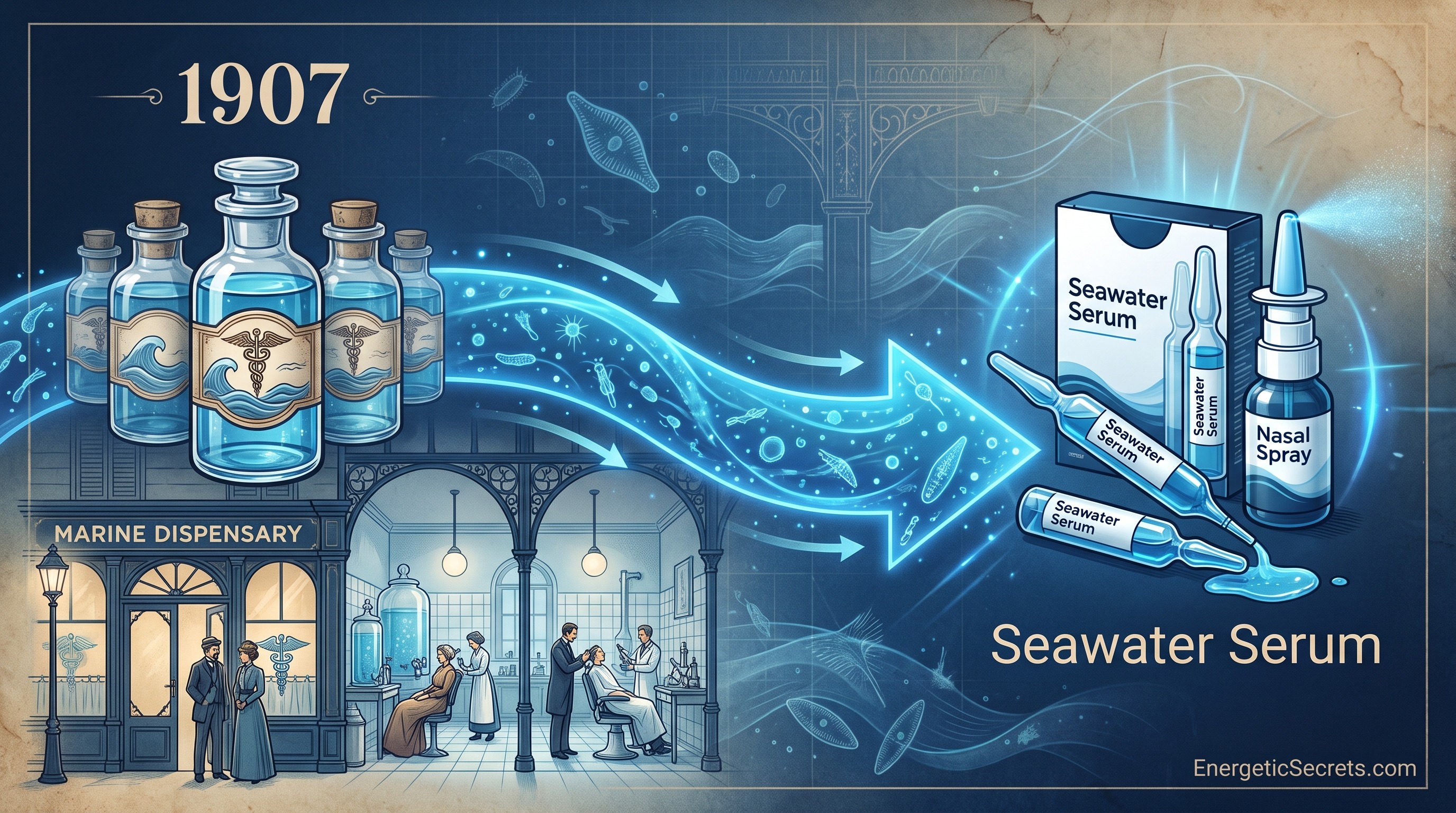
In 1907, Quinton patented the "sérum de Quinton," a seawater preparation harvested from areas of the Atlantic he deemed pure, transported to Paris, sterilized without boiling or chemicals, brought to a specific saline concentration, and stored in vials. He described it as comparable to blood (2). The technical details of the patent come from a Wikipedia summary of the 1932 Vidal dictionary, not from the patent document itself, so they should be considere a secondary description (2).
On March 26, 1907, Quinton opened the first "dispensaire marin," or marine dispensary, in Paris on the rue de l'Arrivée, at his own expense, treating destitute patients free of charge (3). Two years earlier, in June 1905, his work had been presented to the Académie de médecine under a title describing isotonic subcutaneous seawater injections in eighteen cases of tuberculosis (3). The claimed conditions treated, per the 1932 Vidal dictionary, included enteritis, constipation, diarrhea, colitis, newborn gastroenteritis, lactose intolerance, athrepsia, and various skin conditions. It was also presented as a prenatal treatment to prevent tuberculosis, syphilis, and malaria, and to help nausea (2).
A contemporary newspaper, the Hull Daily Mail, reported on July 21, 1908, that the treatments were "very successful and with no side effects" (2). That is a press claim, not clinical evidence, and it should be read as historical perception rather than outcome data, however it does show that the press was not out to debunk this new and innovative practice at the time. The French Wikipedia entry also mentions a figure of 300 injections per day at the dispensaries, but that number is marked as needing a citation and is unverified, so I was unable to verify this number (3).
What Happened to Quinton's Therapy
Quinton's sérum did not survive as medicine. It was removed from the Vidal dictionary, the French pharmaceutical catalog, and is no longer a medicine. Laboratoires Quinton still sells the range, but describing it as personal and hygiene products gets the modern reality wrong. The range is sold today as CE-marked medical devices, food supplements, and cosmetics, which is a different regulatory footing from a medicine (22). Two facts deserve emphasis. None of it is an authorized medicine, and nothing in the range is authorized as an injectable.
An absent drug license is easy to misread as a verdict on efficacy. Selling an injectable requires a marketing authorization, and obtaining one means funding a full clinical development program out of the sponsor's own pocket. That investment only makes sense where the sponsor can hold exclusive rights to the substance and recover the cost through price. Seawater is not a substance anyone can own. Quinton's process carries patents (now long ago expired), but the water itself never did, which leaves the economics inverted: the cheaper and more widely available the material, the less rational it becomes to fund the trials a drug license demands.
So the products are regulated on a different footing, as medical devices, food supplements and cosmetics, and none of those routes requires anyone to adjudicate whether the water works. That is a statement about the cost of the approval pathway, not a finding about seawater. What the trials do show is narrower and more useful than either a license or its absence, and it is set out below.
The products are also broader than the drinkable vials and nasal sprays usually mentioned. It includes isotonic and hypertonic presentations, ophthalmic eye drops, nasal sprays, and oral drinkable forms (22).
The modern production process also answers the obvious question raised by the 1907 patent description above: how do you sterilize seawater without boiling or chemicals? The answer is filtration. The manufacturer describes double cold microfiltration in a clean room, at 0.22 micrometers (a micrometer is one millionth of a meter). That is sterilizing-grade filtration: the pores are small enough to remove microorganisms physically, so no heat and no chemical treatment is needed. Quinton explicitly contrasts this with heat and ultraviolet treatment, which it says are responsible for the irritative and dehydrating effects of other seawater products, and the filtered water is then brought to its final isotonic concentration by blending with spring water (22).
One clarification matters here, because Quinton is so often mentioned in the same breath as phytoplankton. The association comes from the manufacturer, and it concerns where the water comes from rather than what is in the bottle. The company says it harvests from areas "known as phytoplankton vortexes." Its Spanish production page says the harvest zone was chosen because its mineral richness "favors the appearance of phytoplankton and zooplankton," and that this biological richness increases the bioavailability of inorganic nutrients.
The English home page adds that plankton levels "ensure the maximum absorption capacity of these minerals" (22). So the brand's own marketing ties the quality of its water to plankton-rich zones, and that is why the two words travel together. Keep in mind what the 0.22 micrometer filter does: it removes the plankton cells themselves. What ends up in the vial is mineral seawater whose quality the maker attributes to plankton, which is a very different thing from a phytoplankton product. This series will keep that distinction sharp.
So the claim is that the phytoplankton makes the nutrients more bioavailable, presumably bioactivated nutrients the plankton has digested into an activated form. Removal of at least the majority, if not all of the plankton leaving the activated nutrients.
The French Wikipedia entry states plainly that it has never been shown that Quinton marine plasma has any benefit beyond a simple physiological saline solution, and that the therapy now persists mainly in non-conventional medicine despite the absence of scientific proof of effect (3).
This is the honest endpoint of the Quinton story. His "Loi de constance" is a historical theory, not accepted science, and his seawater-as-blood-substitute claim is rejected by modern medicine. What survives is a narrower and more interesting question: does seawater, or the marine environment more broadly, have measurable physiological effects that hold up under modern scrutiny?
The Modern Seawater Science
The peer-reviewed descendants of Quinton's seawater idea concern seawater and deep-sea water, not cultivated phytoplankton. These are mineral concentrates, and they are a distinct evidence thread from the plankton biomass discussed later in this article.
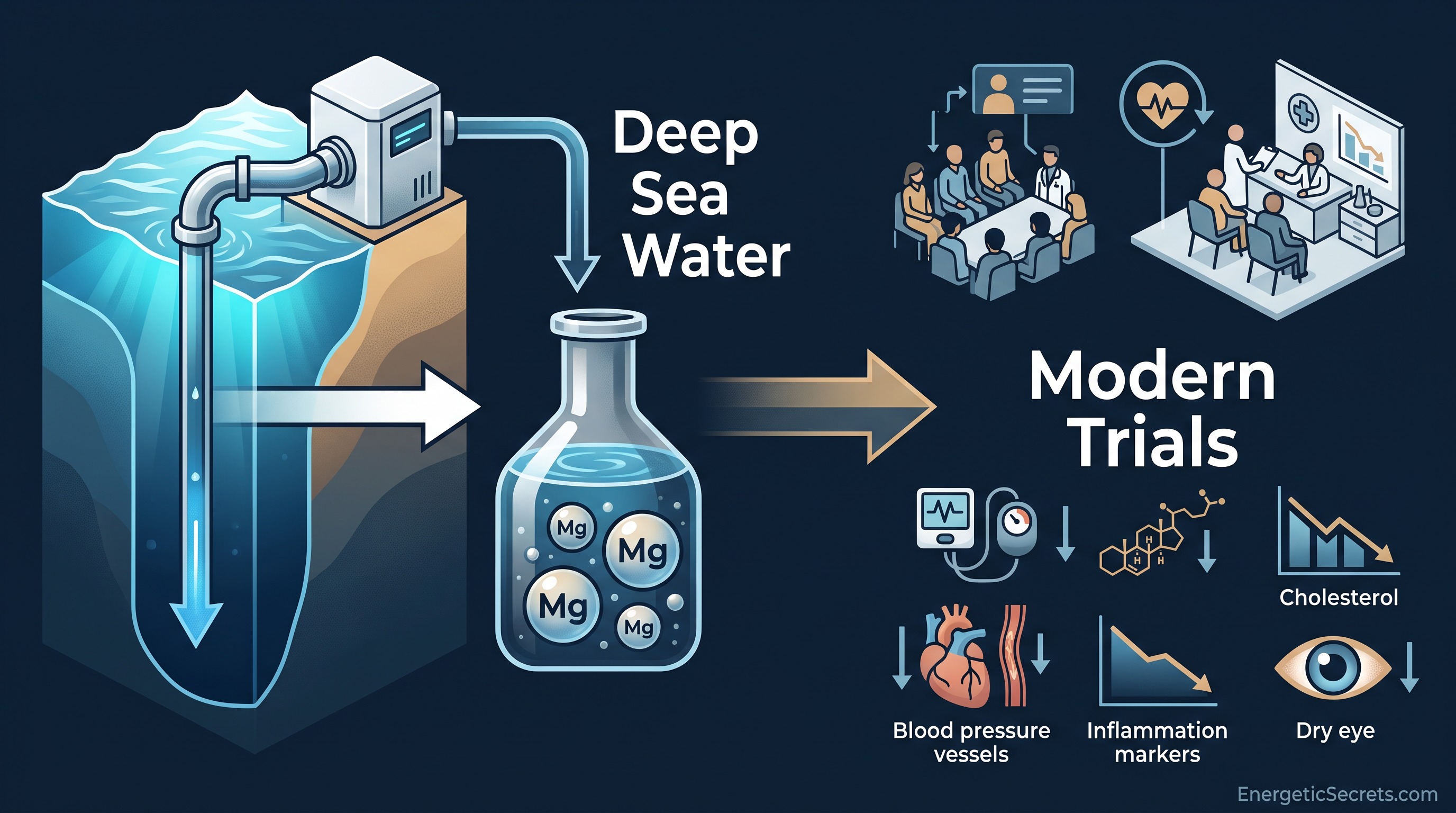
One line of work concerns deep sea water and cardiovascular health. A 2013 study by Sheu and colleagues tested deep sea water from off Hualien County, Taiwan, concentrated to roughly 400,000 milligrams per liter of minerals, with magnesium as the primary ion at about 96,000 milligrams per liter (5). Diluted to 0.1, 1, and 2 times strength, the water decreased systolic and diastolic blood pressure in spontaneously hypertensive rats over eight weeks. The stronger dilutions also suppressed serum cholesterol, reduced liver lipid accumulation, and limited aortic fatty streaks in hypercholesterolemic rabbits, through a pathway involving AMPK stimulation and inhibition of ACC phosphorylation (5). This is deep sea water, a mineral concentrate, and it speaks to the seawater-mineral mechanism rather than to plankton biomass.
A second line concerns saline as a therapy in its own right. A 2012 review by Reeves and colleagues on hypertonic saline in cystic fibrosis describes how saline has mucolytic properties, aids mucociliary clearance, and carries anti-infective and anti-inflammatory effects beyond simple airway hydration (6). This is the modern, evidence-based analogue of "saline as therapy," and it helps explain why saline solutions have physiological effects at all.
As usual the limitation of so called "evidence based science" is the simple fact of typically testing one thing at a time. Clearly salt water from the ocean has a huge plethora of minerals besides sodium chloride but reductionist science typically studies one variable at a time.
There is also human trial evidence for seawater in specific, limited indications. A 2019 randomized multicenter study by Diaz-Llopis and colleagues compared a seawater spray against carmellose artificial tears in 120 people with dry eye syndrome, 60 in each group, over twelve weeks (7). The seawater group reported a 68 percent reduction in symptoms, statistically 26 percent superior to the artificial tears, and showed larger decreases in tear inflammatory markers. No tolerance or side-effect issues were reported (7).
This is a genuine modern randomized controlled trial using a Quinton-branded isotonic seawater product, but for a topical ophthalmic indication, not for ingestion or injection.
Longer-term human data exist for microfiltered seawater. A 2024 double-blinded, randomized, placebo-controlled trial by Babiloni-Lopez and colleagues followed 93 post-menopausal women, average age 70, for 32 weeks (8). Seawater combined with resistance training significantly decreased the inflammatory marker IL-6, increased vitamin D, and lowered systolic and diastolic blood pressure. The authors described seawater, alone or with training, as safe over the long term (8).
In athletes, a 2022 crossover randomized study by Acevedo and colleagues found that seawater consumed during triathlons was not ergogenic but significantly increased post-exercise IL-6 and apelin, suggesting a role in recovery (9). A 2024 study by Aragón-Vela and colleagues found that acute deep seawater supplementation delayed the failure of muscle function in isometric exercise in trained triathletes, without improving performance (10).
One caution applies to this whole thread. A 2013 paper by Alberola and Coll on marine therapy and immune cells is affiliated with Laboratoires Quinton, the company that sells the product, and should be read with that conflict of interest in mind (11) but this line of research seems to stand on its own without this study. So the seawater evidence is real while relatively modest, and it concerns mineral water, not plankton.
The Phytoplankton Science
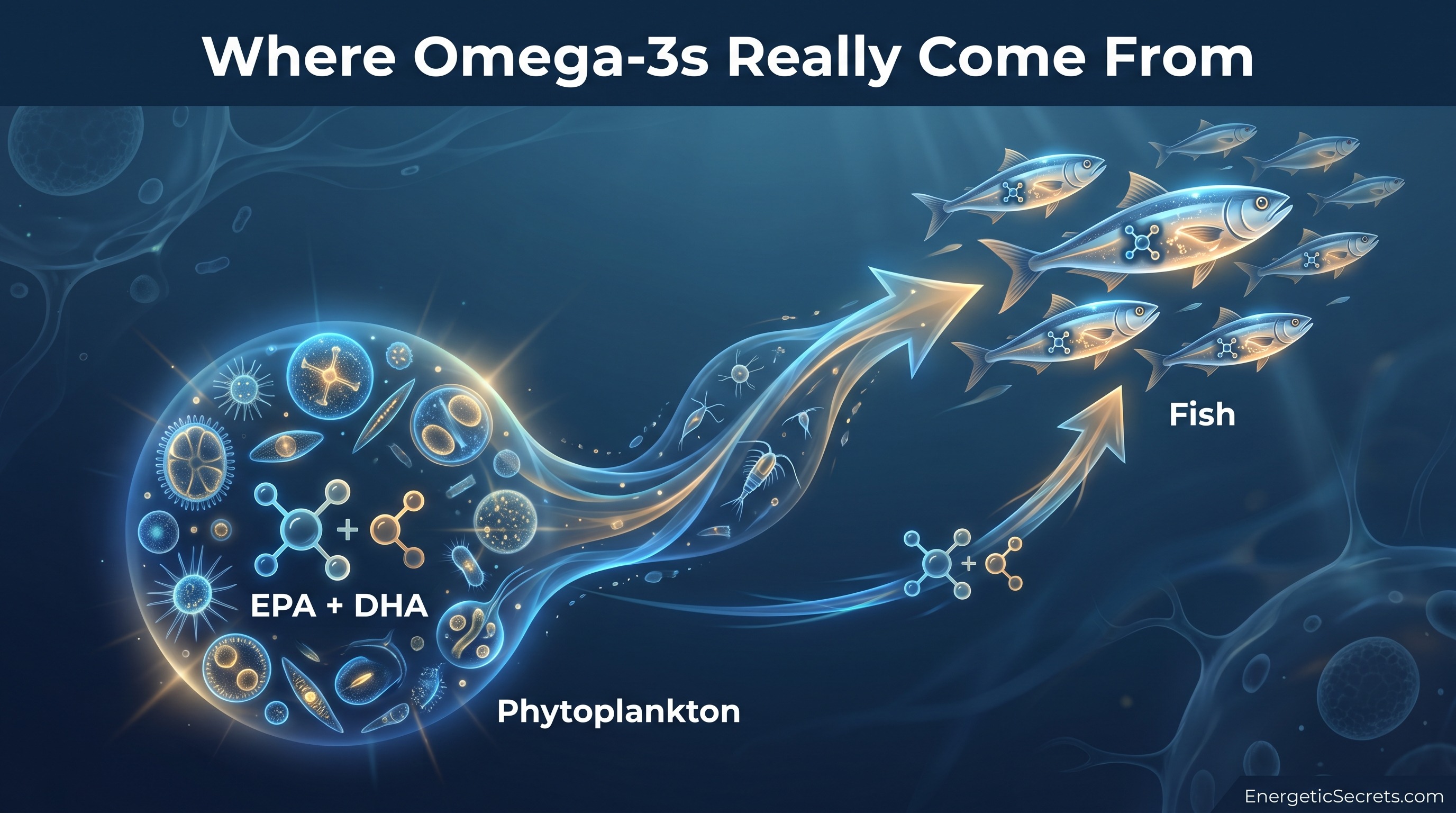
The second, separate evidence thread is marine phytoplankton and microalgae themselves. Here the mechanism is clearer and better established: microalgae are the original source of the omega-3 fatty acids EPA and DHA that humans associate with fish.
Phytoplankton Is a Way of Life, Not a Family
Before the evidence, the word itself needs unpacking, because most of the confusion in this product category starts there. Phytoplankton is a job description, not a branch of the tree of life. The word comes from the Greek phyto, meaning plant, and plankton, meaning drifter. A phytoplankton organism is anything that lives suspended in the water, photosynthesizes, and is too small to swim against a current. Biologists contrast the plankton with the nekton, the swimmers, such as fish, squid, and whales, which can go where they want regardless of the current. If you drift and you photosynthesize, you are phytoplankton.
Because the category is functional rather than genetic, it spans an enormous range of unrelated organisms. Diatoms, dinoflagellates, coccolithophores, green algae, and eustigmatophytes all qualify, and they are about as closely related to one another as bats, birds, and bees, three groups that all fly without sharing any recent common ancestor for flight. This is why "marine phytoplankton" is such an elastic term on a supplement label. It tells you how the organism lives and nothing about which organism it is. Two products can both be sold as marine phytoplankton while containing organisms from entirely different branches of life, with entirely different chemistry. Strain identity is what actually matters, and it is the first question to ask about any product in this space.
The Size Number That Ties This Article Together
Phytoplankton cell size spans several orders of magnitude, from about 0.2 micrometers to more than 200 micrometers (20). The smallest class, the picoplankton, runs about 0.2 to 2 micrometers; nanoplankton run roughly 2 to 20; microplankton run roughly 20 to 200. Now recall the Quinton filter from earlier: 0.22 micrometers. That pore size sits at the very bottom of the phytoplankton size range, below almost every phytoplankton cell in the ocean. Which is precisely why no phytoplankton cell survives into a vial of Quinton.
The seawater story and the phytoplankton story are separated, physically, by 0.22 micrometers of membrane. When someone tells you their seawater product owes its power to plankton, you now know the right follow-up question: filtered at what pore size? But you also have some perspective that the only reason the claim may be half right is that the nutrients may be bioactivated by plankton before a filtration process.
The Base Nutrition of the Ocean
Phytoplankton are not a niche curiosity. They are the base nutrition of the ocean. A 2024 review in Philosophical Transactions of the Royal Society B describes them as unicellular photosynthetic taxa that provide an estimated half of global primary production (18), and a 2026 review in Nature Microbiology puts the figure at approximately half of Earth's net primary production (19). Primary production is the conversion of sunlight, water, and carbon dioxide into living organic matter. Roughly half of all of it, everywhere on Earth, is done by these drifting cells. Everything above them in the food chain eats, directly or indirectly, what they make.
That food-chain position is also where the omega-3 argument of this article begins: the omega-3 content of fish is accumulated microalgal nutrition, passed up the chain. The evidence for that connection is where the phytoplankton science gets concrete.
The Strain That Matters for This Series
One strain will carry much of the rest of this series, so it is worth naming now: Microchloropsis gaditana. It belongs to the eustigmatophytes, one of the less familiar algal groups, and it is a genuine open-water phytoplankton organism that is also cultivated in ponds for product, which is how it reaches the supplement market. One taxonomy note trips up readers and researchers alike, so keep it in mind. Until 2015 this organism was known as Nannochloropsis gaditana. Fawley and colleagues reclassified it into the new genus Microchloropsis that year (21), and both names now appear throughout the published literature, with most of the older research filed under the old name. This strain will be the subject of its own article later in the series.
A 2026 review by Gao and colleagues states the point directly. Marine microorganisms, including bacteria, fungus-like organisms, and microalgae, serve as the richest natural source of omega-3 polyunsaturated fatty acids, and through the food chain these fatty acids are enriched in the fish, crustaceans, and mollusks that people eat (12). In other words, fish do not make their own EPA and DHA. They get them from eating phytoplankton and microalgae.
A 2025 review by Sharma and colleagues makes the same case, describing microalgae as a sustainable source of DHA and EPA and a promising alternative to conventional seafood sources (13). A 2025 review by Habib and colleagues adds that certain microalgal species accumulate 50 to 70 percent lipid by dry weight, a considerable fraction of it long-chain omega-3 fatty acids, and that some algal strains exceed soybean oil lipid productivity by more than twenty-fold per hectare (14). Of course soybean oil is not a healthful oil source but the comparison is still useful to consider.
The cardiovascular relevance of this is the subject of active review. A 2024 review by Yurika and colleagues describes how marine microalgae produce essential nutrients, vitamins, pigments, and omega-3 fatty acids with antioxidant properties and a role in heart-disease prevention, with the most promising results for microalgal polysaccharides, peptides, and carotenoids, while noting that more clinical studies are needed (15).
A 2026 review by Egalini and colleagues on omega-3 formulations in cardiovascular prevention notes that EPA and DHA are critical cardiovascular modulators, that the clinical evidence is heterogeneous, and that microalgae-based alternatives are being pursued as sustainable solutions to the environmental burden of marine oils (16). I would add that the other issue with marine oils is toxicity in 2026 so keeping an open mind to sourcing nutrients is especially important now.
The cellular evidence is more preliminary. A 2019 in vitro study by Goff and colleagues tested extracts of two microalgae, Ostreococcus tauri and Phaeodactylum tricornutum, against benzo[a]pyrene toxicity in endothelial cells (17). The Ostreococcus tauri extract reduced apoptosis and the expression of inflammatory cytokines, demonstrating that microalgae are a source of bioactive molecules with anti-inflammatory and antioxidant potential. This is cell-culture work, not human data, and it should be read as such (17).
Two Threads, Kept Separate
It is important not to blur these two lines of evidence. The Quinton-lineage studies concern seawater and deep-sea-water mineral concentrates. The phytoplankton studies concern microalgal biomass and its omega-3 and bioactive content. The seawater evidence includes some human trials, while the phytoplankton evidence is largely in vitro, animal, or review-level, with limited human clinical data. Both are legitimate, but they answer different questions.
What Part 1 Establishes
This first article has done three things. It has told the historical story of René Quinton and his seawater extracts, with the appropriate skepticism about the dog experiments and the sérum's eventual removal from medicine which we can read into knowing how alternative ideas were indeed blocked by the elitist scientific establishment of that time, use Béchamp as a perfect example.
We've also laid out the modern seawater science, which is real but modest and concerns minerals rather than plankton. And we have introduced the phytoplankton science, where the mechanism is strongest: microalgae are the original source of the omega-3 fatty acids that reach the human diet through fish.
The next article in this series will go deeper into the phytoplankton thread, examining what is actually known about marine phytoplankton as a direct source of nutrition for humans, and where the evidence stands.
Keep an eye out for the next article in this series coming next week! Also we have related new Marine Phytoplankton products also coming in the next week or so. These will have the same strains of phytoplankton that I've personally consumed for the last decade which are delivering proven results even at very modest doses.
References
1. Quinton, René. L'eau de mer, milieu organique : constance du milieu marin originel, comme milieu vital des cellules, à travers la série animale. Paris: Masson et Cie, 1904. 504 p. Gallica, Bibliothèque nationale de France: https://gallica.bnf.fr/ark:/12148/bpt6k746094
2. "René Quinton." Wikipedia (English). https://en.wikipedia.org/wiki/Ren%C3%A9_Quinton
3. "René Quinton." Wikipédia (French). https://fr.wikipedia.org/wiki/Ren%C3%A9_Quinton
4. Hall, Harriet. "ASEA, ORMUS, and Alchemy." Science-Based Medicine, 2015. https://sciencebasedmedicine.org/asea-ormus-and-alchemy/
5. Sheu MJ, Chou PY, Lin WH, Pan CH, Chien YC, Chung YL, Liu FC, Wu CH. "Deep sea water modulates blood pressure and exhibits hypolipidemic effects via the AMPK-ACC pathway: an in vivo study." Mar Drugs. 2013;11(6):2183-202. doi:10.3390/md11062183. PMID 23774889.
6. Reeves EP, Molloy K, Pohl K, McElvaney NG. "Hypertonic saline in treatment of pulmonary disease in cystic fibrosis." ScientificWorldJournal. 2012;2012:465230. doi:10.1100/2012/465230. PMID 22645424.
7. Diaz-Llopis M, Pinazo-Duran MD, Diaz-Guiñon L, et al. "A randomized multicenter study comparing seawater washes and carmellose artificial tears eyedrops in the treatment of dry eye syndrome." Clin Ophthalmol. 2019;13:483-490. doi:10.2147/OPTH.S185409. PMID 30880909.
8. Babiloni-Lopez C, Gargallo P, Juesas A, et al. "Long-Term Effects of Microfiltered Seawater and Resistance Training with Elastic Bands on Hepatic Parameters, Inflammation, Oxidative Stress, and Blood Pressure of Older Women: A 32-Week, Double-Blinded, Randomized, Placebo-Controlled Trial." Healthcare (Basel). 2024;12(2):204. doi:10.3390/healthcare12020204. PMID 38255091.
9. Acevedo OG, Aragón-Vela J, De la Cruz Márquez JC, et al. "Seawater Hydration Modulates IL-6 and Apelin Production during Triathlon Events: A Crossover Randomized Study." Int J Environ Res Public Health. 2022;19(15):9581. doi:10.3390/ijerph19159581. PMID 35954937.
10. Aragón-Vela J, González-Acevedo O, De la Cruz-Márquez JC, et al. "The Effects of Acute Deep Seawater Supplementation on Muscle Function after Triathlon." J Clin Med. 2024;13(8):2258. doi:10.3390/jcm13082258. PMID 38673531.
11. Alberola J, Coll F. "Marine therapy and its healing properties." Curr Aging Sci. 2013;6(1):63-75. doi:10.2174/1874609811306010009. PMID 23895523.
12. Gao K, Li X, Zhang H, Sun J, Secundo F, Mao X. "Sustainable production strategies of omega-3 PUFAs and their enrichment in the human diet." Crit Rev Biotechnol. 2026;46(6):999-1015. doi:10.1080/07388551.2026.2696857. PMID 42481231.
13. Sharma T, Das N, Mehta Kakkar P, et al. "Microalgae as an emerging alternative raw material of docosahexaenoic acid and eicosapentaenoic acid - a review." Crit Rev Food Sci Nutr. 2025;65(31):7883-7902. doi:10.1080/10408398.2025.2486267. PMID 40188418.
14. Habib M, Singh S, Jan S, Jan K, Rao E, Bashir K. "Sustainable Algal Lipids: A Paradigm Shift Towards Nutritional Security and SDG-2." Compr Rev Food Sci Food Saf. 2025;24(6):e70309. doi:10.1111/1541-4337.70309. PMID 41273203.
15. Yurika N, Montuori E, Lauritano C. "Marine Microalgal Products with Activities against Age-Related Cardiovascular Diseases." Mar Drugs. 2024;22(5):229. doi:10.3390/md22050229. PMID 38786620.
16. Egalini F, Riccio E, Grasso M, Nelva A, De Geronimo V. "Omega-3 Polyunsaturated Fatty Acid Formulations in Cardiovascular Prevention: Balancing Clinical Efficacy, Safety, and Environmental Sustainability." Nutrients. 2026;18(15):2538. doi:10.3390/nu18152538. PMID 42588160.
17. Goff ML, Delbrut A, Quinton M, et al. "Protective Action of Ostreococcus tauri and Phaeodactylum tricornutum Extracts towards Benzo[a]Pyrene-Induced Cytotoxicity in Endothelial Cells." Mar Drugs. 2019;18(1):3. doi:10.3390/md18010003. PMID 31861403.
18. Nef C, Pierella Karlusich JJ, Bowler C. "From nets to networks: tools for deciphering phytoplankton metabolic interactions within communities and their global significance." Philos Trans R Soc Lond B Biol Sci. 2024;379(1909):20230172. doi:10.1098/rstb.2023.0172. PMID 39034691.
19. Forget M, Müller O, Stocker R. "The ecology of bacterial attachment to phytoplankton." Nat Microbiol. 2026;11(5):1180-1192. doi:10.1038/s41564-026-02287-6. PMID 42020724.
20. Key RS, Coesel SN, Gradoville MR, Morales RL, Farnelid H, Zehr JP, Armbrust EV, Durham BP. "Picophytoplankton implicated in productivity and biogeochemistry in the North Pacific Transition Zone." mSystems. 2026;11(2):e0080125. doi:10.1128/msystems.00801-25. PMID 41543250.
21. Fawley MW, Jameson I, Fawley KP. "The phylogeny of the genus Nannochloropsis (Monodopsidaceae, Eustigmatophyceae), with descriptions of N. australis sp. nov. and Microchloropsis gen. nov." Phycologia. 2015;54(5):545-552. doi:10.2216/15-60.1
22. Laboratoires Quinton International, S.L. Quinton (English site) and "Protocolo de fabricación" (Spanish production page) (accessed 2026-10-26). Manufacturer's own process and product-line descriptions. |



4 Comments
Join the conversation
The point about nobody being able to patent seawater so nobody funds the trials is actually a really good one. Same reason you never see big studies on vitamin D dosing. No money in it.
I've been taking marine phytoplankton for about 3 years now for the omega 3s since I can't stand fish oil burps. Honestly my joints feel better but I know that's just me talking, not a study.
No way a dog survived having all its blood swapped for salt water. I believe some of it got replaced maybe but all of it, come on. Fun story though.
The 0.22 micron filter part was the thing that got me. So they charge premium prices for seawater and then filter out the actual plankton they brag about on the label. Kinda says it all.