
Beyond Cancer: Amygdalin's Cardioprotective and Systemic Benefits |
How a 'cyanide poison' protects hearts, builds mitochondria, and challenges everything they told you |
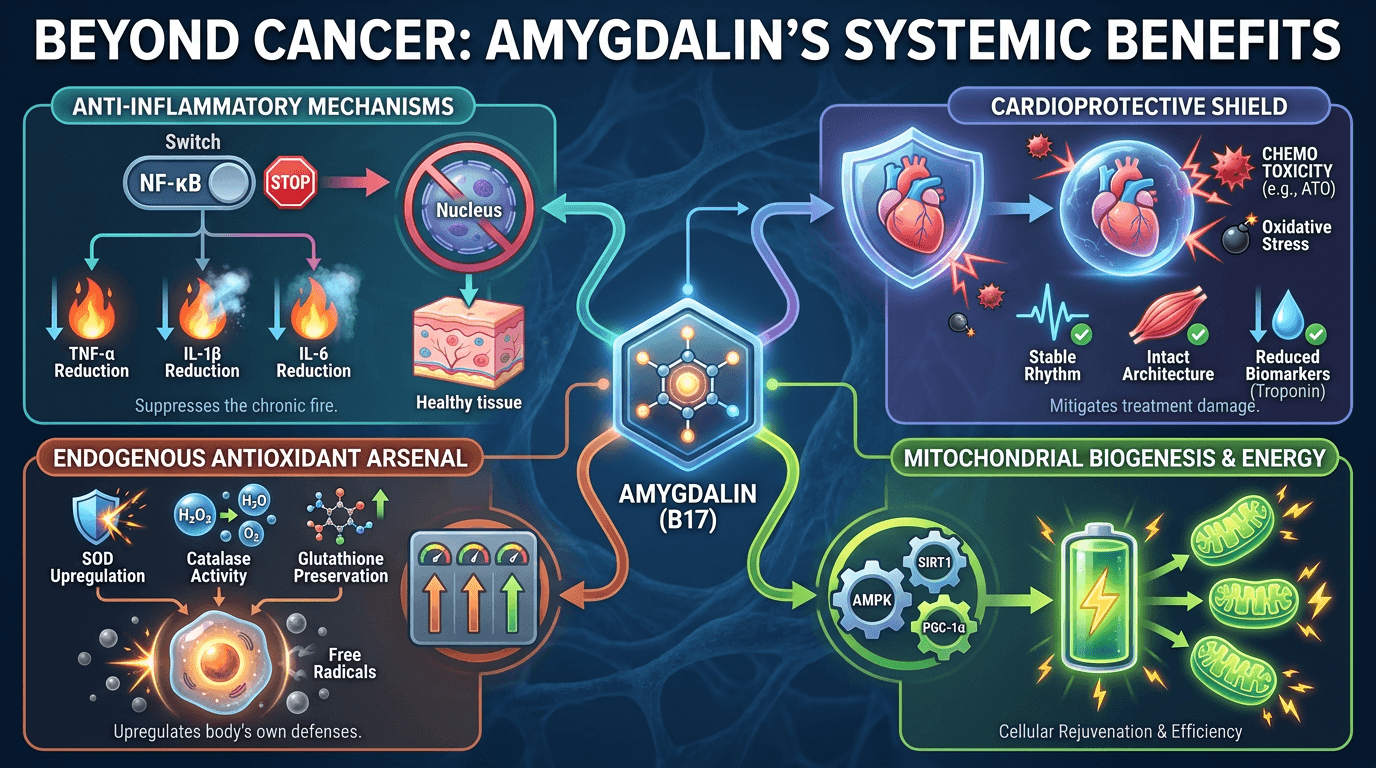
The amygdalin conversation has been hijacked entirely by the cancer debate, as if this molecule exists solely to trigger academic arguments about alternative oncology. But they don't tell you about the compound's broader effects on cardiovascular health, oxidative stress, inflammation, cellular energy production, and metabolic optimization. They don't mention the growing evidence for systemic benefits that extend far beyond tumor cells, nevermind the over 1200 related nitriloside compounds found throughout the plant kingdom.
After all, if amygdalin is simply a toxic cyanide bomb waiting to poison anyone who touches it - as critics frantically claim - how do you explain its protective effects against chemotherapy-induced heart damage? How do you explain enhanced mitochondrial biogenesis, improved antioxidant enzyme expression, and reduced inflammatory markers?
The Arsenic Trioxide Cardiotoxicity Problem
Arsenic trioxide (ATO) is FDA-approved for treating acute promyelocytic leukemia, a rapidly fatal blood cancer. It works remarkably well at inducing remission - but at a steep cost. ATO damages hearts through multiple mechanisms: oxidative stress generation, mitochondrial dysfunction, cardiomyocyte death, and disruption of cardiac electrical conduction. The medical solution? Monitor cardiac function closely with echocardiograms and EKGs, reduce the dose if toxicity appears, and hope the cancer dies before the heart fails.
Guo and colleagues (2025) asked a radically different question: could amygdalin protect the heart while arsenic trioxide fights cancer? Could a natural compound mitigate chemotherapy toxicity without interfering with anticancer efficacy?
Their rat model study, published in Journal of Functional Foods, revealed something the cardiology establishment won't want to hear: amygdalin pretreatment significantly reduced ATO-induced cardiac toxicity across multiple validated endpoints. Electrocardiogram abnormalities - particularly QT interval prolongation and arrhythmias - diminished substantially. Cardiac biomarkers like troponin and creatine kinase (markers of heart muscle damage) improved. Myocardial architecture, examined histologically, remained largely intact rather than showing the necrosis and fibrosis typical of ATO exposure.
Keep in mind, this isn't preventing cancer treatment or reducing therapeutic efficacy. This is protecting the heart during cancer treatment, allowing patients to tolerate higher doses and complete full treatment courses. That's precisely what integrative oncology should look like - combining conventional and complementary approaches to maximize benefit and minimize harm.
The AMPK/SIRT1/PGC-1α Axis: Cellular Energy Optimization
The mechanism underlying amygdalin's cardioprotection involves activation of the AMPK (AMP-activated protein kinase) pathway - a master energy sensor that functions as your cells' metabolic thermostat. When cellular energy (ATP) drops relative to AMP, AMPK activates, triggering a cascade of adaptive responses to restore energy balance.
AMPK activation triggers SIRT1 (sirtuin 1), a NAD+-dependent deacetylase often called a "longevity protein" because of its roles in stress resistance, DNA repair, and metabolic regulation. SIRT1, in turn, activates PGC-1α (peroxisome proliferator-activated receptor gamma coactivator 1-alpha) - the master regulator of mitochondrial biogenesis.
Translation into plain language: amygdalin tells your cells to build new, healthy mitochondria and enhance energy efficiency through the same pathway activated by exercise, caloric restriction, and fasting. That's not just cardioprotection - that's cellular rejuvenation targeting the fundamental machinery of energy production and stress resistance.
The same pathway is activated by resveratrol (the compound in red wine), metformin (a diabetes drug being investigated for longevity benefits), and rapamycin (an immunosuppressant with anti-aging properties). Amygdalin appears to flip the same metabolic switches, triggering adaptive responses that enhance cellular resilience.
After all, mitochondrial dysfunction isn't just a cardiac problem - it's the common denominator in aging, neurodegeneration, metabolic syndrome, and cancer itself. Compounds that support mitochondrial health aren't treating isolated symptoms; they're addressing upstream dysfunction that manifests as multiple seemingly unrelated diseases.
Antioxidant Effects: Upregulating Your Enzyme Arsenal
Oxidative stress - excess free radicals overwhelming cellular antioxidant defenses - underlies virtually every chronic disease from atherosclerosis to Alzheimer's. The standard medical approach? Largely ignore it, or prescribe synthetic antioxidant supplements like vitamin E and beta-carotene that have repeatedly failed to show benefit in clinical trials and sometimes caused harm.
Then of course there are the oxidation therapies but that's a subject for another time.
Here's the rub: taking antioxidants is fundamentally different from upregulating your body's own antioxidant enzyme systems. Amygdalin does the latter.
Guo's 2025 study documented significant enhancement of critical antioxidant enzymes in amygdalin-treated rats:
SOD (Superoxide Dismutase): Neutralizes superoxide radicals (O2-), the most common and dangerous free radical species produced during mitochondrial respiration and inflammatory responses. SOD converts superoxide to hydrogen peroxide, which is then handled by catalase. Guo's study showed significant SOD upregulation in cardiac tissue exposed to amygdalin, providing enhanced protection against oxidative injury.
Catalase (CAT): Converts hydrogen peroxide - a toxic byproduct of SOD activity and normal metabolism - into water and oxygen. Amygdalin treatment increased catalase activity in cardiac tissue, completing the detoxification pathway initiated by SOD. This tandem enhancement creates a comprehensive defense against reactive oxygen species.
Glutathione (GSH): The master intracellular antioxidant, critical for detoxification, immune function, and protecting cellular proteins from oxidative damage. Arsenic trioxide dramatically depletes glutathione, leaving cells vulnerable. Amygdalin preserved glutathione levels that ATO would otherwise destroy, maintaining cellular redox balance.
Keep in mind, synthetic antioxidant supplements often fail in clinical trials because they act as crude scavengers, indiscriminately neutralizing both harmful radicals and beneficial signaling molecules. But compounds that upregulate endogenous antioxidant enzyme systems - that's working with biology rather than against it. That's enhancing the body's own sophisticated, regulated defense mechanisms.
Anti-Inflammatory Mechanisms: Suppressing the Fire
Barakat et al. (2022) documented amygdalin's effects on the inflammatory cascade - the runaway immune response that damages tissues and drives chronic disease progression (PMC9599719). Inflammation isn't just pain and swelling; it's a complex molecular program involving dozens of signaling molecules and transcription factors.
Amygdalin suppresses NF-κB (nuclear factor kappa B), the master transcriptional switch for inflammatory gene expression. When NF-κB translocates to the nucleus and binds DNA, it triggers production of inflammatory cytokines, chemokines, adhesion molecules, and enzymes that perpetuate inflammation. When NF-κB is suppressed, the inflammatory program doesn't activate, and existing inflammation resolves.
The measured effects of amygdalin on inflammatory markers include:
TNF-α reduction: Tumor necrosis factor-alpha, a key inflammatory signaling molecule involved in systemic inflammation, fever, and cachexia (wasting). Elevated TNF-α is implicated in cardiovascular disease, insulin resistance, and cancer progression. Amygdalin treatment produced dose-dependent TNF-α reduction across multiple studies.
IL-1β reduction: Interleukin-1 beta, involved in acute inflammatory responses, fever, and tissue destruction. The NLRP3 inflammasome pathway that produces IL-1β is hyperactive in metabolic diseases and neurodegeneration. Suppressing IL-1β has therapeutic implications far beyond simple pain reduction.
IL-6 reduction: Interleukin-6, a pleiotropic cytokine linked to chronic inflammation, autoimmune disease, and the acute phase response. Persistently elevated IL-6 predicts cardiovascular events and all-cause mortality in population studies. Amygdalin normalized IL-6 levels in treated groups, suggesting systemic anti-inflammatory effects.
After all, chronic inflammation isn't just uncomfortable - it's the common pathway in cardiovascular disease, neurodegeneration, diabetes, autoimmune conditions, and cancer. The medical term "inflammaging" describes how low-grade chronic inflammation drives the aging process itself. Compounds that modulate this safely have therapeutic potential across the disease spectrum.
Mitochondrial Biogenesis: Building Better Power Plants
Your mitochondria are cellular power plants, generating the ATP that fuels every biological process. When they dysfunction - producing insufficient energy and excessive free radicals - everything goes haywire. Energy drops, oxidative stress accumulates, cells age prematurely and die.
The AMPK/SIRT1/PGC-1α pathway that amygdalin activates is the body's primary mechanism for building new mitochondria (biogenesis) and clearing damaged ones through selective autophagy (mitophagy). This quality control system maintains a healthy mitochondrial population, replacing dysfunctional organelles before they cause cellular damage.
Keep in mind, mitochondrial dysfunction is causally implicated in:
• Heart failure and arrhythmias: Cardiomyocytes have the highest mitochondrial density of any cell type because of enormous energy demands. When cardiac mitochondria fail, the heart fails.
Compounds that support mitochondrial health aren't treating individual diseases in isolation - they're addressing upstream dysfunction that manifests as multiple seemingly distinct pathological conditions. That's systems biology medicine rather than reductionist organ-specific treatment.
The Cardioprotection Data Beyond Arsenic Trioxide
Beyond Guo's 2025 arsenic trioxide study, Spanoudaki et al. (2023) reviewed cardiovascular benefits across multiple experimental models (PMID: 37762516):
• Reduction in lipid peroxidation: A marker of oxidative damage to cell membranes, particularly in LDL cholesterol (creating the "oxidized LDL" that drives atherosclerosis). Lower lipid peroxidation means less vascular damage.
But they don't tell you that natural compounds like amygdalin might allow patients to tolerate higher, more effective chemotherapy doses without destroying their cardiovascular systems. They don't tell you that cardioprotective strategies exist outside the pharmaceutical pipeline.
The Broader Metabolic Effects: A Systemic Optimizer
Research has documented additional metabolic benefits:
• Improved insulin sensitivity: Enhanced glucose uptake and utilization, potentially beneficial in metabolic syndrome and type 2 diabetes.
The pattern emerging isn't organ-specific protection in isolation - it's systemic metabolic optimization affecting multiple tissues simultaneously. Amygdalin appears to enhance cellular resilience broadly through fundamental mechanisms: mitochondrial support, antioxidant enhancement, inflammatory suppression, and adaptive stress response activation.
Why This Matters Clinically: Rethinking Cancer Treatment
Cancer patients often die not from cancer itself, but from treatment toxicity. Cardiac failure from anthracyclines. Renal failure from platinum compounds. Hepatic failure from methotrexate. Bone marrow failure from alkylating agents. Immune collapse from immunosuppression. The medical approach? Monitor closely and hope toxicity doesn't occur before the cancer is controlled.
If amygdalin can protect healthy tissues while cancer treatments attack tumors - that's not alternative medicine competing with oncology. That's intelligent, integrative cancer care that maximizes therapeutic benefit while minimizing collateral damage. Cardioprotective, hepatoprotective, nephroprotective compounds that support mitochondrial function and enhance antioxidant defenses - that's exactly what supportive cancer care should include.
After all, the goal isn't just killing cancer. The goal is keeping the patient alive, functional, and with acceptable quality of life during and after treatment. Compounds like amygdalin that protect normal tissues from chemotherapy and radiation toxicity deserve investigation as adjuvants to conventional therapy, not dismissal as quackery.
The Research Exists, The Mechanisms Make Sense
The safety profile at appropriate doses appears favorable in animal models. The mechanisms are well-characterized and biologically plausible. The preclinical evidence spans multiple organ systems and disease models. What's missing is institutional courage to integrate this evidence into clinical practice and conduct the human trials that would validate or refute these findings definitively.
Keep in mind, the same AMPK/SIRT1/PGC-1α pathway activated by amygdalin is the target of billions of dollars in pharmaceutical research aimed at developing "mitochondrial enhancers" and "metabolic optimizers" for aging, neurodegeneration, and metabolic disease. But when a natural compound activates the same pathway, it's dismissed as dangerous alternative medicine.
The irony would be amusing if it weren't tragic for the patients who might benefit.
Learn more about the metabolic benefits of apricot seed amygdalin and other nitriloside compounds in my free online course at https://ForbiddenFood.tv and try our seeds at https://EatApricotSeeds.com
References 1. Guo M, Ma J, Zhao Y, Zeng F, Xu Y, Wang L. Ameliorative effects of amygdalin against arsenic trioxide-induced cardiac toxicity in rat: Role of AMPK/SIRT1/PGC-1α signaling pathway. J Funct Foods. 2025;128:106795. This one is hard to find but I have a copy and anyone that really wants it can contact me after joining https://ForbiddenFood.tv 2. Barakat H, Aljutaily T, Almujaydil MS, Algheshairy RM, Alhomaid RM, Almutairi AS, Alshimali SI, Abdellatif AAH. Amygdalin: A Review on Its Characteristics, Antioxidant Potential, Gastrointestinal Microbiota Intervention, Anticancer Therapeutic and Mechanisms, Toxicity, and Encapsulation. Biomolecules. 2022 Oct 19;12(10):1514. PMID: 36291723; PMCID: PMC9599719. https://pubmed.ncbi.nlm.nih.gov/36291723/
3. Spanoudaki M, Stoumpou S, Papadopoulou SK, Karafyllaki D, Solovos E, Papadopoulos K, Giannakoula A, Giaginis C. Amygdalin as a Promising Anticancer Agent: Molecular Mechanisms and Future Perspectives. Int J Mol Sci. 2023 Sep 19;24(18):14270. PMID: 37762572; PMCID: PMC10531689.
4. Luo Y, Melhem S, Feelisch M, Chatre L, Morton NM, Dolga AM, van Goor H. Thiosulphate sulfurtransferase: Biological roles and therapeutic potential. Redox Biol. 2025 May;82:103595. PMID: 40107018. (Review of rhodanese/TST and cyanide detoxification mechanisms)
5. AMPK/PGC-1α/Mitochondrial Biogenesis: Jäger S, Handschin C, St-Pierre J, Spiegelman BM. (2007). "AMP-activated protein kinase (AMPK) action in skeletal muscle via direct phosphorylation of PGC-1α." Proceedings of the National Academy of Sciences, 104(29):12017-12022. https://pubmed.ncbi.nlm.nih.gov/17609368/
6. Doxorubicin Cardiomyopathy & Natural Protection: Octavia Y, Tocchetti CG, Gabrielson KL, et al. (2012). "Doxorubicin-induced cardiomyopathy: from molecular mechanisms to therapeutic strategies." Journal of Molecular and Cellular Cardiology, 52(6):1213-1225. https://pubmed.ncbi.nlm.nih.gov/22465037/
7. Jaszczak-Wilke E, Polkowska Ż, Koprowski M, Owczarek K, Balcerzak Ł, Kujawski R, Świątek Ł, Olszewska MA. Amygdalin: Toxicity, Anticancer Activity and Analytical Procedures. Molecules. 2021 Apr 15;26(8):2253. PMID: 33924691; PMCID: PMC8069783 https://pubmed.ncbi.nlm.nih.gov/33924691/
8. NF-κB/Inflammation:
|


0 Comments
Join the conversation
Be the first to comment
Share your thoughts above.