
Can A Wi-Fi Router Can Detect Your Breathing Through a Wall? Next Gen Surveillance Is Here! |
Wi-Fi signals now track your breath - discover how everyday routers are becoming spy tools. |
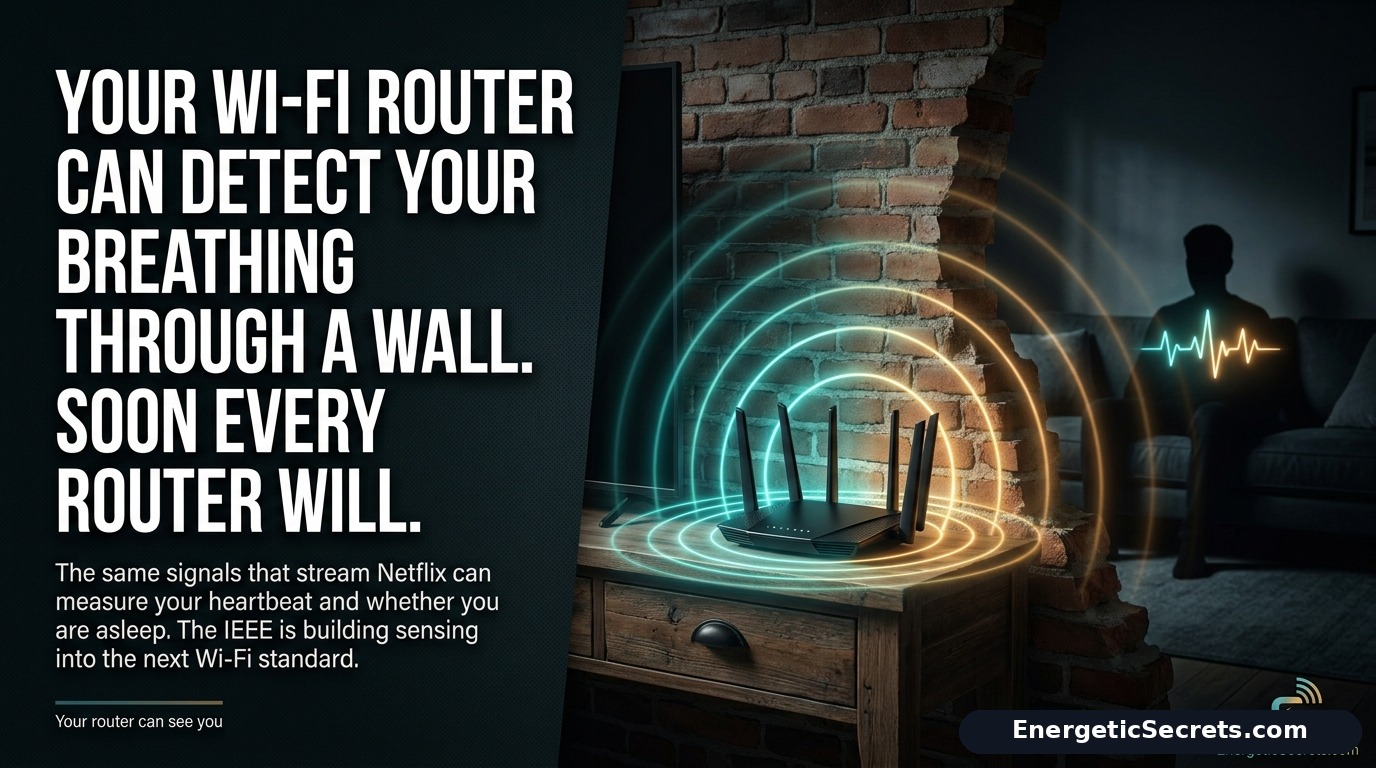
The same radio signals that carry your Netflix stream can measure your breathing, your heartbeat, and whether you're asleep, all through a wall. The technology is already commercial, and the IEEE is building sensing directly into the next Wi-Fi standard. It is a genuine breakthrough for elder care, and a surveillance tool nobody has consented to.
Here's something I didn't know until I started digging into it: the Wi-Fi router in your home (the same one streaming Netflix to your TV right now) can already detect your breathing through a wall. Not in theory. Not in a DARPA lab. In published, peer-reviewed research from multiple independent teams, using the same commodity hardware you can buy at Best Buy.
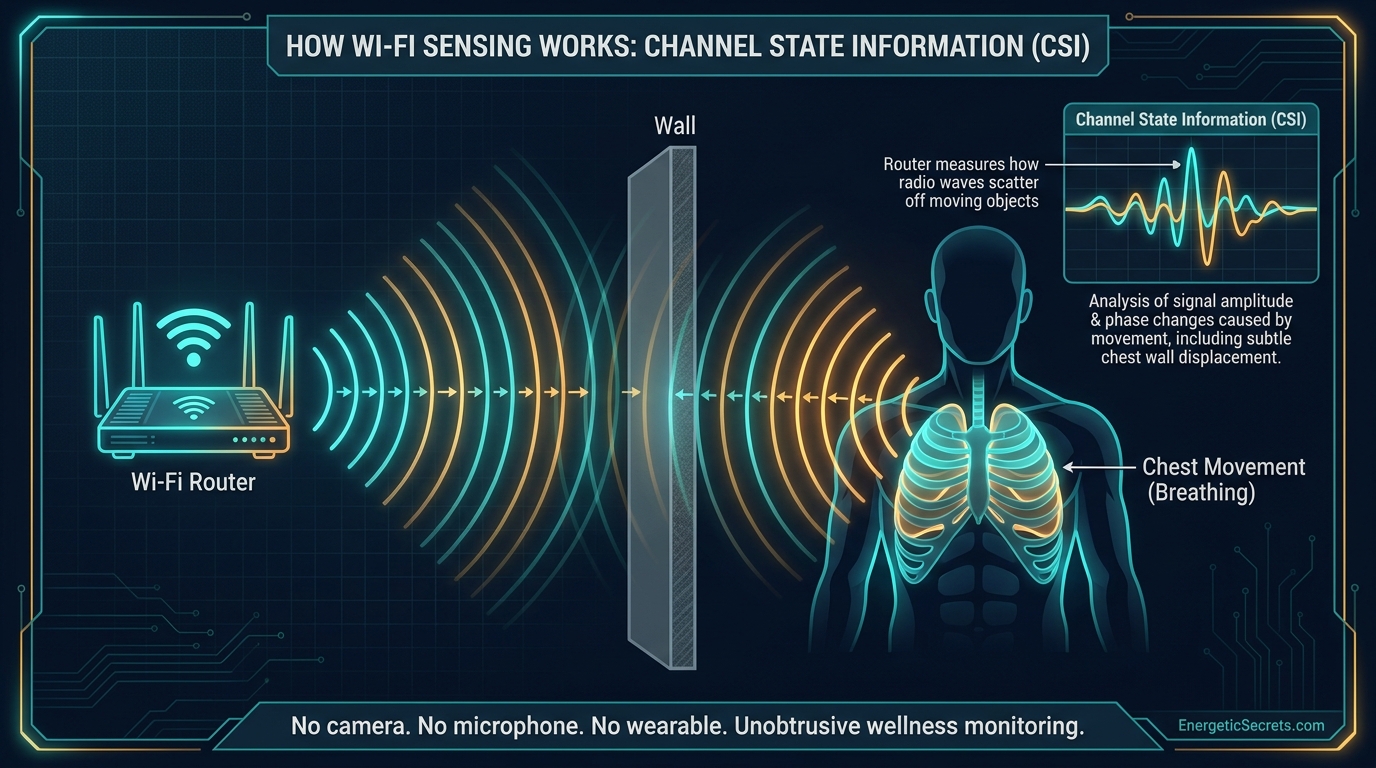
The technology is called Wi-Fi sensing, and it works on a principle that's almost embarrassingly simple once you understand it. Your router is constantly sending out radio waves. Those waves bounce off everything in your home: furniture, walls, pets, and you. When you breathe, your chest moves. That movement (fractions of a millimeter, invisible to the eye) changes how the radio waves reflect back to the router. A sufficiently sensitive receiver, paired with machine learning algorithms trained to recognize those patterns, can extract your respiration rate, your heart rate, and even whether you're asleep or awake.
No camera. No microphone. No wearable. Just the Wi-Fi signals already saturating every room in your house.
The health implications are genuinely exciting. The surveillance implications are genuinely alarming. And the strangest part? Nobody is really talking about either one.
How It Works: The Physics of Wi-Fi Body Sensing
The technical term for what makes this possible is Channel State Information, or CSI. Every Wi-Fi transmission includes a known preamble: a pattern the receiver expects. When the signal arrives, the receiver compares what it got to what it expected, and the difference (the "channel state") tells it how the environment altered the signal.
Most of the time, your router discards this information. It only cares about the data payload: the Netflix stream, the email, the web page.
But the CSI data is a rich, high-resolution record of every physical disturbance the signal encountered on its way from transmitter to receiver. A person walking through the room. A chest rising and falling with each breath. A heartbeat, which produces a tiny but detectable chest displacement with every contraction.
Researchers figured out that if you capture the CSI data instead of throwing it away, and you feed it into a neural network trained to recognize specific patterns, you can extract an extraordinary amount of information about the people in a room, even people in the next room, behind a wall.
The key insight is that Wi-Fi signals penetrate walls (that's the whole point of Wi-Fi), but they also reflect off human bodies. The reflections are weak compared to the direct signal, but they're there, and modern signal processing can isolate them. Fadel Adib and Dina Katabi at MIT's CSAIL demonstrated this dramatically in 2013 with a system called Wi-Vi, which could track a moving human through a concrete wall using only Wi-Fi signals [16]. No device on the other side. No cooperation from the person being tracked. Just the reflections.
The Health Promise: Breathing, Heartbeats, and Fall Detection Without a Single Wearable
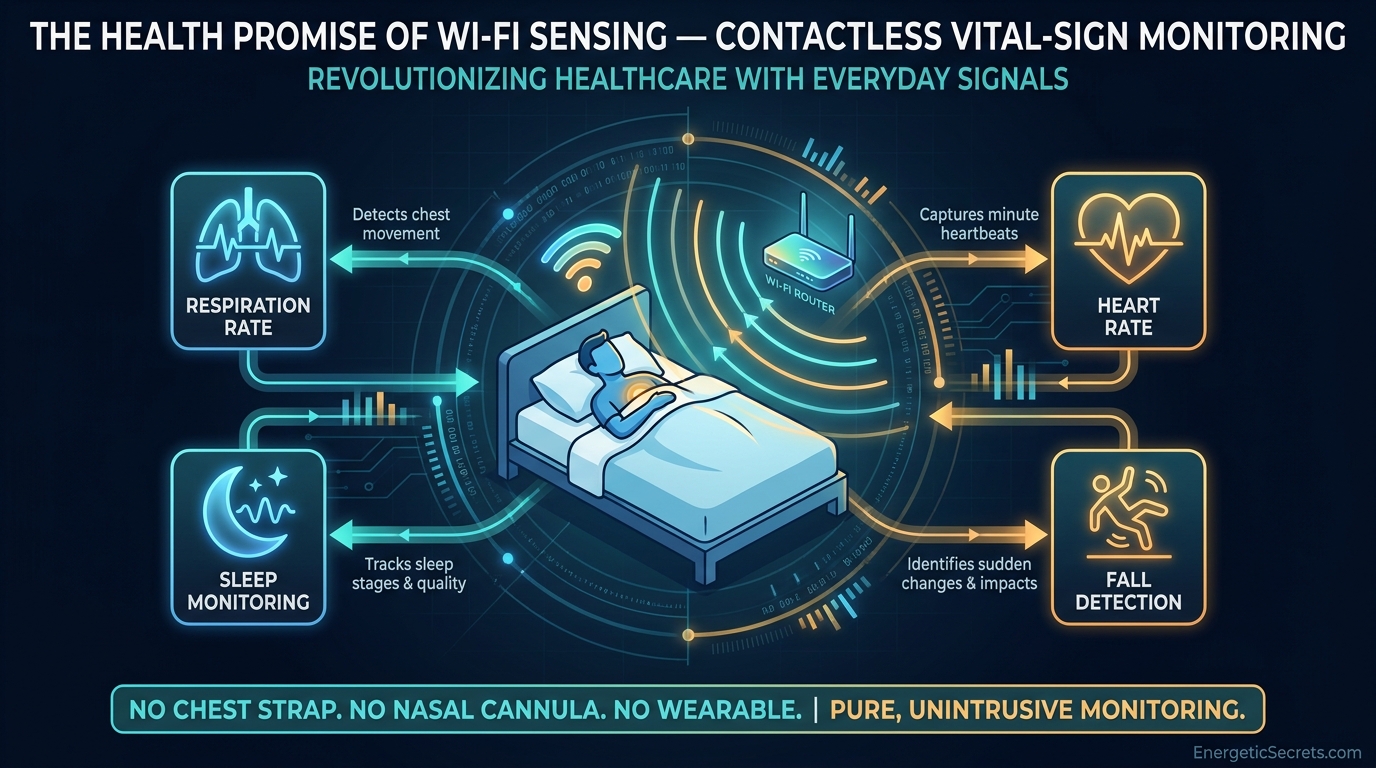
Now, the same MIT lab that built the through-wall tracker also built something called Vital-Radio, and this is where the story gets genuinely interesting from a health perspective. Vital-Radio demonstrated that Wi-Fi-like RF signals can monitor both breathing and heart rate without any sensor touching the body [17]. The system works by detecting the sub-centimeter chest movements caused by respiration and the even smaller movements caused by each heartbeat, then separating the two signals algorithmically.
Since Vital-Radio was published in 2015, the field has exploded. Multiple independent research teams have now demonstrated Wi-Fi-based respiration monitoring using standard consumer-grade hardware. A 2025 paper in the journal Sensors presented VitalCSI, a system that estimates respiratory rate using nothing more than the channel state information from an ordinary Wi-Fi router [1]. Another team, publishing in the IEEE Journal of Biomedical and Health Informatics, showed that Wi-Fi signals combined with artificial neural networks can detect respiration patterns without body contact [2].
The FDA's own Center for Devices and Radiological Health contributed authors to a 2022 paper characterizing the performance of Wi-Fi CSI for respiratory monitoring. That paper presented a specific algorithm called BreatheSmart for extracting breathing data from Wi-Fi signals [3]. When the FDA is co-authoring papers on Wi-Fi vital-sign sensing, the technology has moved well past the "curiosity" phase.
The clinical use cases are compelling. Wi-Breath, published in 2023, explicitly frames Wi-Fi respiration monitoring for remote healthcare applications [4]. Researchers have demonstrated that Wi-Fi can monitor breathing during sleep (a potential screening tool for sleep apnea that requires no overnight stay in a sleep lab, no chest strap, no nasal cannula) [6,7]. A 2021 paper confirmed that Wi-Fi signals can detect human falls, one of the most dangerous events for elderly people living alone [8]. MIT CSAIL's Emerald device, developed from the same research lineage, was designed specifically for fall detection and gait monitoring in elder care, demonstrating the direct path from academic through-wall sensing to practical health applications [21]. And a 2023 study showed that Wi-Fi can detect the breathing of multiple people simultaneously using antenna array switching, moving beyond single-person monitoring [5].
The broader RF vital-sign sensing field goes back even further. As early as 2007, researchers were publishing design guidelines for radio-frequency non-contact vital sign detection [11]. A 2009 paper demonstrated cardiac activity detection using a 5.8 GHz RF sensor (near Wi-Fi's 5 GHz band) [10]. These earlier papers used dedicated radar hardware rather than commodity Wi-Fi, but they established the physical principle: RF signals can detect both respiration and heartbeat without touching the body. More recent radar-based work has refined the approach considerably: portable micro-Doppler radar for breath detection [12], flexible 24 GHz antennas for vital-sign monitoring [13], adaptive noise cancellation algorithms that maintain accuracy even during large body movements [14], and IR-UWB radar systems that can distinguish humans from animals in the monitoring field [15]. The Wi-Fi-specific papers of the last decade took the same principle and applied it to the hardware already in every home.
All these studies yet so little study about the dangers of living with these Wi-Fi devices in your home! However, that's a subject for another day.
I think about my own father, who still practices mainstream medicine as he winds down his career. If you'd told him twenty years ago that a wireless router could monitor a patient's vital signs through a wall, he would have called it science fiction. Of course, he would have also been the first to see the clinical value: an elderly patient who refuses to wear a fall-alert pendant could still be protected. A sleep apnea patient could be screened at home, continuously, without a single wire.
The technology is not a replacement for medical-grade monitoring (no clinical trial has yet compared Wi-Fi sleep monitoring to the gold standard of polysomnography), but the direction of travel is unmistakable.
Through the Wall: When Health Monitoring Becomes Surveillance
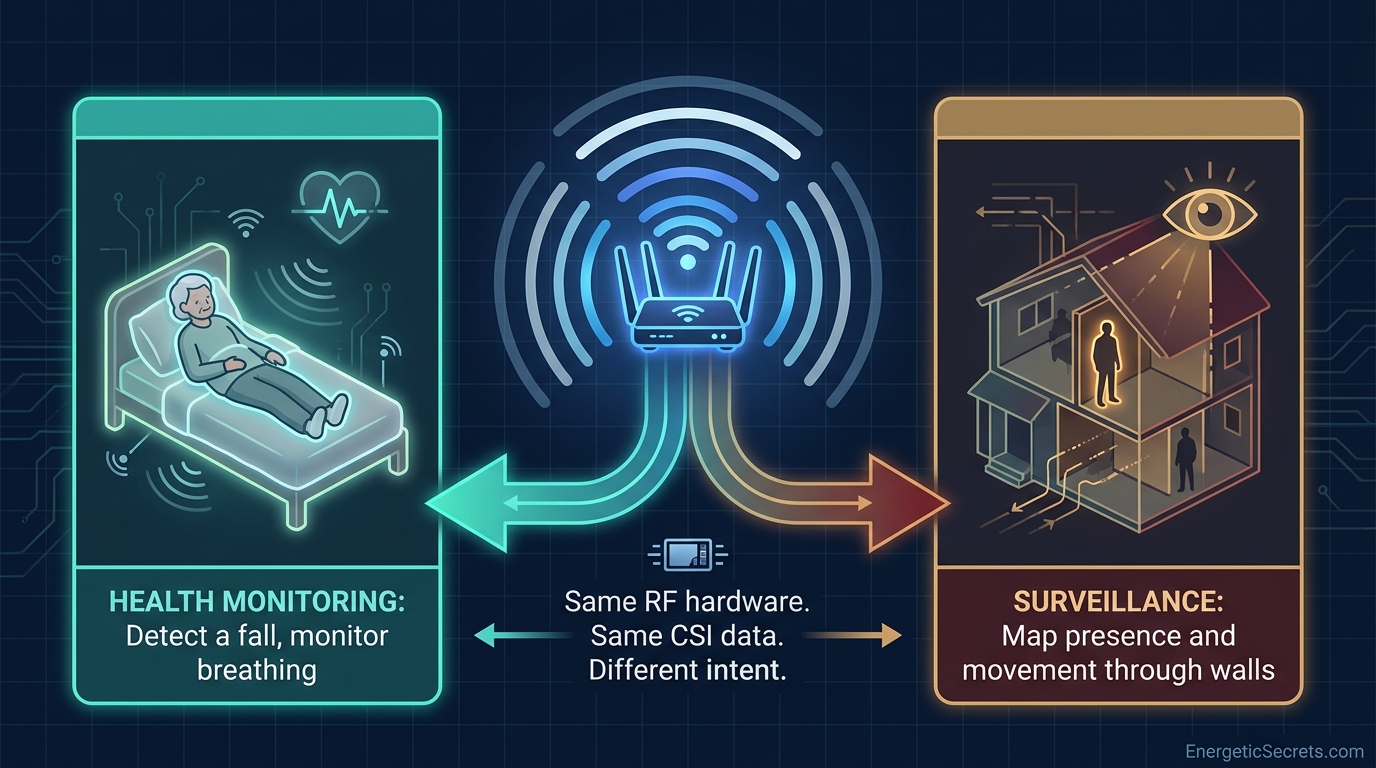
Here's where the dual-use problem becomes impossible to ignore. The same signal-processing pipeline that extracts your grandmother's respiration rate to detect a fall can, deployed without her knowledge or consent, map the presence, movement, and breathing of every occupant in her home through the walls.
This is not a hypothetical. The foundational through-wall sensing papers come from the same research groups that built the health-monitoring systems. Wi-Vi, from MIT in 2013, demonstrated tracking a moving human through a concrete wall using Wi-Fi [16]. WiSee, from the University of Washington the same year, showed that Wi-Fi signals can recognize specific human gestures (nine different gestures classified with 94% accuracy) throughout an entire home, including through walls [18]. The paper won Best Paper at Mobicom, one of the top venues in mobile computing. Subsequent work has extended this to full activity classification. A convolutional neural network (CNN) is a type of machine learning model that learns to recognize patterns in data; here, it learns the pattern of radio-wave disturbances caused by specific movements. A 2021 study combined Wi-Fi CSI with a time-frequency CNN and classified human activities with high accuracy across different indoor environments [9].
The most visually striking demonstration came in 2015, when the MIT team published RF-Capture, a system that can capture the human figure (not just presence or motion, but body shape and pose) through a wall [20]. The images are coarse, more like a heat map than a photograph, but they are unmistakably human figures, extracted from nothing but radio reflections. The paper was published at SIGGRAPH Asia, the premier computer graphics venue, because the result was so visually arresting. The same MIT group also demonstrated full 3D tracking of human movement through walls using only body radio reflections, published at Usenix NSDI 2014 [19].
Keep in mind: none of this requires a camera. None of it requires a microphone. None of it requires the person being monitored to carry a phone or wear a sensor. The Wi-Fi signals already in the environment do all the work. The only difference between a health-monitoring deployment and a surveillance deployment is the intent of the operator and the software pipeline processing the data.
The thing is, intent is not a technical safeguard. A router running Vital-Radio to monitor an elderly parent's breathing is physically identical to a router running Wi-Vi to track occupants through walls. The RF hardware is the same. The CSI data is the same. The only difference is which algorithm you run on the output, and who has access to the results.
It's Already Commercial. And Being Standardized.
If this were still confined to university labs, it would be worth watching but not yet urgent. It is not confined to university labs.
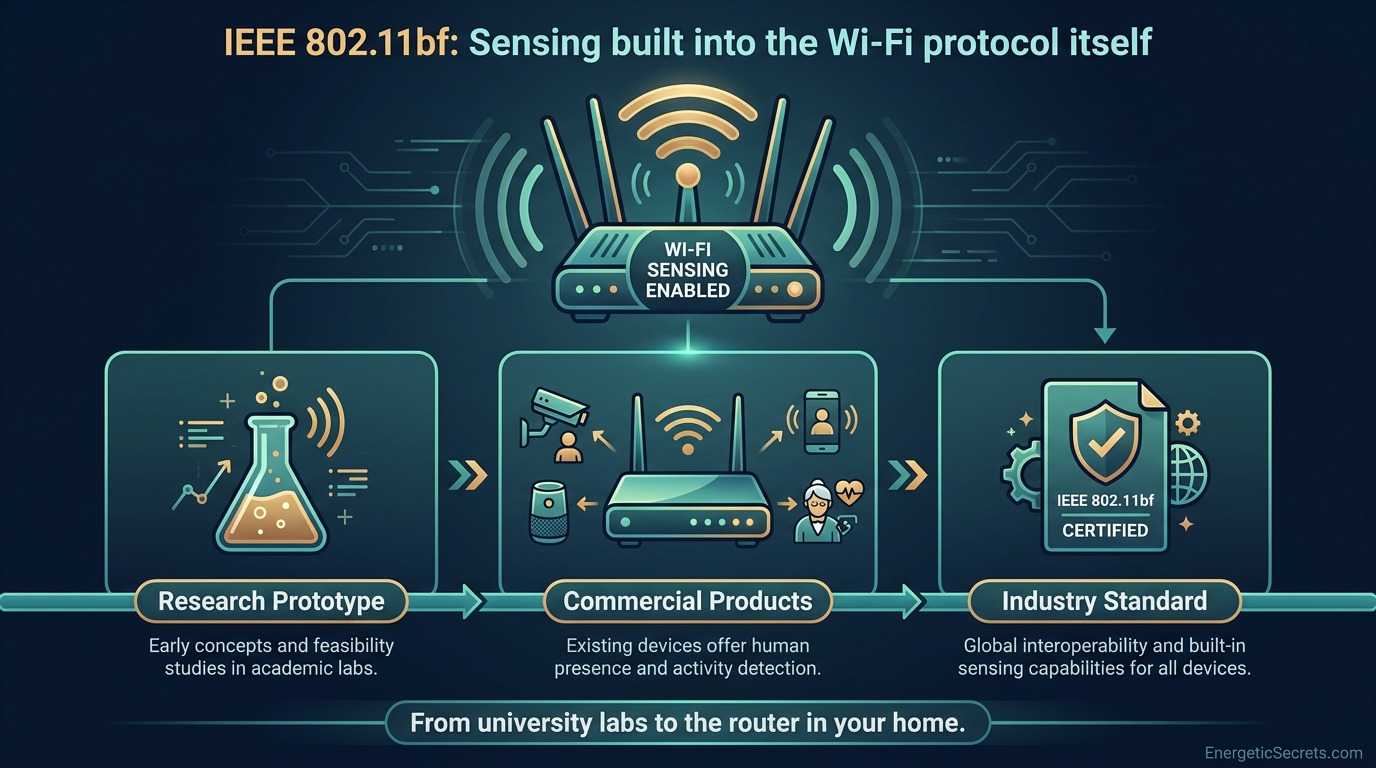
Origin Wireless, founded by University of Maryland Distinguished Professor Dr. Ray Liu, has filed over 220 patents in AI sensing and launched its first commercial Wi-Fi sensing product in 2019 [22]. The company's origin story is worth noting: Dr. Liu began this work under a 2009 DARPA contract for submarine communications. The technology migrated from underwater acoustics to in-home RF sensing, and the company now markets products for human presence detection, home security, vital signs monitoring, and sleep monitoring. Origin Wireless was named a Gartner Cool Vendor and is a driving force behind the IEEE 802.11bf standard.
That standard (IEEE 802.11bf) is the sleeper fact in this whole story. The IEEE is actively developing a formal amendment to the Wi-Fi standard specifically for WLAN sensing [24]. This is not a research hack layered on top of existing Wi-Fi. This is sensing being built into the protocol itself. When 802.11bf is ratified and deployed, every compliant Wi-Fi device will have sensing capabilities as a standard feature, not an aftermarket add-on.
Cognitive Systems, another commercial player, markets a "Spatial Intelligence Platform" to ISPs and security providers, embedding Wi-Fi sensing directly into the routers that internet service providers ship to millions of homes [23].
Suffice it to say, the trajectory is clear. Wi-Fi sensing is moving from research prototype to commercial product to industry standard, and it is doing so largely outside the public conversation about privacy and surveillance.
The Privacy Gap Nobody Is Addressing
I went looking for a dedicated privacy analysis of Wi-Fi sensing from the major civil-liberties organizations. The Electronic Frontier Foundation has published excellent whitepapers on digital surveillance (including an April 2026 paper on arbitrary digital surveillance in the Americas), but as of mid-2026, no Wi-Fi-sensing-specific analysis exists [25]. The Brookings Institution, which covers technology policy extensively, has not published on the topic either [26].
This is itself newsworthy. A technology that can map human presence, movement, breathing, and heartbeat through the walls of a home is being commercialized and standardized, and the organizations that typically sound the alarm on surveillance technologies have not yet addressed it. The privacy gap is not just a technical problem; it is an attention problem.
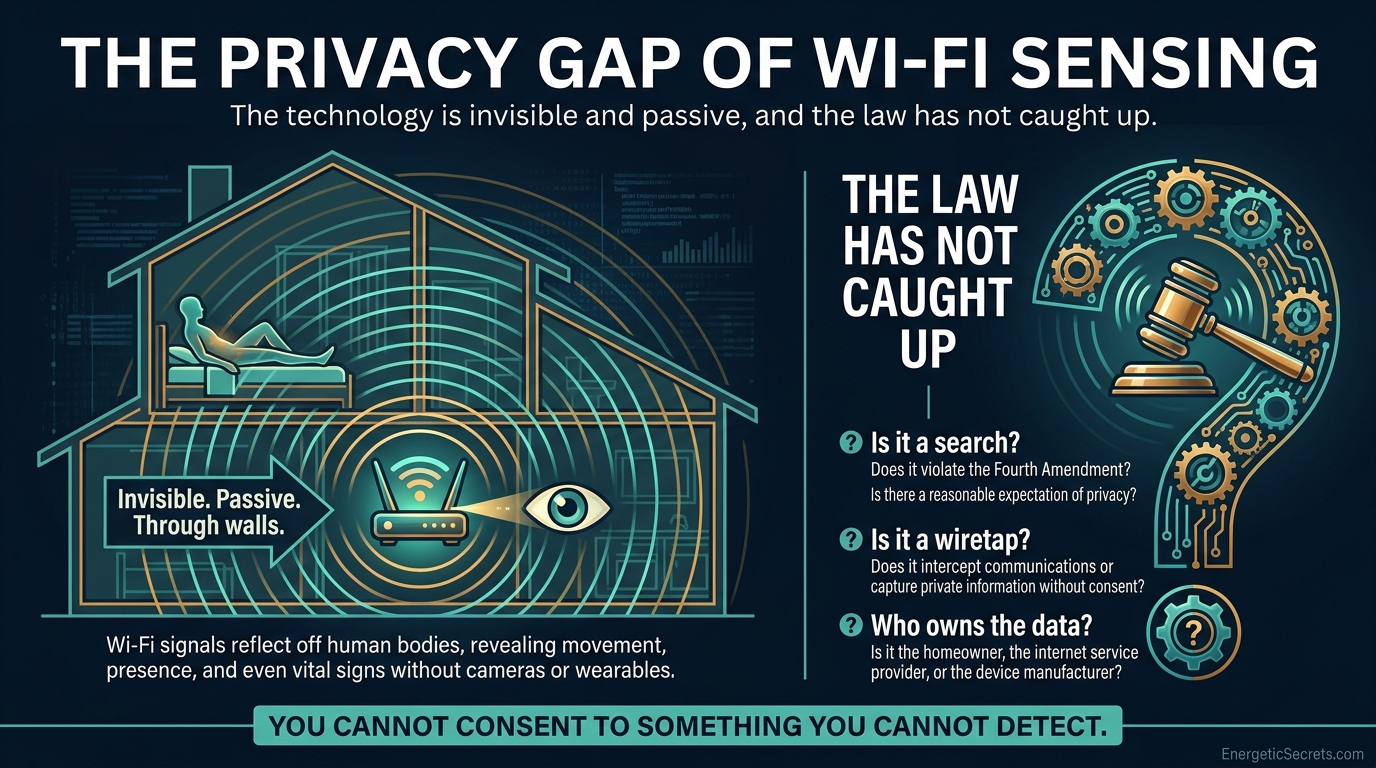
After all, the legal framework for this technology is almost nonexistent. Does a Wi-Fi sensing deployment in an apartment building constitute a search under the Fourth Amendment? If your neighbor's router can detect your presence and breathing through a shared wall, is that a wiretap violation? If an ISP deploys Wi-Fi sensing in the router it leases to you, who owns the data, and who can access it? These questions have no settled answers because the technology has outpaced the law.
Of course, the counterargument is that Wi-Fi sensing is less invasive than a camera. It cannot read text, identify faces, or capture conversations. RF-Capture produces a coarse body outline, not a photograph. But that argument misses the point. A camera is visible. You know when you're being filmed. Wi-Fi sensing is invisible, passive, and operates through walls. You cannot consent to something you cannot detect.
I don't know what the right regulatory framework looks like for this technology. But it sure seems like we should be having that conversation before the sensing is built into every router shipped to every home.
A Technology Without a Public Debate
Wi-Fi sensing is a genuine biomedical breakthrough and a genuine surveillance risk, and those two things are not in tension: they are the same technology, pointed in different directions. The same CSI data that lets a router detect an elderly parent's fall can, processed through a different algorithm, map every occupant's presence and movement through the walls of a home. The same IEEE standard that will make health monitoring ubiquitous will also make through-wall sensing a standard feature of every Wi-Fi device.
The health promise deserves to be taken seriously. Contactless vital-sign monitoring could transform elder care, sleep medicine, and chronic disease management. The research is real, published, and advancing rapidly. The surveillance risk also deserves to be taken seriously, and right now, it is not. The technology is being commercialized and standardized in a near-total policy vacuum.
The question is not whether Wi-Fi sensing is coming. It is already here. The question is whether we will have a public conversation about how it should be used before the defaults are set by the companies building it and the standards bodies codifying it.
Please share this with anyone who owns a router, which is to say nearly everyone except me, and especially anyone responsible for an elderly parent living alone. And if you have thoughts on how this technology should be governed, I would genuinely like to hear them in the comments below.
References
1. Michaelis T, Jorge J, Bijlani N, Villarroel M. VitalCSI: Contactless Respiratory Rate Estimation Using Consumer-Grade Wi-Fi Channel State Information. Sensors (Basel). 2025 Dec 29;26(1). PMID: 41516660. https://pubmed.ncbi.nlm.nih.gov/41516660/
2. Kontou P, Smida SB, Anagnostou DE. Contactless Respiration Monitoring Using Wi-Fi and Artificial Neural Network Detection Method. IEEE J Biomed Health Inform. 2024 Mar;28(3):1297-1308. PMID: 38015678. https://pubmed.ncbi.nlm.nih.gov/38015678/
3. Mosleh S, Coder JB, Scully CG, Forsyth K, Al Kalaa MO. Monitoring Respiratory Motion With Wi-Fi CSI: Characterizing Performance and the BreatheSmart Algorithm. IEEE Access. 2022;10:131932-131951. PMID: 36632174. https://pubmed.ncbi.nlm.nih.gov/36632174/
4. Bao N, Du J, Wu C, Hong D, Chen J, Nowak R, Lv Z. Wi-Breath: A WiFi-Based Contactless and Real-Time Respiration Monitoring Scheme for Remote Healthcare. IEEE J Biomed Health Inform. 2023 May;27(5):2276-2285. PMID: 35749335. https://pubmed.ncbi.nlm.nih.gov/35749335/
5. Guan L, Zhang Z, Yang X, Zhao N, Fan D, Imran MA, Abbasi QH. Multi-Person Breathing Detection With Switching Antenna Array Based on WiFi Signal. IEEE J Transl Eng Health Med. 2023;11:23-31. PMID: 36478771. https://pubmed.ncbi.nlm.nih.gov/36478771/
6. Zhuo H, Zhong T, Wu X, Yu B, Feng S, Zhong Q, Zhang H. Exploiting Dynamic Phase Information for Respiration Monitoring During Sleep via WiFi. IEEE EMBC. 2024;2024:1-5. PMID: 40039351. https://pubmed.ncbi.nlm.nih.gov/40039351/
7. Tataraidze A, Olesyuk R, Pikhletsky M. Can We Monitor Breathing During Sleep via Wi-Fi on Smartphone? IEEE EMBC. 2019;2019:6710-6713. PMID: 31947381. https://pubmed.ncbi.nlm.nih.gov/31947381/
8. Cardenas JD, Gutierrez CA, Aguilar-Ponce R. Influence of the Antenna Orientation on WiFi-Based Fall Detection Systems. Sensors (Basel). 2021 Jul 28;21(15). PMID: 34372358. https://pubmed.ncbi.nlm.nih.gov/34372358/
9. Sharma L, Chao C, Wu SL, Li MC. High Accuracy WiFi-Based Human Activity Classification System with Time-Frequency Diagram CNN Method for Different Places. Sensors (Basel). 2021 May 30;21(11). PMID: 34070922. https://pubmed.ncbi.nlm.nih.gov/34070922/
10. Vasu V, Fox N, Brabetz T, Wren M, Heneghan C, Sezer S. Detection of Cardiac Activity Using a 5.8 GHz Radio Frequency Sensor. IEEE EMBC. 2009;2009:4682-6. PMID: 19964829. https://pubmed.ncbi.nlm.nih.gov/19964829/
11. Li C, Xiao Y, Lin J. Design Guidelines for Radio Frequency Non-Contact Vital Sign Detection. IEEE EMBC. 2007;2007:1651-4. PMID: 18002290. https://pubmed.ncbi.nlm.nih.gov/18002290/
12. Apriono C, Muin F, Juwono FH. Portable Micro-Doppler Radar with Quadrature Radar Architecture for Non-Contact Human Breath Detection. Sensors (Basel). 2021 Aug 28;21(17). PMID: 34502698. https://pubmed.ncbi.nlm.nih.gov/34502698/
13. Kathuria N, Seet BC. 24 GHz Flexible Antenna for Doppler Radar-Based Human Vital Signs Monitoring. Sensors (Basel). 2021 May 27;21(11). PMID: 34072148. https://pubmed.ncbi.nlm.nih.gov/34072148/
14. Yang ZK, Shi H, Zhao S, Huang XD. Vital Sign Detection during Large-Scale and Fast Body Movements Based on an Adaptive Noise Cancellation Algorithm Using a Single Doppler Radar Sensor. Sensors (Basel). 2020 Jul 28;20(15). PMID: 32731415. https://pubmed.ncbi.nlm.nih.gov/32731415/
15. Wang P, Zhang Y, Ma Y, Liang F, An Q, Xue H, Yu X, Lv H, Wang J. Method for Distinguishing Humans and Animals in Vital Signs Monitoring Using IR-UWB Radar. Int J Environ Res Public Health. 2019 Nov 13;16(22). PMID: 31766272. https://pubmed.ncbi.nlm.nih.gov/31766272/
16. Adib F, Katabi D. See Through Walls with Wi-Fi! (Wi-Vi). ACM SIGCOMM 2013. DOI: 10.1145/2486001.2486039. https://people.csail.mit.edu/fadel/wivi/
17. Adib F, Mao H, Kabelac Z, Katabi D, Miller RC. Smart Homes That Monitor Breathing and Heart Rate (Vital-Radio). ACM CHI 2015. DOI: 10.1145/2702123.2702200.
18. Pu Q, Gupta S, Gollakota S, Patel S. Whole-Home Gesture Recognition Using Wireless Signals (WiSee). ACM Mobicom 2013. DOI: 10.1145/2500423.2500436. https://wisee.cs.washington.edu/
19. Adib F, Kabelac Z, Katabi D, Miller RC. 3D Tracking via Body Radio Reflections. Usenix NSDI 2014. https://www.usenix.org/conference/nsdi14/technical-sessions/presentation/adib
20. Adib F, Hsu CY, Mao H, Katabi D, Durand F. Capturing the Human Figure Through a Wall (RF-Capture). ACM SIGGRAPH Asia 2015. DOI: 10.1145/2816795.2818072.
21. MIT CSAIL. Emerald: Fall Detection and Gait Monitoring Device. https://www.emeraldinno.com/
22. Origin Wireless. TruPresence and AI Sensing Platform. https://www.originwirelessai.com/
23. Cognitive Systems. Spatial Intelligence Platform. https://www.cognitivesystems.com/
24. IEEE 802.11bf WLAN Sensing Standard. https://www.ieee802.org/11/Reports/tgbf_update.htm
25. Electronic Frontier Foundation. Whitepapers. https://www.eff.org/wp/
26. Brookings Institution. Search: Wi-Fi Privacy . https://www.brookings.edu/?s=wifi+privacy
Disclaimer: I am not a health professional of any kind and make no medical claims. Please do your own research. Nothing in this article should be considered medical advice. None of the statements have been evaluated by the FDA. Not intended to diagnose, treat, cure or prevent any disease. If you have a medical condition seek professional help. |




5 Comments
Join the conversation
Worked in IT for twenty years and I never once thought about CSI data being used this way. We always just thought of it as signal noise. Wild that the thing routers were throwing away is apparently the most interesting part.
The Wi-Vi demo from MIT in 2013 is what really gets me. That was over ten years ago using hardware you could buy at Best Buy and they could already track people through concrete. What does that same team have now in 2026.
I feel like this is a bit overblown. Your neighbor's router signal barely reaches your living room as it is. The idea that someone is running neural networks on it to track you through a wall seems like a lot of effort for very little.
My mom lives alone and falls a lot. I would genuinely love a router that could alert me if she went down. So I get the elder care angle completely. But the idea that my ISP could also be reading my breathing patterns through their leased equipment is a totally different thing.
The part about the 802.11bf standard is what got me. They're literally baking this into every future router and nobody is talking about it at the school board level, the city council level, nowhere.