
From Sewage to Supper: The Shocking Truth About What's Really on Your Plate |
6,700 confirmed cases. 45 states. 423 hospitalizations. The CDC 2026 cyclosporiasis outbreak is the latest chapter in a pattern that has repeated every summer for decades. |
The Parasite on Your Plate: How Human Waste Reaches the American Dinner Table
6,700 confirmed cases. 45 states. 423 hospitalizations. And the season isn't over.
The CDC's 2026 cyclosporiasis surveillance numbers are the kind of thing that makes you stop and stare at your salad: since May 1, more than 6,700 Americans have been sickened by a microscopic parasite whose only known host is the human body (4). The CDC knows of more than 11,500 additional cases that haven't yet been confirmed. An active multistate outbreak linked to iceberg lettuce from central Mexico triggered a Taylor Farms recall on July 17. And the reporting lag means the true count is still climbing.
This isn't a story about bacteria. It's about a single-celled parasite called Cyclospora cayetanensis that exploits a gap in America's food-safety architecture: a regulatory system built for E. coli and Salmonella that never accounted for a pathogen that can't be cultured in a lab, lacks whole-genome sequencing for routine outbreak tracking, and reaches your salad through a chain that begins with human waste in irrigation water.
I'm sure glad that the salad I eat comes from a local farmer friend or my own garden!
A Parasite With One Host: You
Cyclospora cayetanensis is a coccidian parasite with a transmission cycle that is almost brutally simple. The organism infects the human small intestine, reproduces, and sheds oocysts (microscopic egg-like structures) into the host's feces. Those oocysts are not immediately infectious. They need one to two weeks in the environment, sporulating in warm, humid conditions, before they can infect another person (1).
Here is the critical detail, and it is the one the mainstream food-safety narrative tends to glide past: humans are the only known host (2). There is no established animal reservoir. No livestock intermediary. No confirmed wildlife vector. When Cyclospora oocysts show up on produce, human fecal contamination of water or soil is a recognized transmission route (1). The thing is, that means the parasite on your lettuce didn't come from a cow. It came from a person.
A 2022 review in Microorganisms put it plainly: "Humans are the only known hosts of this parasite" (2). A systematic review of Cyclospora in animals confirmed the same: while PCR-based detections have occasionally been reported in animals, no productive animal infection or reservoir has been established (3).
Some of us are understandably skeptical about PCR-based detections in general and take any mention of that with a monumental grain of salt.
But the contamination pathway is still not a mystery. It has been documented in peer-reviewed research. But the evidence supports a recognized transmission route, not a universal claim that every outbreak traces to a single kind of failure in every supply chain. After all, when you are dealing with a parasite that can only come from one species, the question is not whether human waste is involved. The question is how it got there.
The 2026 Outbreak: What We Know Right Now
As of July 27, 2026, the CDC reports 6,707 laboratory-confirmed domestically acquired cyclosporiasis cases across 45 states, with 423 hospitalizations (4). The median age of patients is 44, and 56% are female, but cases span ages 1 through 98. The hospitalization rate sits at 6.3%, meaning roughly one in every 16 confirmed patients ends up in a hospital bed.
On July 17, Taylor Farms recalled iceberg lettuce sourced from central Mexico after CDC, FDA, and state health officials linked it to a multistate outbreak spanning nine states (4). The investigation is active. Traceback efforts are ongoing.
This is not an isolated event. It is the latest chapter in a pattern that has repeated every summer for decades which I suppose that most Americans don't have any idea is happening.
A History Written in Contaminated Produce
Cyclospora outbreaks in the United States follow a predictable rhythm: they peak between May and August, they are predominantly linked to fresh produce, and they have been documented annually since the mid-1990s (5).
The vehicles are familiar to anyone who has followed food-safety news: cilantro, basil, raspberries, salad mixes, lettuce. A 2019 CDC surveillance summary covering 2011–2015 established the baseline epidemiology: seasonal, produce-linked, and concentrated in the summer months (5). A 2025 analysis of FoodNet and FDOSS data from 2015–2019 confirmed the pattern and documented the difficulty of attributing outbreaks to specific produce items when multiple ingredients are involved (6).
Then came 2020. Genotyping confirmed multiple outbreak clusters, with one major cluster linked to bagged salad mix (7). The 2019 season had already produced multiple outbreak clusters linked to fresh produce imports, prompting the development of improved genotyping systems to track them (8).
In 2021–2022, Florida saw a doubling of cyclosporiasis cases partially attributable to a single salad kit (9). In 2023, an outbreak among patrons of a Mexican-style restaurant in Limestone County, Alabama, demonstrated how contaminated produce can sicken dozens of people through a single food-service point (10).
The FoodNet surveillance network, which tracks foodborne illness across 10 U.S. sites, documented a marked increase in Cyclospora incidence from a baseline of roughly 0.1–0.3 cases per 100,000 population (2016–2018) to higher rates during the large outbreak years of 2020–2022 (11, 12). Keep in mind, those are only the confirmed cases. The CDC itself acknowledges thousands more that never get laboratory confirmation.
How the Parasite Reaches Your Plate
The contamination pathway has been investigated in peer-reviewed research, and the picture that emerges is not reassuring.
In 2024, a study published in the Journal of Food Protection investigated Cyclospora prevalence in southeastern U.S. growing environments and found the parasite in agricultural settings (13). That same year, researchers confirmed Cyclospora 18S rRNA gene detections in irrigation pond water and wastewater sludge, establishing that the parasite's DNA is present in the water sources used to grow crops in the United States (14).
A 2026 cross-sectional study detected Cyclospora in both fresh produce and irrigation water at the environmental-agricultural interface (15). The cross-sectional design cannot establish the water as the source of the produce detections, but it confirms something that should give anyone pause: the parasite and the food supply intersect at the point of production. Earlier work had already validated the technical methods for detecting Cyclospora in agricultural water using dead-end ultrafiltration and DNA-based approaches (16).
Human fecal contamination of water or soil is a recognized transmission route, and studies have reported molecular detections in growing environments and produce (1, 13–16). Those detections do not by themselves establish viability or the exact contamination route for a specific product. Washing produce is prudent, but this article should not represent washing as eliminating risk.
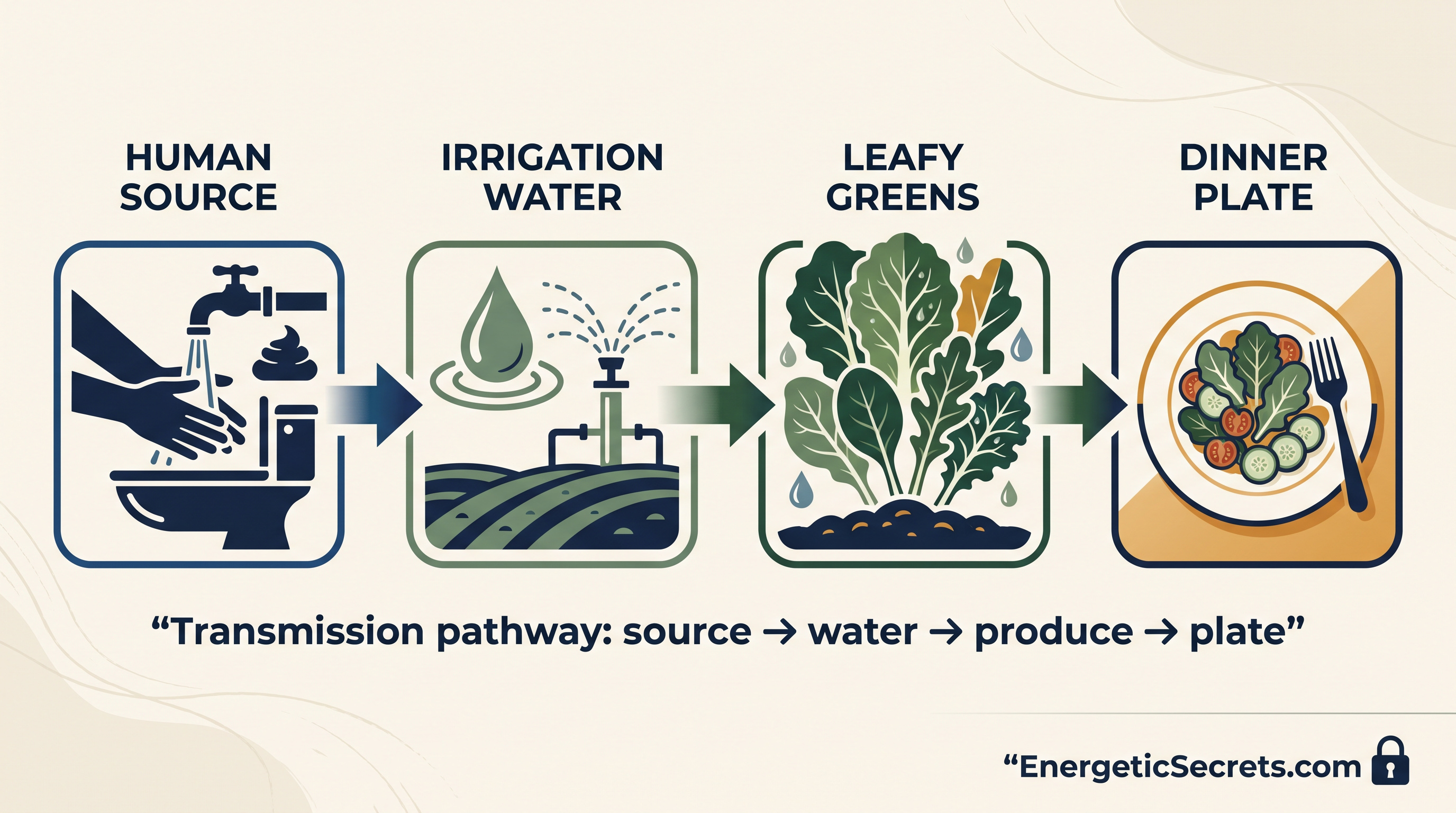
A possible contamination route which has largely been ignored since a whistleblower from the EPA documented it in the book "Science For Sale" revealed that municipal waste from water treatment facilities all over the US was being sold as "compost" and used in growing food crops. Could this be another contamination route for Cyclospora? (17)
David L. Lewis's Science for Sale is one source worth reading carefully, even if you come away with more questions than answers.
A 2024 molecular survey of frozen berries reported molecular detection of Cyclospora DNA and other parasites (18). A 2020 study using qPCR found Cyclospora on strawberries sold in Bogotá, Colombia (19). Neither study establishes that freezing failed to inactivate viable oocysts, nor does the Bogotá market study document U.S. export frequency. Of course, the fact that we are even having this conversation about frozen berries and imported strawberries tells you something about how far this parasite has spread.
The Detection Gap: Why This Parasite Is Harder to Catch Than Salmonella
If Cyclospora were a bacterium, the 2026 outbreak would look very different. Whole-genome sequencing, the gold standard for Salmonella and Listeria outbreak investigations, can link cases to a specific source with speed and precision. It is the tool that has transformed foodborne-illness surveillance in the last decade.
Cyclospora doesn't have that tool.
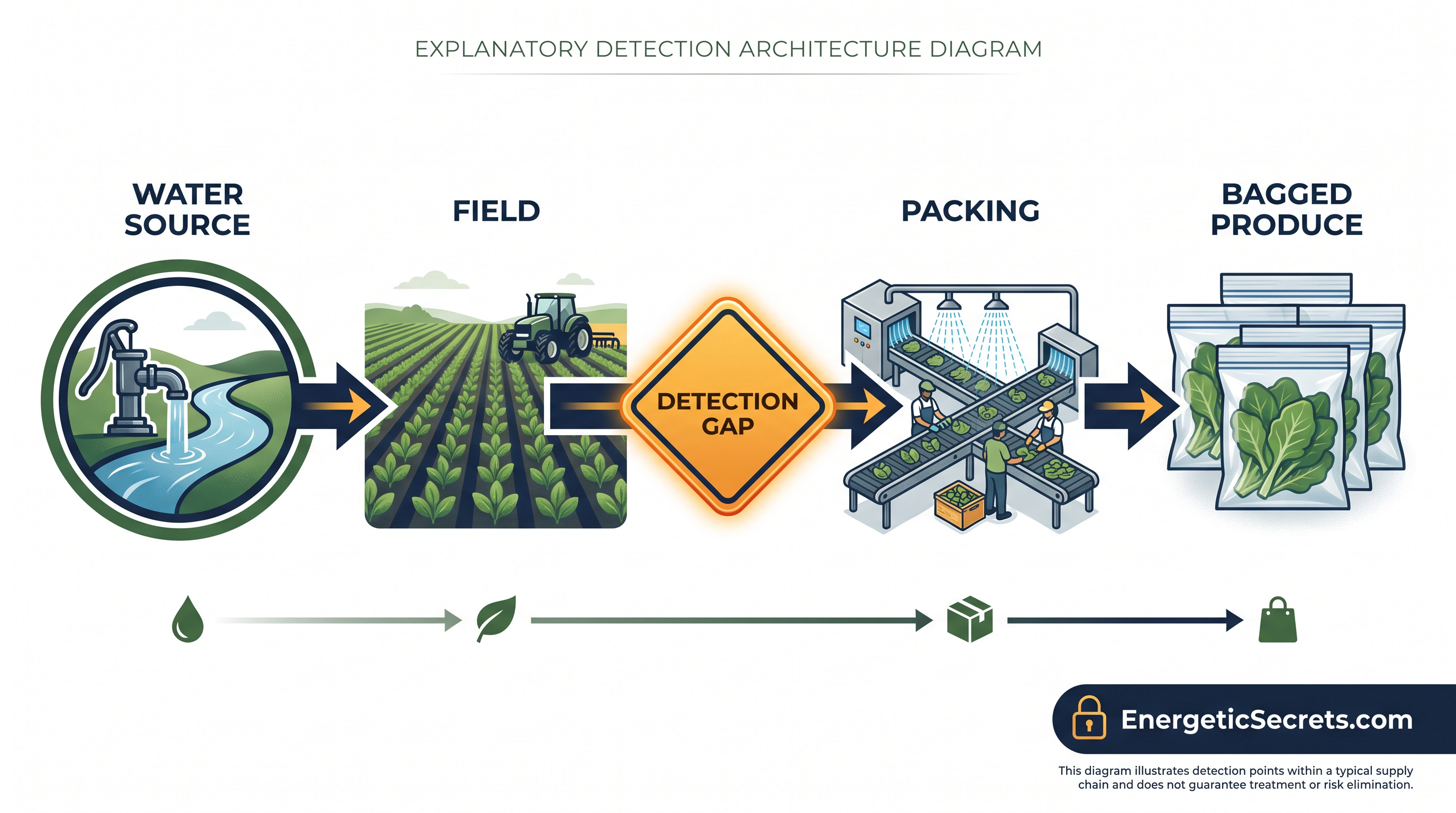
As the CDC states plainly on its 2026 surveillance page: "The Cyclospora parasite is harder to track than many bacteria like Salmonella because whole genome sequencing isn't available for this parasite" (4).
The reasons are fundamental. There is no laboratory culture system for Cyclospora. There is no animal model. Researchers cannot grow the parasite to study it: they must rely on oocysts obtained from naturally infected human patients, which "considerably restricts what can be learnt about this parasite" (20). Suffice it to say, when you cannot even grow the thing you are trying to fight, you are fighting with one hand tied behind your back.
A 2026 comprehensive review in Comprehensive Reviews in Food Science and Food Safety surveyed the state of the field: researchers are using surrogate organisms (Eimeria species) to study Cyclospora biology and develop mitigation strategies, because studying the real thing is so constrained (21).
Progress is being made, and I want to be fair about that. Targeted amplicon sequencing methods now allow genotyping from produce and clinical samples with enhanced resolution (22). A field-deployable CRISPR-based assay has been developed for detecting Cyclospora in human fecal samples (23). Deep-sequencing workflows have been validated for outbreak genotyping (24). FDA-optimized protocols for detecting Cyclospora in food and water now exist (25).
These methods are advancing outbreak investigation, but their operational limits and uptake vary by assay and setting (22–25). The 2021 retrospective evaluation of integrated molecular-epidemiological approaches confirmed both the promise and the limitations: genotyping helps, but it is not yet a substitute for the sequencing infrastructure that exists for bacteria (26).
The Regulatory Gap: A System Built for Bacteria
The FDA's Food Safety Modernization Act (FSMA) Produce Safety Rule establishes science-based minimum standards for growing, harvesting, packing, and holding produce. Its microbial water-quality criteria use generic E. coli as an indicator organism (27).
Here is the problem, and it is the kind of thing that makes you wonder who was in the room when these rules were written: the rule uses generic E. coli as an indicator and does not set a Cyclospora-specific testing requirement (27). A generic E. coli result is not a pathogen-specific test for Cyclospora. The Produce Safety Rule does not mention Cyclospora by name. It does not mandate protozoan-parasite testing. It exempts farms below certain revenue thresholds, and its compliance dates have been repeatedly extended (27).
A 2025 review in Food and Waterborne Parasitology examined why parasitic diseases are undercounted and under-regulated compared to bacterial and viral foodborne illnesses, and concluded that the regulatory framework was simply not designed with parasites in mind (28). A 2026 review of reclaimed-water use for produce irrigation in the United States highlighted the gap between water-reuse practices and pathogen-monitoring requirements, including for protozoan parasites (29).
This is not a conspiracy. It is an architecture problem. The food-safety system was built in an era when bacterial pathogens dominated the conversation. Cyclospora, a parasite that can't be cultured, lacks routine whole-genome sequencing, and reaches produce through a fecal-oral route that standard bacterial indicators don't capture, falls through the cracks. The thing is, when your regulatory architecture was built for a different enemy, you should not be surprised when a different enemy walks right through it.
The Import Blind Spot
Some U.S. outbreaks have been linked to imported produce, including the 2026 central-Mexico iceberg-lettuce investigation (4). Historical outbreaks have been associated with produce from Mexico, Central America, and other endemic regions.
Traceback investigations frequently hit dead ends. Produce passes through multiple distributors. It is commingled, and the resulting products carry no lot-level tracking that would allow investigators to distinguish between individual sources. As the CDC notes, "Many foods investigated in outbreaks have multiple produce ingredients, like salsa or salads, making it difficult to narrow down to a single food item" (4).
Genotyping is beginning to help. A 2025 analysis of Cyclospora genotypic variations in U.S. cases from 2018–2021 linked specific genotypes to epidemiological characteristics, including associations with likely geographic origins of contaminated produce (30). And a landmark 2023 study demonstrated that what was previously classified as a single species (Cyclospora cayetanensis) actually comprises at least three distinct species, all capable of causing human disease (31).
This has significant implications for outbreak tracking and source attribution, but the taxonomy is still being refined. After all, when you discover that your "one parasite" is actually three, every prior outbreak investigation needs to be re-examined.
The Human Cost
Cyclosporiasis is not a mild stomach bug. The infection causes protracted, watery diarrhea, abdominal cramping, nausea, fatigue, and weight loss that can last for weeks if untreated (32).
In immunocompromised patients, including organ-transplant recipients and people on immunosuppressive therapies, the infection can be severe, prolonged, and may involve sites beyond the intestine (33). A 2026 case-series review documented the growing public-health concern of severe Cyclospora infections in vulnerable populations (33).
The treatment of choice is trimethoprim-sulfamethoxazole (TMP-SMX), a combination antibiotic. It is effective, but relapse can occur (32). For patients who cannot tolerate sulfa drugs, no equally effective alternative exists.
Of course, that is the kind of gap the pharma cartel has no financial incentive to fill: a parasite that mostly affects people in low-income countries is not exactly a blockbuster-drug opportunity.
I will be investigating terrain-based natural substances that may be helpful as a remediation so keep an eye out for that.
The global burden is substantial. A 2024 systematic review and meta-analysis estimated the worldwide prevalence of Cyclospora infection at 3.4%, rising to 5.9% in Africa and 7.6% in low-income countries (34). In high-income countries, the prevalence is 0.4%. The meta-analysis has the usual limitations of pooled estimates: heterogeneity across included studies and sensitivity to individual-study influence.
A 2026 WHO-commissioned global burden study, published in The Lancet Global Health, included Cyclospora among the 14 foodborne diarrheal hazards assessed, providing the most current global burden framework available (35).
What Can Be Done
The research pipeline is active, but it is early-stage. Sand and zero-valent iron (ZVI) filters have shown promise for removing Cyclospora oocysts from irrigation water in laboratory studies (36). Preharvest sampling plans have been modeled, but the models show that current sampling approaches have limited sensitivity for detecting low-level contamination (37). These are research findings, not deployed solutions.
The structural fixes are not mysterious: mandate protozoan-parasite testing in irrigation water, not just bacterial indicators. Close the small-farm exemption in the Produce Safety Rule for farms of sufficient size that they may be contaminating supply chains.
I want to be clear, this is a slippery slope, and we should not let these rather large farms that are contaminating supply chains be considered "small-farms" for that exemption. This could allow factory farms to force massive regulation that shuts down the little guy and this should not be trusted.
However, for these "supply-chain" farms we should require lot-level traceability for imported produce. Fund the development of culture systems and whole-genome sequencing for Cyclospora. Deploy the detection methods that already exist (the FDA-optimized protocols, the genotyping workflows) at the ports of entry and in growing regions.
Until then, the parasite whose only known host is the human body will keep finding its way onto American plates. Not because the science is missing. Because the regulatory architecture was built for a different enemy.
But let's not throw the baby out with the bathwater and allow this to be another incursion into the lives of small farmers who are being assaulted from all directions by regulatory agencies. Have we already forced enough over-regulation on small farms to cause future famine in our beloved country?
In closing, this is one of those topics that sits at the intersection of everything I care about: a regulatory system that was never designed to protect you from the threat it now faces, a parasite that exploits the gaps in that system with almost surgical precision, and a food supply so complex and opaque that tracing a single contaminated head of lettuce back to its source is still, in 2026, a genuine investigative challenge.
And if there was ever a better reason to eat local, here it is. Get to know your local farmers at farmers markets when you can and then you can avoid factory farms in general.
Please share your thoughts in the comments below. What do you think: is the small-farm exemption protecting family farms, or has it become a loophole that large operations exploit?
And if you found this useful, share it with anyone who still thinks a quick rinse under the tap is all the food safety they need. As usual you can dig deeper in the archive at EnergeticSecrets.com where you can subscribe and never miss an update.
1. Almeria S, Cinar HN, Dubey JP. Cyclospora cayetanensis and Cyclosporiasis: An Update. Microorganisms. 2019;7(9):317. PMID 31487898
2. Dubey JP, Khan A, Rosenthal BM. Life Cycle and Transmission of Cyclospora cayetanensis: Knowns and Unknowns. Microorganisms. 2022;10(1):118. PMID 35056567
3. Totton SC, O'Connor AM, Naganathan T, Martinez BAF, Sargeant JM. A review of Cyclospora cayetanensis in animals. Zoonoses Public Health. 2021;68(8):861-867. PMID 34156154
4. CDC. Cyclosporiasis Surveillance — United States, 2026. Centers for Disease Control and Prevention. Data as of July 27, 2026. CDC Cyclosporiasis Surveillance
5. Casillas SM, Hall RL, Herwaldt BL. Cyclosporiasis Surveillance — United States, 2011–2015. MMWR Surveill Summ. 2019;68(3):1-16. PMID 31002104
6. Markon AO, Karasick A, Punzalan C, da Silva AJ, Wolpert B. Evaluating Foodborne Cyclosporiasis Using Foodborne Diseases Active Surveillance Network and Foodborne Disease Outbreak Surveillance System Data, 2015–2019. Am J Trop Med Hyg. 2025;112(2):319-326. PMID 39561398
7. Barratt J, Ahart L, Rice M, et al. Genotyping Cyclospora cayetanensis From Multiple Outbreak Clusters With an Emphasis on a Cluster Linked to Bagged Salad Mix — United States, 2020. J Infect Dis. 2022;225(12):2176-2180. PMID 34606577
8. Barratt J, Houghton K, Richins T, et al. Investigation of US Cyclospora cayetanensis outbreaks in 2019 and evaluation of an improved Cyclospora genotyping system against 2019 cyclosporiasis outbreak clusters. Epidemiol Infect. 2021;149:e214. PMID 34511150
9. Rehme P. Notes from the Field: Doubling of Cyclosporiasis Cases Partially Attributable to a Salad Kit — Florida, 2021–2022. MMWR Morb Mortal Wkly Rep. 2023;72(27):751-752. PMID 37410669
10. Goetzman J, Carter A, Oliveira A, Ingram LA. Outbreak of Cyclosporiasis Among Patrons of a Mexican-Style Restaurant — Limestone County, Alabama, May–June 2023. MMWR Morb Mortal Wkly Rep. 2025;74(13):217-221. PMID 40244909
11. Collins JP, Shah HJ, Weller DL, et al. Preliminary Incidence and Trends of Infections Caused by Pathogens Transmitted Commonly Through Food — Foodborne Diseases Active Surveillance Network, 10 U.S. Sites, 2016–2021. MMWR Morb Mortal Wkly Rep. 2022;71(40):1260-1264. PMID 36201372
12. Delahoy MJ, Shah HJ, Weller DL, et al. Preliminary Incidence and Trends of Infections Caused by Pathogens Transmitted Commonly Through Food — Foodborne Diseases Active Surveillance Network, 10 U.S. Sites, 2022. MMWR Morb Mortal Wkly Rep. 2023;72(26):701-706. PMID 37384552
13. Kahler AM, Hofstetter J, Arrowood M, et al. Sources and Prevalence of Cyclospora cayetanensis in Southeastern U.S. Growing Environments. J Food Prot. 2024;87(7):100309. PMID 38815808
14. Hofstetter J, Arfken A, Kahler A, Qvarnstrom Y, Rodrigues C, Mattioli M. Evaluation of coccidia DNA in irrigation pond water and wastewater sludge associated with Cyclospora cayetanensis 18S rRNA gene qPCR detections. Microbiol Spectr. 2024;12(8):e0090624. PMID 38916361
15. Naz I, Almayouf MA, Rehman A, et al. Molecular detection of Cyclospora cayetanensis in fresh produce and irrigation water in peri-urban settings: a cross-sectional study of the environmental-agricultural interface. BMC Microbiol. 2026;26(1). PMID 42067754
16. Durigan M, Murphy HR, da Silva AJ. Dead-End Ultrafiltration and DNA-Based Methods for Detection of Cyclospora cayetanensis in Agricultural Water. Appl Environ Microbiol. 2020;86(23). PMID 32948525
17. Lewis DL. Science for Sale: How the US Government Uses Powerful Corporations and Leading Universities to Support Government Policies, Silence Top Scientists, and Derail Public Health. New York: Skyhorse Publishing; 2014. 352 pp. ISBN 978-1626360716.
18. Barlaam A, Datteo M, Perdonò S, Puccini A, Giangaspero A. Molecular Survey of Parasitic Contamination of Frozen Berries. Pathogens. 2024;13(10). PMID 39452771
19. Ortiz Pineda C, Temesgen TT, Robertson LJ. Multiplex Quantitative PCR Analysis of Strawberries from Bogotá, Colombia, for Contamination with Three Parasites. J Food Prot. 2020;83(10):1679-1684. PMID 32421823
20. Almeria S, Chacin-Bonilla L, Maloney JG, Santin M. Cyclospora cayetanensis: A Perspective (2020–2023) with Emphasis on Epidemiology and Detection Methods. Microorganisms. 2023;11(9):2171. PMID 37764015
21. McCaughan KJ, Kniel KE. Current Knowledge and Future Directions for Cyclospora cayetanensis Research and Its Surrogates. Compr Rev Food Sci Food Saf. 2026;25(1):e70327. PMID 41347294
22. Leonard SR, Mammel MK, Gharizadeh B, et al. Development of a targeted amplicon sequencing method for genotyping Cyclospora cayetanensis from fresh produce and clinical samples with enhanced genomic resolution and sensitivity. Front Microbiol. 2023;14:1212863. PMID 37396378
23. Qin Z, Wang Y, Sun M, et al. Development of a field-deployable RPA-CRISPR/Cas12a assay for the detection of Cyclospora cayetanensis in human feces. Parasit Vectors. 2025;19(1):4. PMID 41316351
24. Peterson AC, Jacobson D, Richins T, Barratt J, Qvarnstrom Y. Assessing the sequencing success and analytical specificity of a targeted amplicon deep sequencing workflow for genotyping the foodborne parasite Cyclospora. J Clin Microbiol. 2025;63(6):e0181124. PMID 40366167
25. Durigan M, Ewing-Peeples L, Almeria S, et al. Detection of Cyclospora cayetanensis in Food and Water Samples: Optimized Protocols for Specific and Sensitive Molecular Methods from a Regulatory Agency Perspective. J Food Prot. 2024;87(7):100291. PMID 38701974
26. Ahart L, Jacobson D, Rice M, et al. Retrospective evaluation of an integrated molecular-epidemiological approach to cyclosporiasis outbreak investigations — United States, 2021. Epidemiol Infect. 2023;151:e131. PMID 37466070
27. FDA. FSMA Final Rule on Produce Safety. U.S. Food and Drug Administration. FDA FSMA Produce Safety Rule
28. Robertson LJ. Transmission of parasites to people via food: how can we determine their impact and why do we need to know? Food Waterborne Parasitol. 2025;39:e00258. PMID 40212461
29. Reyes GA, Suslow TV, Chevez Z, et al. A Review of Reclaimed Water Use for Irrigation of Produce Crops and Food Safety Aspects in the United States. J Food Prot. 2026;89(7):100824. PMID 42217625
30. Shen J, Cama VA, Jacobson D, Barratt J, Straily A. Cyclospora Genotypic Variations and Associated Epidemiologic Characteristics, United States, 2018–2021. Emerg Infect Dis. 2025;31(2):256-266. PMID 39983699
31. Barratt JLN, Shen J, Houghton K, et al. Cyclospora cayetanensis comprises at least 3 species that cause human cyclosporiasis. Parasitology. 2023;150(3):269-285. PMID 36560856
32. Mathison BA, Pritt BS. Cyclosporiasis — Updates on Clinical Presentation, Pathology, Clinical Diagnosis, and Treatment. Microorganisms. 2021;9(9):1863. PMID 34576758
33. Kataria S, Singla A, Mamoria VP, Sharma I. The burden of cyclosporiasis in immuno-compromised patients: A growing public health issue lessons from case studies. Trop Doct. 2026;56(3):514-520. PMID 41919665
34. Chen Y, Qin Z, Li J, Xiao L, Zhang L. The global prevalence of Cyclospora cayetanensis infection: A systematic review, meta-analysis, and meta-regression. Acta Trop. 2024;253:107175. PMID 38492874
35. Majowicz SE, Colston JM, Kirk MD, et al. WHO estimates of the global, regional, and national burden of 14 foodborne diarrheal enteric hazards, 2000–21: an updated data synthesis. Lancet Glob Health. 2026:103997. PMID 42296981
36. Yeager C, Tucker M, Gutierrez A, et al. Filters comprised of sand and Zero Valent Iron hold promise as tools to mitigate risk posed by Cyclospora cayetanensis oocysts. Food Waterborne Parasitol. 2024;37:e00243. PMID 39301535
37. Reyes GA, Chavez RA, Stasiewicz MJ. Modeling Preharvest Cyclospora cayetanensis Sampling and Testing for Various Water and Produce Sampling Plans. J Food Prot. 2023;86(11):100161. PMID 37742835
Disclaimer: I am not a health professional of any kind and make no medical claims. Please do your own research. Nothing in this article should be considered medical advice. None of the statements have been evaluated by the FDA. Not intended to diagnose, treat, cure or prevent any disease. If you have a medical condition seek professional help. |




7 Comments
Join the conversation
6700 confirmed cases and most people have never even heard the word cyclosporiasis. I sent this to my whole family. Thank you for putting this together in plain language.
I appreciate the research but the section about municipal waste being sold as compost felt like it went a different direction. That book has some serious critics. Just saying, worth noting.
When a whistleblower from the EPA speaks out like he did with a book like Science For Sale, critics will come out of the shadows for sure! Read the book if you have a chance this wasn't the only topic he covered in there...
Curious about the part where they say it might actually be three separate species. Does that mean past outbreaks were misattributed? Seems like a pretty big deal that nobody is talking about.
I've been buying from a farm stand down the road for two summers now and honestly stuff like this is exactly why. Worth every extra cent.
So the FDA rule doesn't even test for this parasite specifically? They're testing for e coli and calling it a day? That's wild to me.
The Taylor Farms recall is what brought me here. My daughter got so sick in July and we had no idea what it was. Weeks of misery. Now I'm wondering if this was it.