
Boeing Engineered This Out of the 787: Every Other Airliner Still Breathes Through Its Engine |
Almost every jet feeds you unfiltered air bled off the engine. Boeing built the 787 without it. The chemical found in passengers' blood, and why the illness is still disputed. |

Almost every jet feeds you unfiltered air bled off the engine. Boeing built the 787 without it. The chemical found in passengers' blood, and why the illness is still disputed.
Every time you board a commercial jet, you hand the airline your life in more ways than you probably realize. You trust the pilots, the maintenance crews, the air traffic controllers. But there is one thing almost nobody thinks about: the air you are actually breathing for the next several hours. And the truth about where that air comes from is one of the most quietly contested questions in modern aviation.
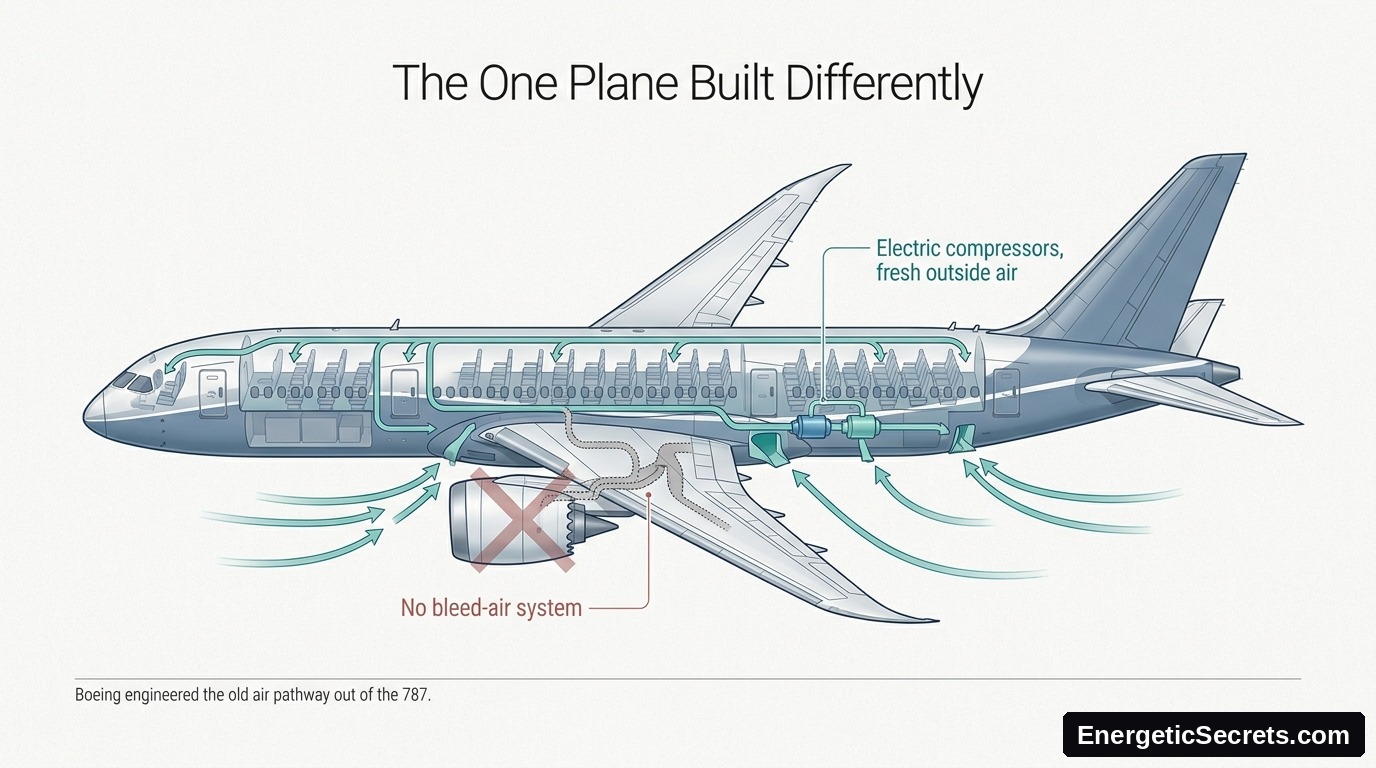
Here is the part that surprises most people. The air in a pressurized cabin is not pulled in fresh from outside and filtered. On almost every airliner flying today, the air you breathe is "bleed air," compressed air bled directly off the engine's compressor stage and piped into the cabin. It is hot, it is pressurized, and on most aircraft it is not filtered for chemical contaminants before it reaches your lungs.

The Air You Breathe at 35,000 Feet
To keep a cabin breathable at altitude, an aircraft has to pressurize it. The cheapest and oldest way to do that is to take air that has already been compressed by the engine and route some of it into the cabin. That is the bleed-air system, and it has been the industry standard for decades (34).
The catch is that this air passes through the same machinery that is bathed in jet-engine oil. If everything works perfectly, the oil stays where it belongs. But engines are not perfect, and seals wear. When a seal leaks, a small amount of heated oil can enter the bleed-air stream and ride along into the cabin. The result is what crews call a "fume event," and it has been documented across nearly all common aircraft models (12).
There is one notable exception to this design. Boeing's 787 Dreamliner was built with a "no-bleed" architecture that eliminates the traditional pneumatic system and bleed manifold entirely, replacing it with electric systems (38). The fact that Boeing engineered the bleed-air pathway out of the 787 is, by itself, a quiet admission that the pathway was a problem worth engineering around.
What Is Actually in Jet Engine Oil
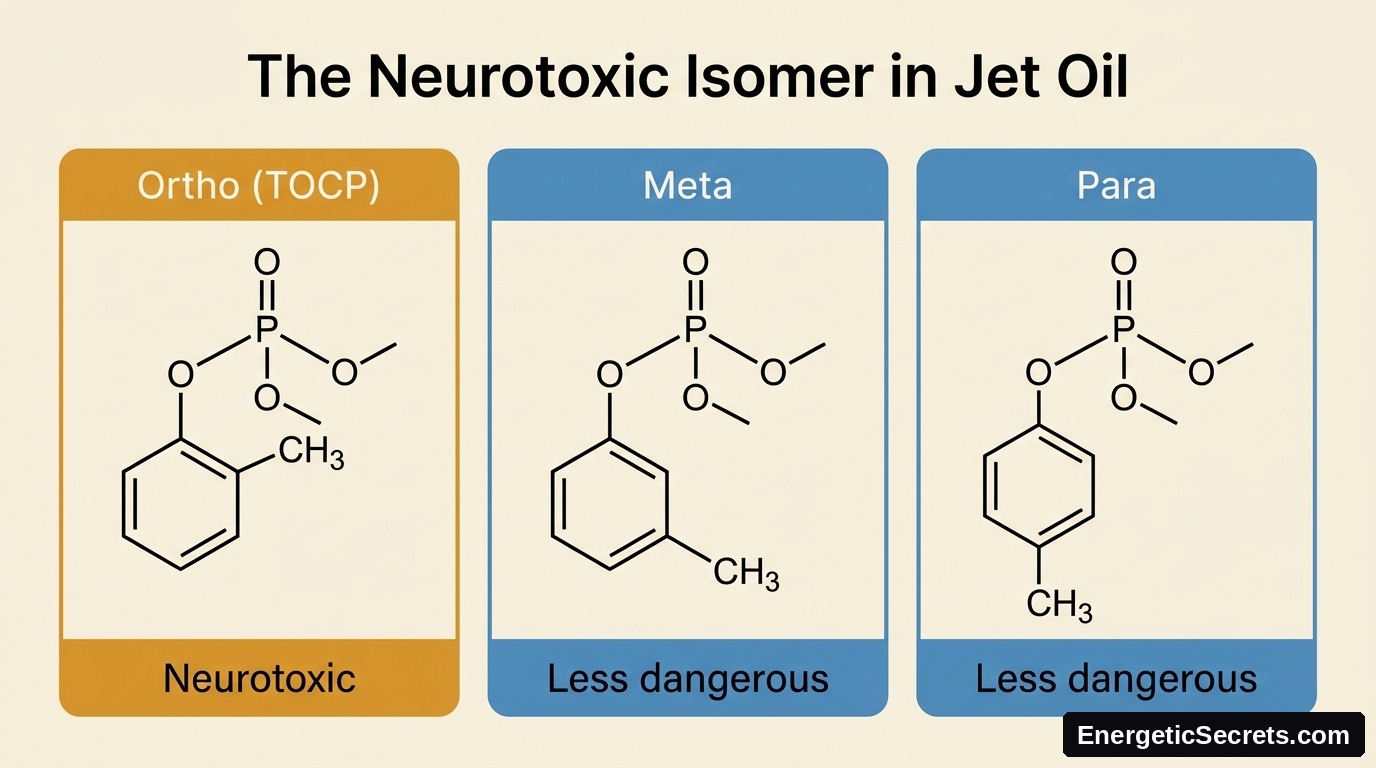
Jet engine oil is not a simple lubricant. It contains a family of chemicals called tricresyl phosphates, or TCP, added as an anti-wear agent to protect the engine's moving parts (30, 31).
TCP is not one molecule. It comes in several isomers, which are the same atoms arranged differently. The difference matters enormously. The ortho-substituted isomers, especially tri-ortho-cresyl phosphate (TOCP), are the neurotoxic fraction. The meta and para isomers are far less dangerous (18, 19).
When engine oil is heated and aerosolized, the TCP can break down and rearrange. One study found that used aircraft oil contains a different, more toxic profile of TCP compounds than fresh oil, which means the very act of running the engine may be making the oil more hazardous (14). A follow-up study looked for evidence that TCP shifts toward the more toxic ortho forms in the cabin-air environment and found none, which means the ortho forms measured in cabin air must come from another source (13).
A Poison We Have Known About Since 1930
None of this is new science. The neurotoxicity of ortho-cresyl phosphates was first recognized in a mass poisoning that most people have never heard of, and it is worth knowing because it is the clearest proof that this class of chemical can destroy a nervous system.
In 1930, during Prohibition, thousands of Americans drank a patent medicine called "Ginger Jake," an alcohol extract of ginger that was legal to sell. To get around a government requirement that made the drink unpalatable, a manufacturer adulterated it with a compound containing TOCP. The result was an epidemic of partial paralysis, a condition that came to be called "Jake leg" (28, 29).
The mechanism is now well understood. TOCP and related organophosphates cause a condition called organophosphate-induced delayed neuropathy, or OPIDN, by inhibiting an enzyme called neuropathy target esterase, or NTE (26, 27). The damage does not show up immediately. It appears days or weeks after exposure, which is one reason the link between a fume event and later illness is so easy to miss.
How the Oil Gets Into the Cabin
The pathway from engine oil to your lungs is not theoretical. Researchers have measured organophosphates in aircraft cabin and cockpit air (22), and aviation technicians who work around turbine and hydraulic oils show measurable exposure (23).
More striking is the biomarker evidence. When TOCP enters the body, it binds to an enzyme in the blood called butyrylcholinesterase. Scientists can detect those bound adducts and prove that a person was exposed. That is exactly what they found in jet passengers: exposure to tri-o-cresyl phosphate was detected in people who had simply flown on a commercial airplane (15, 20).
In symptomatic flight crew, researchers have also measured changes in acetylcholinesterase and neuropathy target esterase activity after fume events (25).
In other words, this is not a hypothetical. The chemical has been found inside the bodies of ordinary passengers, not just crew members who fly for a living.
What Crews Report
The people who spend the most time in the cabin are the ones who have been sounding the alarm. Fume events are associated with acute and long-term neurological, respiratory, and cardiological symptoms in aircrew (1, 7).
The reported symptoms read like a list of nervous-system complaints: headaches, dizziness, memory problems, difficulty concentrating, tremors, and a fog that does not lift. Some crew members describe respiratory irritation and asthma-like symptoms (10), and researchers have documented lung involvement in the syndrome (9). A case report described a patient who recovered completely, was re-exposed, and then suffered prolonged disability (6).
I have flown more times than I can count but honestly have never been a fan of flying so I only do it when necessary. While I've always been concerned about the air on the aircraft I had no idea it was this bad. After reading the case reports, I am not sure I will ever board a plane the same way again.
The Whistleblower: Captain John Hoyte
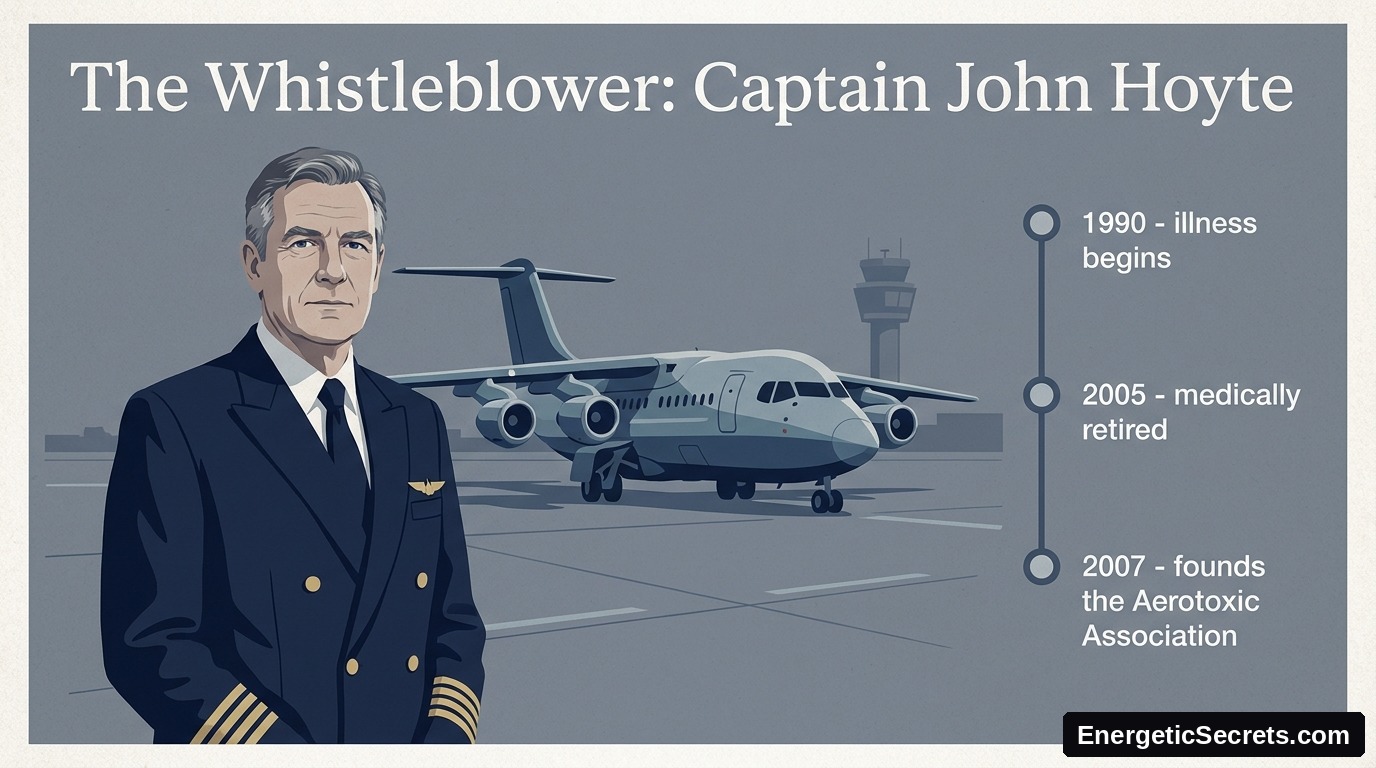
The man who has done more than anyone to force this issue into the open is a British pilot named Captain John Hoyte (note the "e" at the end, it is often misspelled). Hoyte was a training captain on the BAe 146, a regional jet that became notorious among crews for fume events (36).
Hoyte's own illness began in 1990, and it ended his flying career. He was medically retired in 2005. Two years later, in 2007, he founded the Aerotoxic Association, an organization dedicated to documenting and publicizing what he called aviation's darkest secret (36, 37).
The term "aerotoxic syndrome" itself was coined in 2000 by two researchers, Chris Winder and Jean-Christophe Balouet, the same pair who documented the toxicity of commercial jet oils (30, 37). So the name, the science, and the advocacy all trace back to a small group of people who refused to let the issue disappear.
Why the Industry Pushes Back
Here I have to be careful, because this is where the story gets contested. The advocates argue that the aviation industry has resisted acknowledging contaminated-air illness for decades, and that internal knowledge of the hazard goes back to the 1950s (35). That timeline documents a long paper trail: a 1953 Aero Medical Association discussion, a 1955 recommendation for a separate compressor, a 1973 military specification, and a 2002 FAA statement that no aircraft was airworthy because no contaminated-air detection systems were fitted.
That is the advocates' argument, and it is a documented history of industry knowledge. But I want to be honest about what it is and what it is not. The claim that the industry resists because of liability is an advocacy framing, not a peer-reviewed finding. The historical analysis in Mawdsley (11) frames the whole debate as a "burden of proof" contest between affected crews and the industry, which is a fair description of the standoff.
The Honest Counter-Evidence
If I am going to ask you to take this seriously, I owe you the other side. And the other side is real.
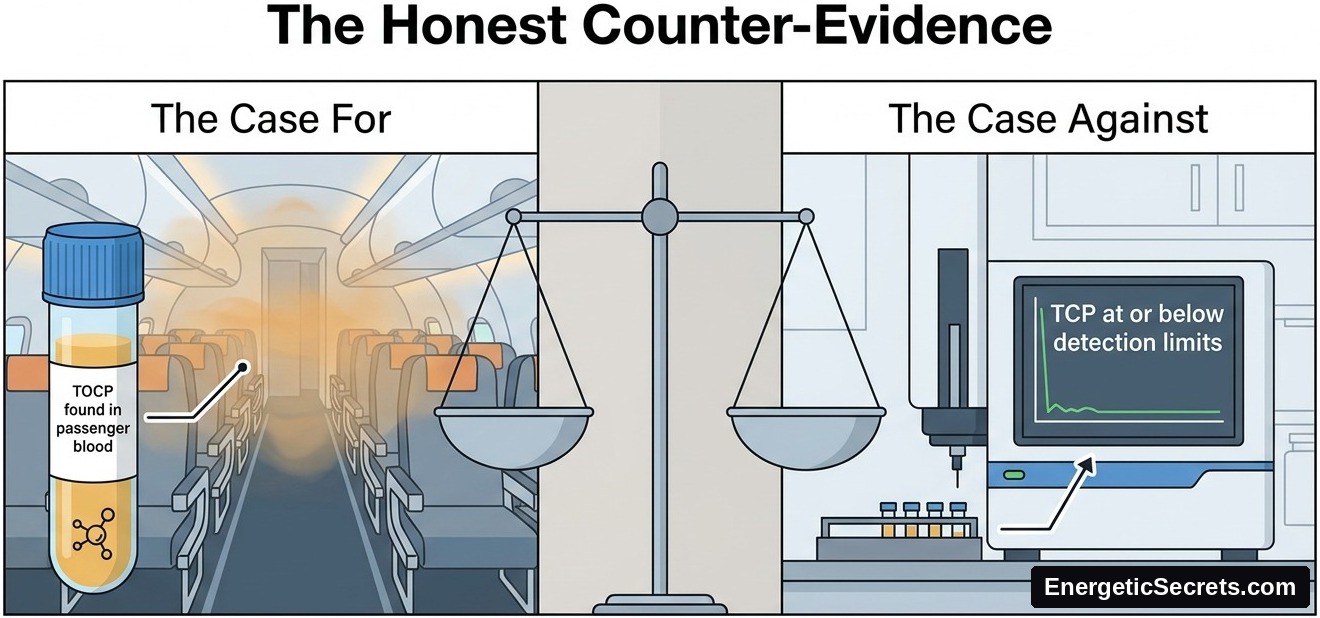
Several peer-reviewed studies have measured TCP and ortho-TCP levels in cabin air and found them at or below detection limits. Schindler et al. (16) found no ortho-TCP metabolites above the limit of detection in urine samples from 332 crew members. de Boer et al. (18) concluded that measured TCP concentrations "do not exceed provisional toxicity thresholds" and that TCP alone is "not likely to be responsible" for the symptoms. de Ree et al. (19) found only the less toxic non-ortho isomers in low concentrations. Wolkoff et al. (24) questioned whether pollutant exposures explain aircrew symptoms at all.
A Dutch review asked the blunt question in its title: "Aerotoxic syndrome: fact or fiction?" (32). And a study of F-16 pilots found no TOCP exposure through their on-board oxygen systems (21). Duarte et al. (17) found the different TCP isomers to be roughly equipotent in vitro, with no clear structure-activity relationship. A 2025 retrospective cohort of nearly 15,000 crew found fume events were not associated with significant clinical consequences, and concluded its findings do not support an "aerotoxic syndrome" (5).
I do not know the answer to the question of whether TCP alone, at the levels actually measured, is enough to cause the reported illness. It sure seems like the simple version of the story, the one that says "TCP is poisoning everyone," is not fully supported by the measurements. But then again, if that's the case why won't the airlines install monitors in the planes to see this in live time?
A Stronger Case: Nanoparticles, Carbon Monoxide, and Cumulative Exposure
But here is the thing. The weakness of the TCP-alone theory does not mean the syndrome is imaginary. It may mean the mechanism is more complicated, and the more complicated version is actually more concerning.
One line of research points to nanoparticles. Ultrafine particles have been measured on board commercial aircraft (33), and a 2024 review argues that nanoparticles in bleed air may act as carriers for toxic oil compounds, delivering them deep into the body in a way that raw chemical measurements would miss (3).
Another points to carbon monoxide. The same 2024 research group published a separate paper arguing that carbon monoxide is a co-contaminant in bleed air and may contribute to the syndrome (4).
And a third points to cumulative exposure. Burdon et al. (1) argue that the health consequences of contaminated cabin air are best understood as the result of repeated, low-level exposure over a career, not a single dramatic event. After all, that would explain why some crew members are devastated while a one-time passenger notices nothing.
There is even a peer-reviewed estimate that up to 50% of the population may be susceptible to the syndrome, based on a Dutch passenger survey (2). I want to be precise here: that is an estimate, an inference from survey data, not a measured prevalence. But even if the real number is a fraction of that, it is still a lot of people.
A Diagnosis Still in Dispute
One more honest note. "Aerotoxic syndrome" is not a formally recognized medical diagnosis. As of 2013, it was not recognized in medicine (37). Researchers have proposed diagnostic criteria (7), and clinicians have described patients with "probable" aerotoxic syndrome (8), but the condition remains contested and emerging rather than settled. Do I trust the medical establishment in this regard, absolutely not. There are plenty of reasons they would avoid accepting this syndrome, including liability and profit motives.
And this is not a reason to dismiss it. Plenty of real illnesses spent years in exactly this limbo before the evidence caught up. But it is a reason to describe it accurately, as a syndrome with documented symptom clusters and exposure biomarkers, not as a formally established disease.
In Closing
The story of aerotoxic syndrome is not a simple one, and I have tried not to pretend otherwise. The design flaw is real: most aircraft pressurize the cabin with unfiltered engine air, and Boeing's decision to engineer that pathway out of the 787 is the strongest evidence that the industry knows it is a problem. The chemistry is real: jet oil contains a neurotoxic organophosphate with a documented history of paralyzing people. The exposure is real: the chemical has been found in the blood of ordinary passengers.
What remains genuinely uncertain is how much of the reported illness is explained by TCP alone, and how much comes from nanoparticles, carbon monoxide, and a lifetime of cumulative exposure. The honest answer is that we do not fully know yet, and the people who fly for a living are the ones paying the price while the science catches up.
If you fly often, this is worth your attention. Share this with anyone who spends a lot of time in the air, and please share your own experience in the comments below. I would genuinely love to hear from crew members and frequent flyers about what you have noticed. And if you want to keep digging into the things mainstream sources would rather not talk about, subscribe to this newsletter here at EnergeticSecrets.com.
References
1. Burdon J, Budnik LT, Baur X, Hageman G. "Health consequences of exposure to aircraft contaminated air and fume events: a narrative review and medical protocol for the investigation of exposed aircrew and passengers." Environmental Health. 2023. PMID 37194087. DOI 10.1186/s12940-023-00987-8.
2. Ramsden JJ. "Aerotoxic Syndrome—Susceptibility and Recovery." Toxics. 2025;13(6):420. PMID 40559894. DOI 10.3390/toxics13060420.
3. Hageman G, van Broekhuizen P, Nihom J. "The role of nanoparticles in bleed air in the etiology of Aerotoxic Syndrome: A review of cabin air-quality studies of 2003–2023." Journal of Occupational and Environmental Hygiene. 2024. PMID 38593380. DOI 10.1080/15459624.2024.2327348.
4. Hageman G, van Broekhuizen P, Nihom J. "The role of carbon monoxide in aerotoxic syndrome." Neurotoxicology. 2024. PMID 38135191. DOI 10.1016/j.neuro.2023.12.008.
5. Klerlein M, Dubiez L. "Medical Consequences After a Fume Event in Commercial Airline Crews." Aerospace Medicine and Human Performance. 2025. PMID 39853293. DOI 10.3357/AMHP.6531.2024.
6. Creeden R, Blonien N, Schultz JK, Wheeler J. "Prolonged Disability following Re-Exposure after Complete Recovery from Aerotoxic Syndrome: A Case Report." International Journal of Environmental Research and Public Health. 2023;20(24):7156. PMID 38131708. DOI 10.3390/ijerph20247156.
7. Hageman G, Pal TM, Nihom J, Mackenzie Ross SJ. "Aerotoxic syndrome, discussion of possible diagnostic criteria." Clinical Toxicology. 2020. PMID 31389264. DOI 10.1080/15563650.2019.1649419.
8. Hageman G, Pal TM, Nihom J, Mackenzie Ross SJ. "Three patients with probable aerotoxic syndrome." Clinical Toxicology. 2020. PMID 31092058. DOI 10.1080/15563650.2019.1616092.
9. Roig J, Michaelis S, Burdon J. "The Lung in Aerotoxic Syndrome." Archivos de Bronconeumología. 2022. PMID 35545468. DOI 10.1016/j.arbres.2022.03.021.
10. Roig J, Domingo C, Burdon J, Michaelis S. "Irritant-induced Asthma Caused by Aerotoxic Syndrome." Lung. 2021. PMID 33719009. DOI 10.1007/s00408-021-00431-z.
11. Mawdsley SE. "Burden of Proof: The Debate Surrounding Aerotoxic Syndrome." Journal of Contemporary History. 2022. PMID 36091490. DOI 10.1177/00220094221074819.
12. Shehadi M, Jones B, Hosni M. "Characterization of the frequency and nature of bleed air contamination events in commercial aircraft." Indoor Air. 2016. PMID 25864418. DOI 10.1111/ina.12211.
13. Megson D, Hajimirzaee S, Doyle A, Cannon F. "Investigating the potential for transisomerisation of tricresyl phosphate with a palladium catalyst and its implications for aircraft cabin air quality." Chemosphere. 2019. PMID 30342398. DOI 10.1016/j.chemosphere.2018.10.082.
14. Megson D, Ortiz X, Jobst KJ, Reiner EJ. "A comparison of fresh and used aircraft oil for the identification of toxic substances linked to aerotoxic syndrome." Chemosphere. 2016. PMID 27258902. DOI 10.1016/j.chemosphere.2016.05.062.
15. Liyasova M, Li B, Schopfer LM, Nachon F, et al. "Exposure to tri-o-cresyl phosphate detected in jet airplane passengers." Toxicology and Applied Pharmacology. 2011. PMID 21723309. DOI 10.1016/j.taap.2011.06.016.
16. Schindler BK, Weiss T, Schütze A, Koslitz S, et al. "Occupational exposure of air crews to tricresyl phosphate isomers and organophosphate flame retardants after fume events." Archives of Toxicology. 2013. PMID 23179756. DOI 10.1007/s00204-012-0978-0.
17. Duarte DJ, Rutten JMM, van den Berg M, Westerink RHS. "In vitro neurotoxic hazard characterization of different tricresyl phosphate (TCP) isomers and mixtures." Neurotoxicology. 2017. PMID 26851706. DOI 10.1016/j.neuro.2016.02.001.
18. de Boer J, Antelo A, van der Veen I, Brandsma S, et al. "Tricresyl phosphate and the aerotoxic syndrome of flight crew members—current gaps in knowledge." Chemosphere. 2015. PMID 24925093. DOI 10.1016/j.chemosphere.2014.05.015.
19. de Ree H, van den Berg M, Brand T, Mulder GJ, et al. "Health risk assessment of exposure to TriCresyl Phosphates (TCPs) in aircraft: a commentary." Neurotoxicology. 2014. PMID 25193069. DOI 10.1016/j.neuro.2014.08.011.
20. Schopfer LM, Masson P, Lamourette P, Simon S, et al. "Detection of cresyl phosphate-modified butyrylcholinesterase in human plasma for chemical exposure associated with aerotoxic syndrome." Analytical Biochemistry. 2014. PMID 24892986. DOI 10.1016/j.ab.2014.05.021.
21. Tacal O, Schopfer LM. "Healthy F-16 pilots show no evidence of exposure to tri-ortho-cresyl phosphate through the on-board oxygen generating system." Chemico-Biological Interactions. 2014. PMID 24661946. DOI 10.1016/j.cbi.2014.03.004.
22. Solbu K, Daae HL, Olsen R, Thorud S, et al. "Organophosphates in aircraft cabin and cockpit air—method development and measurements of contaminants." Journal of Environmental Monitoring. 2011. PMID 21399836. DOI 10.1039/c0em00763c.
23. Solbu K, Daae HL, Thorud S, Ellingsen DG, et al. "Exposure to airborne organophosphates originating from hydraulic and turbine oils among aviation technicians and loaders." Journal of Environmental Monitoring. 2010. PMID 20949195. DOI 10.1039/c0em00273a.
24. Wolkoff P, Crump DR, Harrison PT. "Pollutant exposures and health symptoms in aircrew and office workers: Is there a link?" Environment International. 2016. PMID 26641522. DOI 10.1016/j.envint.2015.11.008.
25. Heutelbeck AR, Bornemann C, Lange M, Seeckts A, et al. "Acetylcholinesterase and neuropathy target esterase activities in 11 cases of symptomatic flight crew members after fume events." Journal of Toxicology and Environmental Health, Part A. 2016. PMID 27924713.
26. Johnson MK, Glynn P. "Neuropathy target esterase (NTE) and organophosphorus-induced delayed polyneuropathy (OPIDP): recent advances." Toxicology Letters. 1995. PMID 8597094.
27. Petroianu GA. "Neuropathic organophosphates: from Scrugham, Heim and Lorot to Jake leg paralysis." Die Pharmazie. 2016. PMID 29442005. DOI 10.1691/ph.2016.6080.
28. Woolf AD. "Ginger Jake and the blues: a tragic song of poisoning." Veterinary and Human Toxicology. 1995. PMID 7571360.
29. Morgan JP, Tulloss TC. "The Jake Walk Blues. A toxicologic tragedy mirrored in American popular music." Annals of Internal Medicine. 1976. PMID 793467.
30. Winder C, Balouet JC. "The toxicity of commercial jet oils." Environmental Research. 2002. PMID 12123648.
31. van Netten C, Leung V. "Comparison of the constituents of two jet engine lubricating oils and their volatile pyrolytic degradation products." Applied Occupational and Environmental Hygiene. 2000. PMID 10701290.
32. de Graaf LJ, Hageman G, Gouders BC, Mulder MF. "[Aerotoxic syndrome: fact or fiction?]." Nederlands Tijdschrift voor Geneeskunde. 2014. PMID 24713335.
33. Michaelis S, Loraine T, Howard CV. "Ultrafine particle levels measured on board short-haul commercial passenger jet aircraft." Environmental Health. 2021. PMID 34404396. DOI 10.1186/s12940-021-00770-7.
34. Global Cabin Air Quality Executive (GCAQE). "Aircraft Contaminated Air Position Statement." January 2025. https://www.gcaqe.org/_files/ugd/3e3e4e_40809dfd44f5462386457f1cf9f10955.pdf.
35. Global Cabin Air Quality Executive (GCAQE). "Contaminated Cabin Air Key Timeline" (History page). https://www.gcaqe.org/history.
36. Stichting Fly Aware. "Capt. John Hoyte: 'Aerotoxic Syndrome – Aviation's Darkest Secret'." https://flyaware.nl/en/john-hoyte-aerotoxic-syndrome-aviations-darkest-secret-2/.
37. Wikipedia. "Aerotoxic Association." https://en.wikipedia.org/wiki/Aerotoxic_Association.
38. Sinnett M. "787 No-Bleed Systems: Saving Fuel and Enhancing Operational Efficiencies." Boeing Aero Magazine, Q4 2007. Retrieved via Wayback Machine. https://web.archive.org/web/20230610154327/https://www.boeing.com/commercial/aeromagazine/articles/qtr_4_07/article_02_1.html.
Disclaimer: I am not a health professional of any kind and make no medical claims. Please do your own research. Nothing in this article should be considered medical advice. None of the statements have been evaluated by the FDA. Not intended to diagnose, treat, cure or prevent any disease. If you have a medical condition seek professional help. |




5 Comments
Join the conversation
I fly a couple times a year for work and never noticed a thing so I'm not sure I buy the passenger part. But cumulative exposure over a whole career for crew members, that I can believe.
Honestly the simple fix seems like just put monitors in the planes. If theres nothing to hide then prove it in real time. The fact they wont is the red flag for me.
So Boeing just quietly designed the whole bleed air thing out of the 787 and nobody talks about it? That alone tells you everything you need to know.
The part that got me is the Ginger Jake thing from 1930. If they knew this chemical could paralyze people back then why is it still in the engine oil going into the cabin. Makes no sense.
My sister was a flight attendant for 22 years and she has the memory problems and the tremors exactly like they describe here. She always blamed it on stress but now I really wonder.