
Targeted! The Oncotarget Journal Published a Peer-Reviewed Cancer-COVID Review Then Was Allegedly DDoS Attacked Days Later |
Two researchers reviewed 69 publications and mapped three ways the shots could promote cancer, calling the work hypothesis-generating rather than proof of causation. Days after publication, the journal's site went down in an alleged cyberattack. |
This story is wild, here's the quick summary: A Peer-Reviewed Study Asked Whether the COVID Shots Can Wake Up Cancer. Days Later, the Journal's Site Went Down.
Brown University's Wafik El-Deiry and Tufts' Charlotte Kuperwasser reviewed 69 publications and laid out three biological mechanisms by which the shots could promote cancer: immune dysregulation, spike protein biology, and residual DNA. The paper does not claim causation; it calls its findings hypothesis-generating. It was published anyway, and days later the journal's website went down.
On January 3, 2026, a peer-reviewed paper appeared in the journal Oncotarget that the medical establishment would clearly rather you never read. Within days, the journal's website went down in what its editors called a "malicious cyberattack." The paper's co-author went public claiming the study had been censored. And the journal itself has a documented history of being pushed out of the major indexes that decide which science counts as legitimate.
The paper is titled "COVID vaccination and post-infection cancer signals: Evaluating patterns and potential biological mechanisms." Its authors are Charlotte Kuperwasser of Tufts University School of Medicine and Wafik S. El-Deiry of Brown University's Warren Alpert Medical School and Legorreta Cancer Center (1). It is a systematic review of 69 publications, and it is the most comprehensive attempt yet to ask a question that has been treated as radioactive for five years: is there a signal connecting the COVID shots to cancer?
The thing is, the paper does not prove anything. It says so itself, in careful language. It describes its findings as "an early phase of potential safety-signal detection" and calls them "hypothesis-generating" (1). What makes it a landmark is not a smoking-gun conclusion. It is the fact that a study this direct, on a topic this censored, passed peer review and was published at all.
A Journal With a Target on Its Back
To understand why this paper matters, you have to understand what has happened to the journal that published it.
Oncotarget was deselected from MEDLINE in 2017, which meant its papers stopped appearing in PubMed, the database most doctors and researchers use to find studies (9). The National Library of Medicine declined to give a specific reason, but noted journals may be removed for "major changes in the scientific quality or editorial process" (9).
In 2018, Clarivate delisted the journal from the Journal Citation Reports, stating it "no longer meets the standards necessary for continued coverage," only months after naming it a "Rising Star" (10). The journal was also placed on librarian Jeffrey Beall's list of "potential, possible, or probable predatory scholarly open-access journals" (10).
Oncotarget was re-indexed by MEDLINE in 2022 (10). But the pattern is hard to miss: a journal that publishes inconvenient findings keeps finding itself pushed to the margins, then readmitted, then pushed again.
Now consider what happened the week this paper came out. On January 10 and 11, 2026, El-Deiry posted on X that a "shocking study linking covid jabs and cancer" had been "censored by mysterious cyberattack" and had gone "offline after cyberattack" (11).
The journal's own statement said that in December 2025 and January 2026 its server "encountered malicious cyberattacks that led to disruptions of online publications and website access," and it alleged "suspicions that certain individuals associated with PubPeer may have been involved in cybercriminal activities" (11). El-Deiry publicly blamed PubPeer, a post-publication peer-review site, for the alleged attack (11).
I do not know who attacked the journal's servers, if anyone did. That claim is an allegation, not an established fact. But here is what is not in dispute: a peer-reviewed review connecting cancer to the COVID shots was published, and within days its publisher was claiming the site had been taken down. On a topic this heavily policed, that sequence of events is itself the story.
What the Study Actually Found
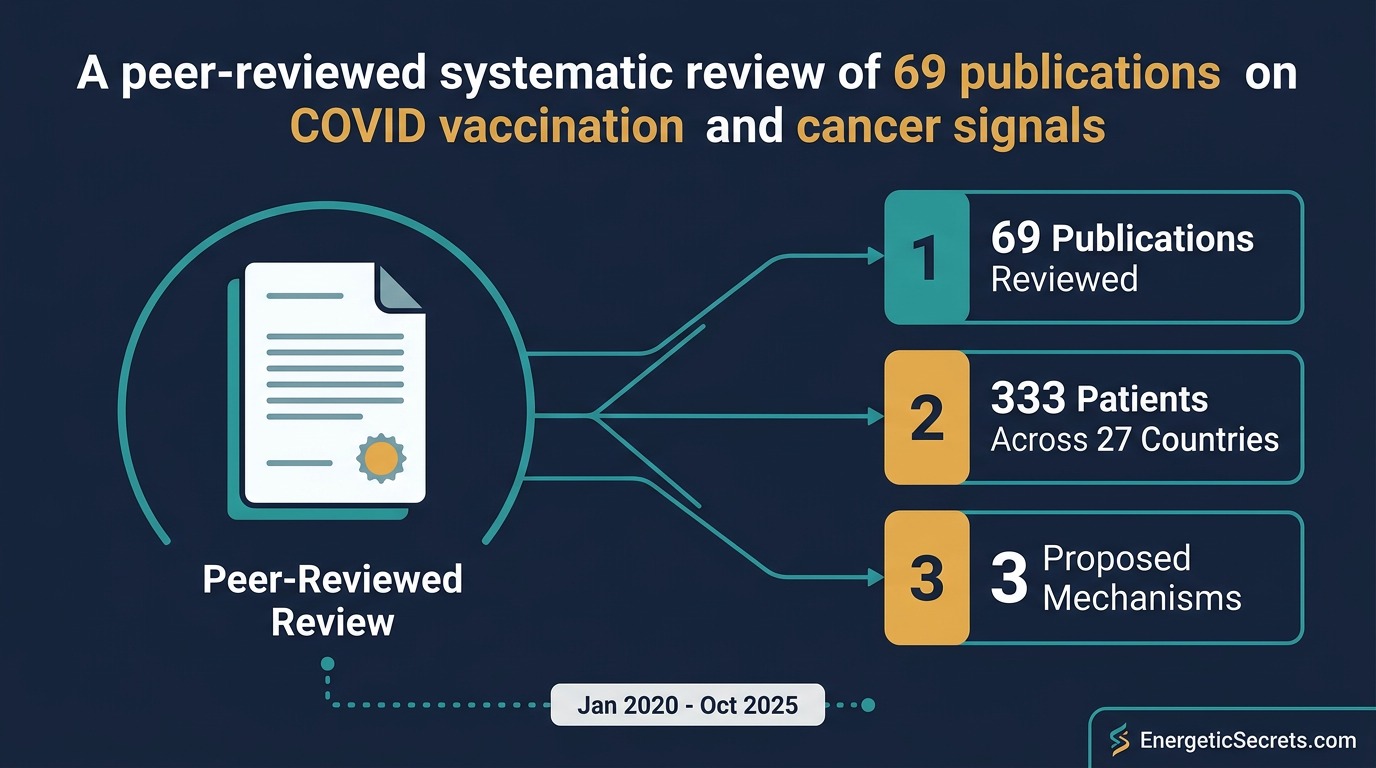
The review is a systematic literature search covering January 2020 through October 2025. It identified 69 publications that met its inclusion criteria (1).
Of those, 66 were article-level reports describing 333 patients across 27 countries (1). Two were retrospective population-level investigations: one from Italy with a cohort of roughly 300,000 people (3), and one from South Korea with roughly 8.4 million people (2), both quantifying cancer incidence and mortality trends among vaccinated populations. One was a longitudinal analysis of about 1.3 million US military service members spanning the pre-pandemic through post-pandemic periods (1).
The cancers documented across these reports included hematologic malignancies like non-Hodgkin's lymphomas, cutaneous lymphomas, and leukemias; solid tumors including breast, lung, melanoma, sarcoma, pancreatic cancer, and glioblastoma; and virus-associated cancers like Kaposi sarcoma and Merkel cell carcinoma (1).
Three themes recurred across the reports. First, unusually rapid progression, recurrence, or reactivation of preexisting indolent or controlled disease. Second, atypical or localized histopathologic findings, including involvement of vaccine injection sites or regional lymph nodes. Third, proposed immunologic links between acute infection or vaccination and tumor dormancy, immune escape, or microenvironmental shifts (1).
The signal is not confined to the review's own synthesis. A South Korean population cohort found one-year cancer risks associated with COVID-19 vaccination (2). A 30-month Italian cohort examined vaccination, all-cause mortality, and hospitalization for cancer (3). A single-center cohort found repeated COVID-19 vaccination was a poor prognostic factor in pancreatic cancer (5). And US Department of Defense surveillance data showed non-Hodgkin lymphoma incidence rising in active-component service members from 2017 through 2023 (8).
None of this establishes causation. The paper is explicit about that. What it establishes is a documented signal, spread across dozens of independent reports and multiple countries, that the authors argue deserves rigorous investigation. That is the honest ceiling of the claim, and it is the ceiling I will hold to here.
Mechanism One: Immune Dysregulation
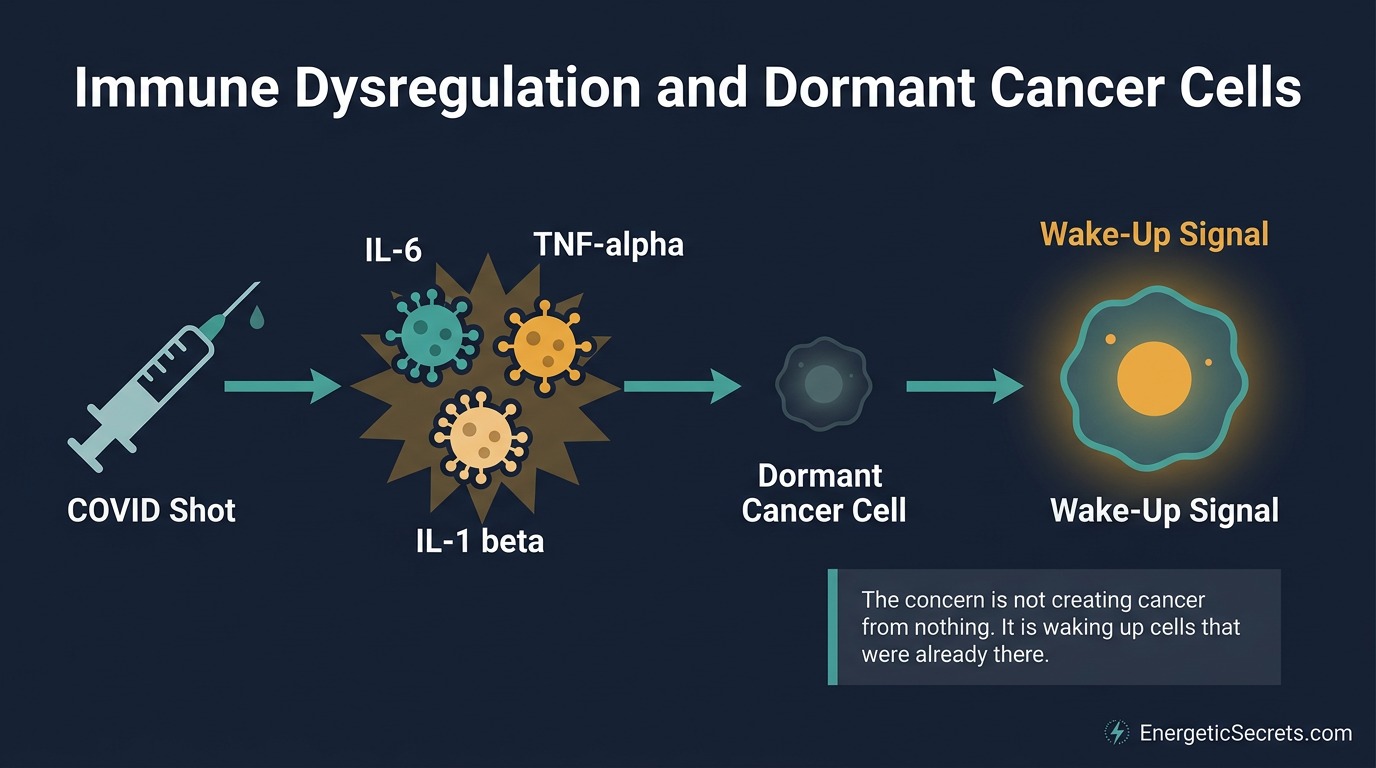
The first mechanism the paper proposes is the one most people can grasp intuitively. The COVID shots, and infection itself, trigger a surge of proinflammatory cytokines: IL-6, TNF-alpha, and IL-1 beta, appearing within one to three days (1).
This happens because the mRNA and the lipid nanoparticle (LNP) delivery system activate pattern-recognition receptors called TLR7/8 and NLRP3, which are part of the innate immune system's alarm system (1). That alarm is supposed to be temporary. The paper's concern is what happens when it is not.
IL-6 activates a signaling protein called STAT3, which drives cancer cell proliferation, survival, angiogenesis, and immune suppression in the tumor microenvironment (1). TNF-alpha activates NF-kB and AP-1, which drive cell survival, proliferation, and immune evasion, and it recruits myeloid-derived suppressor cells, tumor-associated macrophages, and regulatory T cells that suppress the cytotoxic T cells that would otherwise kill cancer (1). IL-1 beta upregulates VEGF, MMPs, and integrins, promoting new blood vessel formation and remodeling of the tissue around a tumor, and it polarizes macrophages toward the M2, tumor-promoting phenotype (1).
Yes, I realize that was rather technical but also feel this topic is important enough to explain it in a way that is somewhat understandable to everyone, but also for the experts out there it can survive any scrutiny that might come at it.
Put together, the paper describes a "synergistic pro-inflammatory circuit" that can rapidly promote cancer if transformed or pre-malignant cells already exist (1). In other words, the concern is not that the shot creates cancer from nothing. It is that the shot's inflammatory storm can wake up dormant or indolent cancer cells that were already there, converting them into rapidly proliferating, angiogenic malignancies.
The same transient immunosuppression may also relax the body's surveillance of latent oncogenic viruses like EBV, HHV-8, and MCV, which would help explain the virus-associated cancers that showed up in the reports (1).
I know there are a lot of apposing views on what is generally called a "virus" in medical journals and hold some of those views myself but prefer to let that go for this important discussion.
Mechanism Two: Spike Protein Biology
The second mechanism is the spike protein itself, whether it comes from infection or from the "vaccine". I often refer to what's commonly referred to as "spike protein" by the more generic term "synthetic biology" but for the purpose of simplicity we'll also let that go for this discussion since most of the journals still focus on this concept of "spike protein" failing to accurately describe what that is.
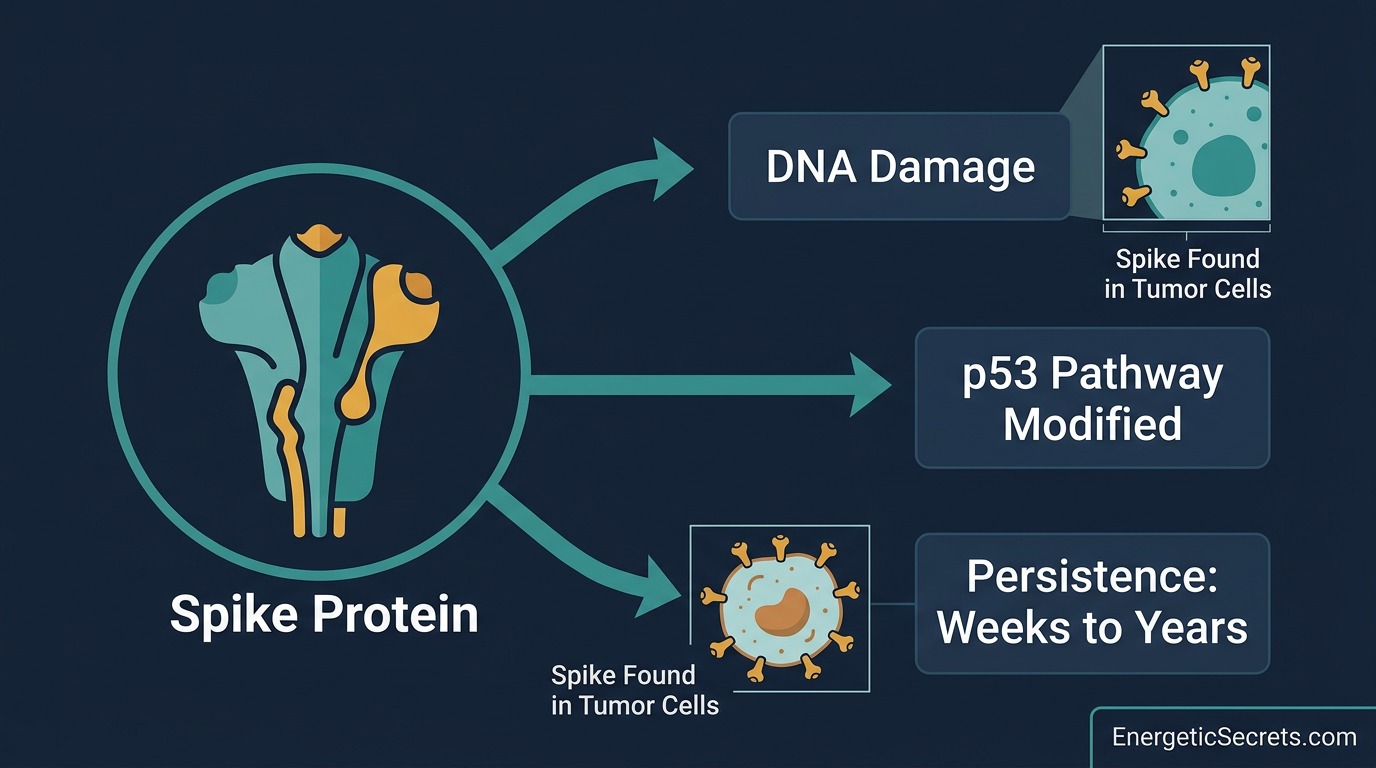
The "spike protein" has reported biological activities with oncogenic potential. It interacts with ACE2, NRP-1, integrins, and TLRs, leading to VEGF/NRP-1 signaling (1). It has been reported to induce DNA damage and to modify the p53 pathway under oxidative stress (1). p53 is one of the most important tumor-suppressor genes in the human body, and anything that modifies it is worth taking seriously.
The paper also flags something most people have never heard: the spike protein produced by the vaccines is not the natural SARS-CoV-2 protein. It is a stabilized version called Spike-2P, with proline substitutions at positions K986P and V987P (1), so you can see why I prefer the synthetic biology reference.
The paper argues we need to assess whether this engineered variant is the one showing up in tumors, and it notes spike protein has been reported in glioma, astrocytoma, and metastatic breast cancer (1).
There is also the question of persistence. Vaccine-produced spike protein has been reported to persist for weeks, months, and even years after vaccination (1). A protein that sticks around that long, and that has been reported to damage DNA and modify p53, is exactly the kind of thing you would want studied carefully before you inject it into billions of people. A separate study reported a high risk of heart tumors after COVID-19, with spike protein expression found in the tumors (7).
I personally remember a time when a very good doctor referred to the heart as the only organ that DIDN'T get tumors. Was that once true? Apparently it's not anymore...
One case report in the review is especially striking. A patient developed metastatic breast cancer to the skin within one month after a sixth Pfizer-BioNTech dose, and the metastatic cells stained positive for spike protein but not for nucleocapsid (1, 4). Nucleocapsid is a marker of natural infection. Its absence suggests the spike protein in those cancer cells came from the vaccine, not from the virus.
Mechanism Three: Residual DNA Contaminants
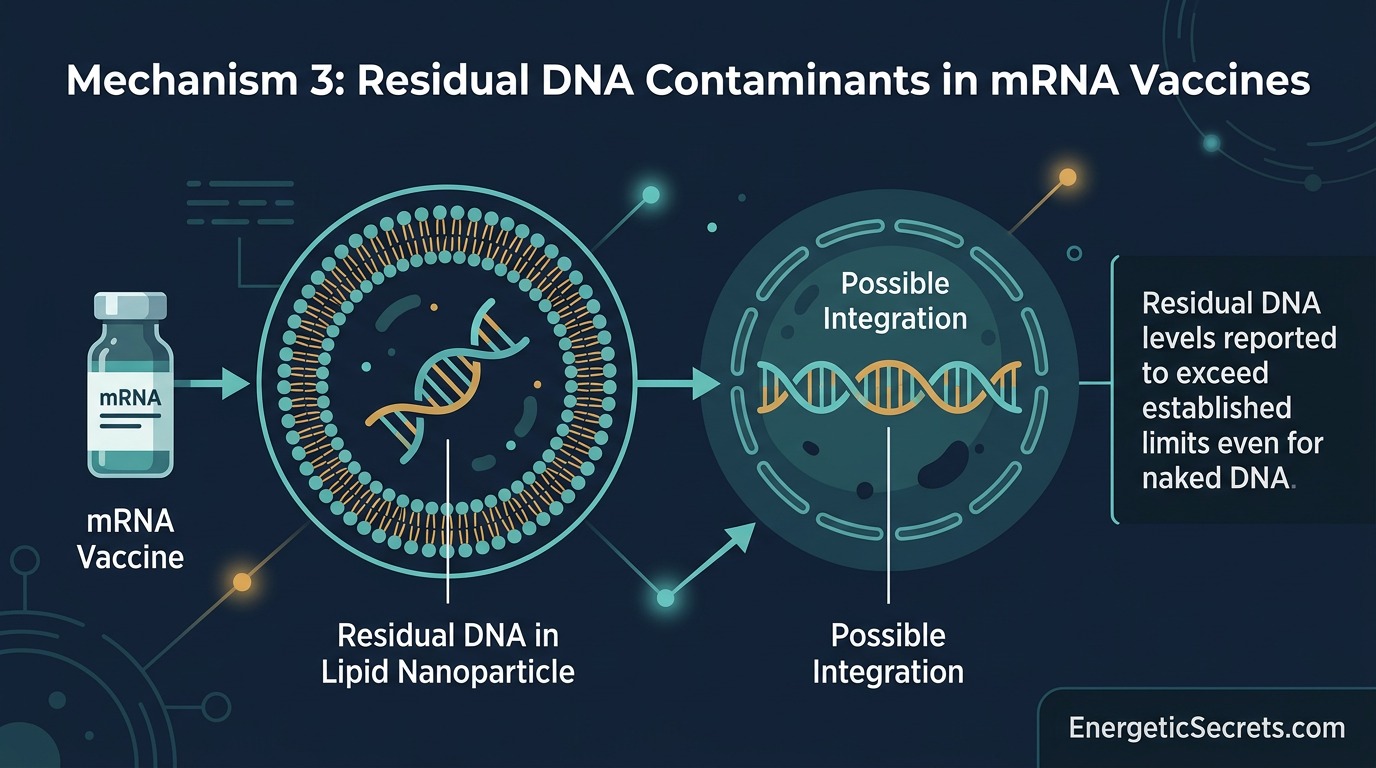
The third mechanism is the one that tends to make people's eyes go wide, because it sounds like something out of a lab accident rather than a medical product.
Residual DNA is a byproduct of the in-vitro transcription process used to manufacture mRNA vaccines. It can include double-stranded DNA, abortive RNAs, and RNA:DNA hybrids (1). These fragments are encapsulated by the nanolipids, which allows more stable and efficient entry into cells and increases the risk of integration. The paper states that the residual DNA levels "exceed the established limits even for naked DNA" (1).
The paper also notes that SV40 regulatory elements are present in the BNT2b (Pfizer-BioNTech) vaccine impurities (1). SV40 is a virus that has been studied for decades for its potential role in cancer first detected from the crude process of manufacturing polio vaccines with monkey kidney cells as the proliferation medium. This is why it was called SV40, it was the 40th simian virus detected and for decades been the source for many conspiracy theories. But you know how it is these days the difference between a conspiracy "theory" and reality is about 6 months.
If these DNA fragments are inserted into the genome, the paper argues, they can alter the expression of adjacent sequences and increase tumorigenic potential (1).
LNP-encapsulated DNA activates innate immune sensing through cGAS-STING and TLR9, and lipid-based delivery shows genomic integration rates of roughly 1 to 10 percent of initially transfected cells in vitro (1). That is a laboratory number, not a human outcome, but it is the kind of number that should have triggered far more safety testing than it did. Some of us were shouting from the rooftops being censored all over for saying this in 2021.
The literature here is not one-sided, and the review does not pretend it is. A 2025 paper in Nature reported that SARS-CoV-2 mRNA vaccines sensitize tumors to immune checkpoint blockade (6). That is a finding about the vaccines interacting with tumor biology, not a claim that they cause cancer. But it cuts both ways: it confirms that these vaccines reach and alter the tumor microenvironment, which is precisely the territory the three mechanisms above are concerned with.
And incidentally, years ago I reported in a video short (likely censored, a number of my videos at that time were) about dangers of Immune Checkpoint Inhibitor drugs. Fact is these drugs carry heavy side effects like most drugs but that's not the topic at of today's article. But to today's topic, sensitizing tumors with ICI drugs is already known to be a risky endeavor, despite the millions of tax-dollar supported research being dumped into them.
The Man Behind the Paper
Wafik El-Deiry is not a fringe figure. He is a professor at Brown University, the director of the Legorreta Cancer Center, and a co-Editor-in-Chief of Oncotarget (1). The paper discloses that, because of that editorial role, he "was not involved in the review of this manuscript or the decision to accept it" (1).
After publication, El-Deiry gave an interview to Children's Health Defense, an advocacy outlet, in which he called the paper "the first most comprehensive presentation summarizing the world's literature on the subject matter of COVID vaccines, COVID infection and cancer," and said some findings "look like a smoking gun" linking the shots to cancer (11). He also said, "I believe there is a risk of cancer associated with COVID vaccination. The magnitude of the risk remains to be more precisely defined, including the risk of hyperprogression" (11).
Those are El-Deiry's own words, as reported through a Children's Health Defense interview that was quoted by Science-Based Medicine, a source that is openly hostile to the paper (11). I am giving you the attribution straight so you can weigh it yourself. The quotes are his. The framing around them is not neutral, and I am not pretending it is.
Of course, the skeptical response was immediate. David Gorski, writing at Science-Based Medicine, dismissed the paper as a "resurrection of the myth that COVID vaccines cause 'turbo cancers'" (11). That is the predictable counter, and it is worth naming it for what it is: a dismissal of the messenger rather than an engagement with the mechanisms.
Why This Matters
Here is the part I keep coming back to. I believe I was vaccine-injured as a child, and I have spent decades watching the mainstream medical world insist that the products it recommends are beyond question, right up until the moment the evidence forces it to admit otherwise. I do not know whether the COVID shots cause cancer. I do not think anyone honestly knows that yet, and the paper does not claim to know it either. However, like others who have been studying this in great detail since 2021 I am very skeptical.
What I do know is that a peer-reviewed review, written by two credentialed researchers at major universities, examined 69 publications and laid out three biologically plausible mechanisms by which these shots could promote cancer. And the response was not a careful rebuttal of those mechanisms. The response was a website outage, a cyberattack claim, and a wave of dismissal.
The paper itself calls for "rigorous epidemiologic, longitudinal, clinical, histopathological, forensic, and mechanistic studies" (1). That is not a demand for a conclusion. It is a demand for the science to actually be done. After all, if the signal is real, we need to know. And if the signal is not real, the only way to prove that is to study it honestly, not to shut it down.
The journal's own summary put it plainly: the review "does not challenge the value of COVID-19 vaccination" but "calls for deeper investigation" (12). That is the measured, defensible position, and it is the one I will leave you with.
In closing, the story here is not that the COVID shots cause cancer. The story is that a serious, peer-reviewed study asked the question, documented a signal, and proposed mechanisms, and the establishment's first instinct was to make it hard to read. That instinct, more than any single finding, is what should worry you.
Now, before you go, I want to ask you to do two things. First, share this article with anyone you feel would benefit from reading it.
A story like this gets buried precisely because it is hard to read, and the more people who see it, the harder it becomes to bury. Second, tell me what you think in the comments.
Do you believe a peer-reviewed signal like this deserves the rigorous investigation the authors are asking for, or was the dismissal justified?
And if you want to keep digging with me, subscribe to this newsletter here at EnergeticSecrets.com so the next study the establishment would rather you never read lands in your inbox the day it comes out.
Disclaimer: I am not a health professional of any kind and make no medical claims. Please do your own research. Nothing in this article should be considered medical advice. None of the statements have been evaluated by the FDA. Not intended to diagnose, treat, cure or prevent any disease. If you have a medical condition seek professional help.
References
1. Kuperwasser C, El-Deiry WS. COVID vaccination and post-infection cancer signals: Evaluating patterns and potential biological mechanisms. Oncotarget. 2026 Jan 3;17:1–29. doi:10.18632/oncotarget.28824. PMID: 41498242. PMCID: PMC12893478.
2. Kim HJ, Kim MH, Choi MG, Chun EM. 1-year risks of cancers associated with COVID-19 vaccination: a large population-based cohort study in South Korea. Biomarker Research. 2025;13:114. doi:10.1186/s40364-025-00831-w. PMID: 41013858.
3. Acuti Martellucci C, Capodici A, Soldato G, Fiore M, Zauli E, Carota R, et al. COVID-19 vaccination, all-cause mortality, and hospitalization for cancer: 30-month cohort study in an Italian province. EXCLI Journal. 2025;24:690–707. doi:10.17179/excli2025-8400. PMID: 40881928.
4. Sano S. A case of metastatic breast carcinoma to the skin expressing SARS-CoV-2 spike protein possibly derived from mRNA vaccine. Journal of Dermatological Science. 2025;120:71–73. doi:10.1016/j.jdermsci.2025.09.007. PMID: 41076388.
5. Abue M, Mochizuki M, Shibuya-Takahashi R, Ota K, Wakui Y, Iwai W, et al. Repeated COVID-19 Vaccination as a Poor Prognostic Factor in Pancreatic Cancer: A Retrospective, Single-Center Cohort Study. Cancers. 2025;17:2006. doi:10.3390/cancers17122006. PMID: 40563656.
6. Grippin AJ, Marconi C, Copling S, Li N, Braun C, Woody C, et al. SARS-CoV-2 mRNA vaccines sensitize tumours to immune checkpoint blockade. Nature. 2025;647:488–497. doi:10.1038/s41586-025-09655-y. PMID: 41125896.
7. Mitrofanova L, Makarov I, Goncharova E, Makarova T, Starshinova A, Kudlay D, et al. High Risk of Heart Tumors after COVID-19. Life. 2023;13:2087. doi:10.3390/life13102087. PMID: 37895467.
8. Russell SJ, Mabila SL. Non-Hodgkin lymphoma incidence in active component U.S. service members, 2017–2023. MSMR. 2025;32:16–17. PMID: 40019944.
9. Retraction Watch. Widely used U.S. government database delists cancer journal. October 25, 2017. https://retractionwatch.com/2017/10/25/widely-used-u-s-government-database-delists-cancer-journal/
10. Wikipedia. Oncotarget. https://en.wikipedia.org/wiki/Oncotarget (accessed 2026-08-17).
11. Gorski D. And so 2026 begins…with a resurrection of the myth that COVID vaccines cause "turbo cancers." Science-Based Medicine. January 12, 2026. https://sciencebasedmedicine.org/and-so-2026-begins-with-a-resurrection-of-the-myth-that-covid-vaccines-cause-turbo-cancers/
12. Oncotarget.org. Exploring Possible Links Between COVID-19 Vaccination, Infection, and Cancer. January 26, 2026. https://www.oncotarget.org/2026/01/26/exploring-possible-links-between-covid-19-vaccination-infection-and-cancer/ |


9 Comments
Join the conversation
My husband was in remission for four years. Six weeks after his third shot his numbers came back bad. Doctors said it was just how it goes sometimes. Maybe it was. But I think about it a lot.
The SV40 element stuff is what gets me. That was being flagged by independent labs in 2023 and the response then was the same. Silence and mockery. Now it's in a peer reviewed review and still silence and mockery.
I got boosted three times. I'm not panicking but I do think people who ask these questions deserve actual answers not a website going dark and a bunch of dismissals.
This paper was even reposted by independent doctors and researchers who tracked tens of thousands of downloads when the Oncotarget site was down.
So Brown University and Tufts researchers publish a peer reviewed paper and the response from the establishment is basically just name calling. Gorski calling it a myth is not a rebuttal of the actual mechanisms.
The part about the sixth Pfizer dose and the metastatic breast cancer cells testing positive for spike but not nucleocapsid stopped me cold. That's one case but still. That's not nothing.
Oncotarget got kicked off PubMed in 2017 for quality issues. That history matters. I'm not saying the mechanisms are wrong but publishing in a journal with that track record doesn't help the case.
I think you may be missing the point of the article. When the peer-review process gets gated simply by publishing solid research that disagrees with established narratives that's where science breaks down and becomes anti-science. What do you even suggest should be done @rick_doubts?
My oncologist told me last year that he's seeing more aggressive recurrences than he used to. Never said why. Just said it was unusual. This kind of research at least gives a name to what a lot of us have been noticing.