
Tick Saliva Is Secretly Hijacking Your Immune System - And You Won't Feel a Thing |
The Invisible Weapon: How a Tick's Saliva Dismantles Your Immune System Before You Know You've Been Bitten |
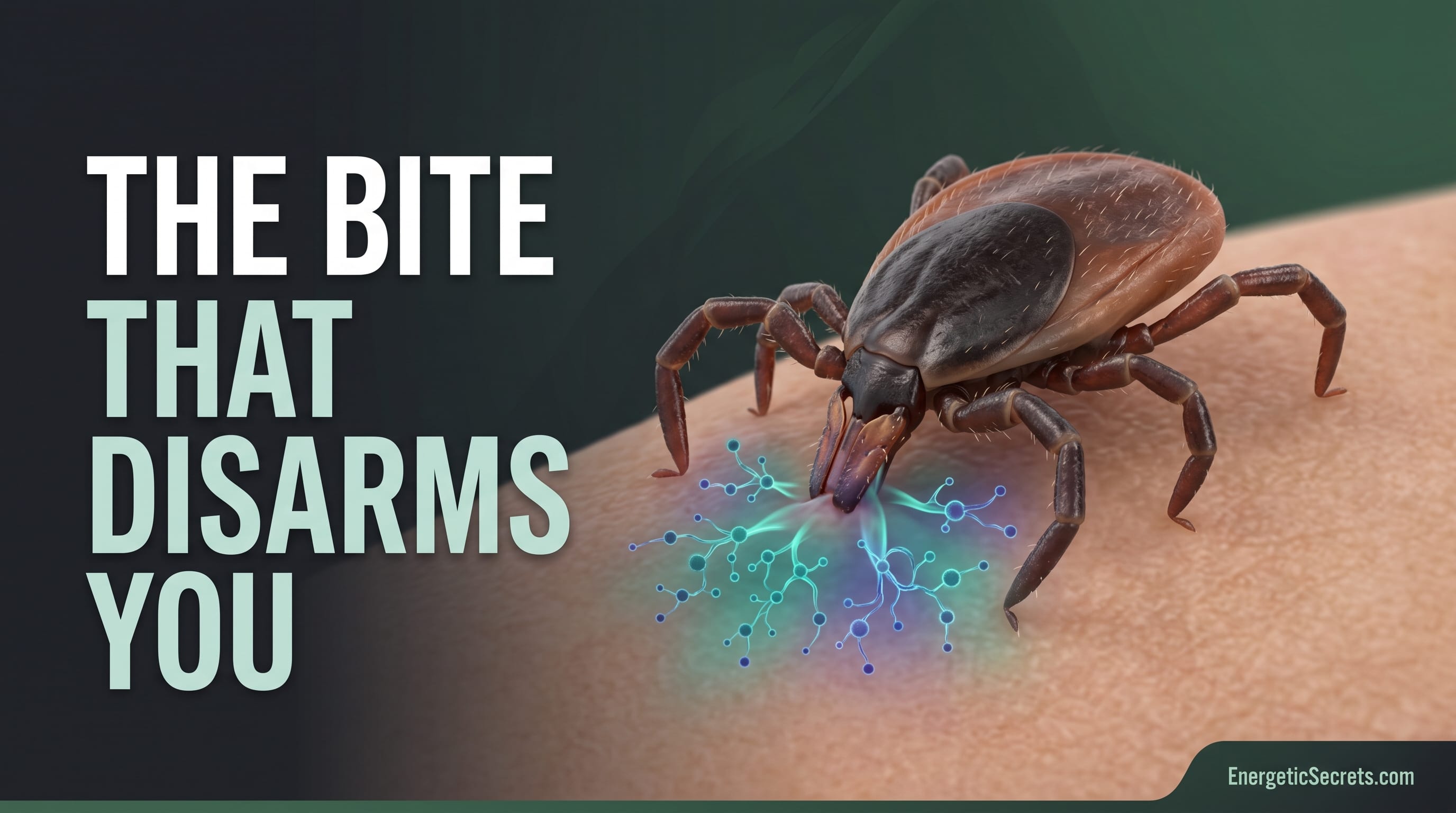
New research reveals the tick is not a passive vector but a pharmacological engineer that disables host immunity at the molecular level before a single pathogen arrives.
The moment a tick's mouthparts pierce your skin, a targeted pharmacological assault begins. This is not passive infection. Before a single Borrelia bacterium crosses from tick to host, the tick has already begun injecting a precisely engineered cocktail of bioactive proteins designed to do one thing: make your immune system stop working at the bite site.
The process starts within seconds of attachment. Saliva flows into the wound carrying anticoagulants to keep blood moving freely, vasodilators to widen local blood vessels, anti-inflammatory compounds to suppress the pain and swelling that would alert you to the intrusion, and immunomodulatory proteins that begin selectively shutting down the immune defenses best positioned to detect and destroy incoming pathogens [1][2].
By the time your body might ordinarily mount a response, the tick has established an immunological blind spot. Pathogens enter not into an alert immune environment but into a chemically neutered one the tick helped create. Understanding this mechanism is not just fascinating science. It is the key to understanding why tick-borne diseases are uniquely difficult to clear.
The Vector That Feeds for Days
A mosquito feeds for seconds. It lands, probes, draws blood, and departs before your immune system can organize a meaningful response. The tick operates on an entirely different timescale. The black-legged tick (Ixodes scapularis), primary vector of Lyme disease, Anaplasmosis, Babesiosis, and Powassan virus, feeds for three to seven days. That extended window is not an accident. It is the foundation of the tick's entire biological strategy for establishing infection [1][2].
To maintain sustained contact, the tick secretes a cement-like protein compound that physically anchors it to the host's skin. This cement plug forms a tight seal around the tick's hypostome (its barbed feeding tube) within the first hours of attachment, making the tick extremely resistant to dislodgment without mechanical removal [2]. Once anchored, it does not simply draw blood passively. It alternates between injecting saliva and withdrawing blood in repeated cycles, continuously bathing the bite site in fresh salivary compounds throughout the entire feeding period.
The salivary composition is not static. It shifts and evolves over the course of feeding, changing emphasis from compounds that establish the initial immunological silence to those that maintain it against an increasingly aware host immune system [1]. Early saliva prepares the wound environment. Later saliva suppresses the adaptive immune responses your body attempts to mount as hours become days. The tick is responding dynamically to your immune system's attempts to clear it.
This extended, evolving biological conversation with the host immune system is what separates ticks from every other common arthropod vector. No other parasite of comparable size maintains a days-long pharmacological dialogue with its host's defenses. That dialogue, it turns out, is the mechanism behind everything that makes tick-borne disease so hard to diagnose and so hard to treat.
A Hundred Compounds, One Goal
The tick salivary proteome is one of the most complex pharmacological arsenals found in nature. Over 100 distinct bioactive proteins have been characterized in tick saliva, with the total number of unique salivary compounds in some species estimated to be far higher [1]. Each class has a specific function, and together they work in concert toward a single objective: keeping the host immune system suppressed long enough for feeding to complete and pathogens to establish.
Anticoagulants. Tick saliva contains multiple anticoagulant mechanisms operating in parallel. Kunitz-type serine protease inhibitors block thrombin and factor Xa, preventing the clotting cascade from sealing the wound. Platelet aggregation inhibitors prevent the primary hemostatic plug from forming around the hypostome. Without these compounds, blood would clot around the tick's mouthparts within minutes, ending the feeding and trapping the parasite in place [6][7]. Vasodilators. To ensure continuous blood flow to the feeding site, tick saliva contains prostaglandin E2 and related prostanoids that dilate local blood vessels [6]. These compounds not only sustain feeding but carry direct anti-inflammatory effects: they suppress mast cell degranulation and modulate the initial innate immune response to the wound, reducing the chemical alarm signals that would recruit immune cells to the area. Anti-inflammatory compounds. Lipocalins are carrier proteins that sequester key inflammatory signaling molecules, particularly histamine, serotonin, and leukotrienes, preventing them from triggering the local inflammatory cascade that would make the bite site visible to roving immune cells [7]. Cystatins are cysteine protease inhibitors that block antigen processing by dendritic cells and macrophages, limiting the adaptive immune response to the bite site itself [6][7]. A site where antigens cannot be properly processed is a site where an immune response cannot be properly initiated. Complement inhibitors. The complement system is one of the immune system's earliest responses to a foreign body in tissue; it can tag and destroy pathogens within minutes. Tick saliva contains multiple proteins that inhibit complement activation at several cascade points, preventing the opsonization and lysis that would otherwise clear pathogens during their initial inoculation window [1][6]. Immunomodulatory proteins. This is the most sophisticated class. These compounds do not simply block immune effectors. They reprogram immune cells. They shift T-helper cell polarization, suppress natural killer cell function, and induce regulatory T-cells that actively suppress nearby immune activity [6][7][1]. The effect is not passive tolerance. It is active, directed immune redirection. The tick is not hiding from your defenses. It is dismantling them from the inside.
The combined effect of these five classes is an engineered microenvironment at the bite site that looks, from a pathogen's perspective, like an unguarded open door. One hundred compounds. One goal.
Engineering an Immune Blind Spot
The most clinically significant consequence of tick salivary proteins is deliberate skewing of the host immune response away from the type that would clear tick-borne pathogens.
A healthy immune response to an intracellular pathogen like Borrelia burgdorferi is Th1-dominant: it produces interferon-gamma, activates macrophages, and mobilizes cytotoxic T-cells capable of hunting infected cells. Tick saliva systematically suppresses this pathway while promoting Th2 responses, which are associated with allergy and large-parasite defense but are considerably less effective against the bacteria and protozoa the tick carries [3][8]. The tick does not need to hide its pathogens. It just needs to make sure the right immune response never gets organized.
Research published in 2021 identified a more precise molecular mechanism. Tick feeding upregulates PD-1 (programmed death-1) on host T-cells and PD-L1 (programmed death-ligand 1) on antigen-presenting cells at the bite site [3]. PD-1/PD-L1 signaling is the same immune checkpoint pathway that tumors exploit to evade detection and destruction by the immune system. When it is activated at the bite site, T-cells entering that microenvironment are functionally shut down before they can respond to incoming pathogens. The bite site becomes, in immunological terms, a zone of tolerance.
Natural killer (NK) cells represent another early layer of defense. NK cells are the immune system's first-responder cytotoxic units; they do not require prior sensitization and can begin attacking unfamiliar or infected cells within hours of exposure. A 2025 review describes how ixodid tick saliva can reshape immune activity at the skin interface, including pathways relevant to early immune surveillance. The specific salivary compounds and their clinical significance in human infection remain active areas of research [9].
Regulatory T-cells (Tregs) complete the picture. Tregs ordinarily dampen excessive immune responses and prevent autoimmunity. Tick salivary compounds induce Treg activity at the bite site, creating local immunological tolerance precisely where active surveillance is most needed [8]. The tick has repurposed the immune system's own self-regulation mechanism against the host. Researchers use the term "privileged entry" to describe the result: an anatomical site where immune defenses have been systematically disabled, creating a window during which pathogens can establish infection before the systemic immune response becomes aware there is a problem. The engineering precision involved rivals anything deliberately designed.
Double Trouble: The Coordinated Assault
Anyone who has watched my presentation, "Pleomorphism: Antoine Béchamp vs. Louis Pasteur: Who Was Right?", will be familiar with the concept of "Double Trouble," first presented in the seminal yet largely forgotten 1953 book Practical Bacteriology [11]. If you assume that tick-borne illness proves terrain theory incorrect, the Double Trouble trauma paradigm may call for a new understanding of disease disturbance.
With the new understanding of the process involved during a tick bite which takes "Double Trouble" (where two distinct trauma events to the nervous system are required to establish pathology of disease) further to "Triple Trouble". The fundamental to this understanding is that in the case of the extended tick bite there are at least two (and likely dozens) of nerve trauma which include protein delivery, bacteria delivery, etc. in addition to the nerve trauma that comes from the actual bite itself.
The concept of "Double Trouble" in the case of tick-borne pathology opens up an even bigger can of worms to what was known and understood in 1953 and cements a clear picture of how the tick-borne vector could be the most powerful vector known for weaponized disease propagation but also that weaponized vaccines could be the runner up.
What makes a tick bite fundamentally different from any other common vector-borne exposure is not any single mechanism in isolation. It is the simultaneity and duration of the combined assault. Consider a mosquito bite. Pathogens are delivered in a single, brief injection. The host immune system, though exposed to minor salivary antigens during that moment, engages arriving pathogens almost immediately. Immune evasion depends almost entirely on the pathogen's own strategies once it is inside the host.
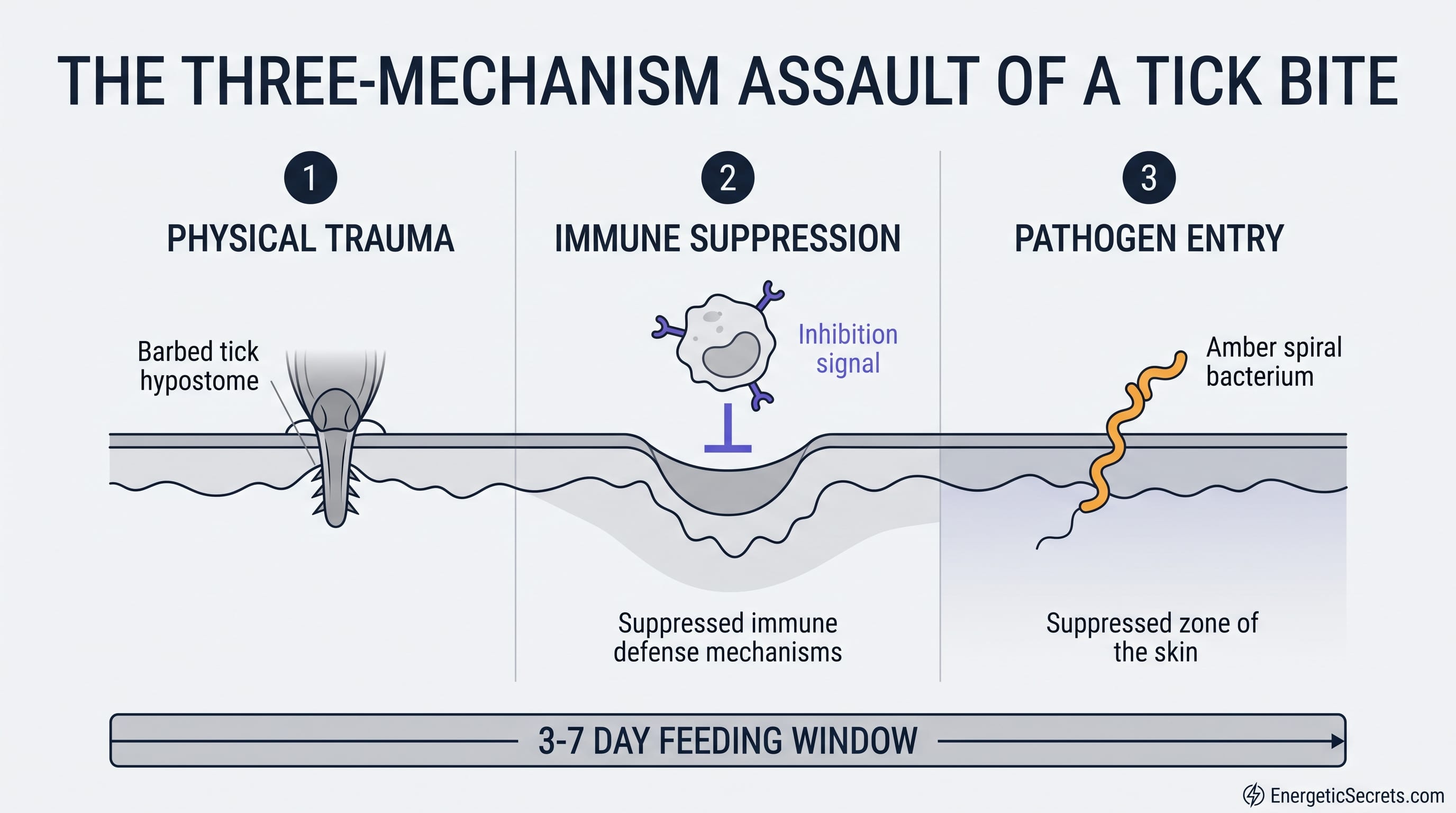
The tick delivers three distinct insults across a window lasting three to seven days [2][8]. First: physical trauma from the barbed hypostome, which creates a wound and an anchored feeding tube directly into the dermal blood supply. Second: continuous pharmacological immune suppression at the bite site, actively maintained and adapted throughout the feeding period as the host mounts successive immune responses the tick must overcome. Third: progressive pathogen inoculation into an immune environment that has been pre-configured, biochemically, to not respond.
No other commonly encountered arthropod vector executes all three of these simultaneously across an extended multi-day window. That distinction carries direct clinical weight. Research examining outcomes across tick-borne disease cases has found that bite duration correlates directly with both infection probability and disease severity [2][8]. The longer the tick feeds, the more thoroughly the immune blind spot is established, and the more pathogens are transmitted as the immune window deepens.
Borrelia burgdorferi transmission probability specifically increases sharply after 36 to 48 hours of tick attachment. This is not simply because it takes time for bacteria to migrate from the tick midgut to the salivary glands. It is also because the immune suppression at the bite site takes time to fully mature. The tick and its pathogens have co-evolved across millions of years to maximize this window. The result is a delivery system more sophisticated than anything a pharmaceutical engineer would design: triple-mechanism, self-sustaining, and adaptive.
Beyond Bacteria: The Exosome Discovery
In 2020, researchers made an unexpected discovery in tick saliva: extracellular vesicles, commonly called exosomes [4]. Exosomes are nano-scale, membrane-bound particles secreted by cells. They carry proteins, lipids, and potentially nucleic acids (including small RNAs) from the cell of origin to recipient cells, where they can alter gene expression and cellular behavior. They are one of the primary mechanisms by which cells signal to and reprogram each other across tissue distances. Their presence in tick saliva raised an immediate question: were these vesicles simply cellular debris, or were they performing a biological function?
The answer emerging from subsequent research suggests they are doing something specific. The tick-derived exosome cargo identified in the 2020 study included signaling proteins such as CXCL12 and IL-8, along with potentially small RNA molecules that could influence gene expression in recipient host cells [4]. A 2023 study found evidence that tick salivary exosomes can enter host cells and alter their gene expression patterns, in effect beginning to reprogram host cellular behavior before pathogens themselves arrive [5].
The scale of the tick EV (extracellular vesicle) proteome is substantial. One proteomic analysis identified 178 distinct proteins in tick extracellular vesicles [10]. The functional roles of most of these proteins remain uncharacterized, but the breadth of the cargo suggests this is not incidental biology. It suggests a deliberate molecular communication system embedded within the tick's salivary delivery.
It is important to be clear about what this does and does not yet mean. Exosome-mediated host cell reprogramming by tick saliva has been demonstrated in laboratory models. Its full clinical significance in human infection is still under active investigation, and it does not yet imply a proven mechanism for any specific clinical outcome in humans [4][5][10]. What it does mean is that the tick-host interface during feeding is considerably more sophisticated than a simple blood-meal extraction. The conversation between tick biology and host biology during those three to seven days of feeding has consequences researchers are only beginning to map.
What This Means for You
The science reviewed above is not abstract. It has direct, practical implications.
The most important is timing. Borrelia transmission accelerates sharply after 36 to 48 hours of tick attachment. Removing a tick within 24 to 36 hours is the single most effective risk-reduction step available. The mechanism now makes that window clearer: early removal is not only about limiting the total pathogen dose transferred. It is about interrupting the immune engineering process at the bite site before it fully establishes the blind spot that pathogens exploit. The tick needs time to complete its pharmacological preparation. Removing it early denies that time. If you discover a tick that has been feeding for an unknown duration, particularly if it was visibly engorged, contact a physician promptly.
Early clinical intervention is dramatically more effective than treatment initiated after symptoms appear. Do not wait for a bull's-eye rash: studies consistently document that erythema migrans is absent in a significant percentage of confirmed Lyme cases, and co-infections from the same bite (including Anaplasma, Babesia, and Bartonella) require entirely different treatment approaches that standard Lyme testing will not catch.
Supporting immune function during and after a confirmed tick exposure is a reasonable response to the mechanism described in this article. A bite that has actively suppressed local immune function for hours or days creates a period of heightened vulnerability at the bite site and, potentially, systemically. General immune support during that window aligns with what the biology suggests. [TODO: add HealthHarmonic product link if applicable] The bottom line is this: ticks are not passive delivery vehicles. They are active immune engineers running a sophisticated, multi-mechanism, multi-day pharmacological program against your defenses. Knowing that changes how you respond to every tick encounter, every engorged tick you find, and every unexplained symptom that follows a tick-endemic outdoor exposure.
References
|
 |




5 Comments
Join the conversation
I live near wooded trails and do tick checks after every single walk. Knowing the immune suppression is already starting within seconds of attachment makes me want to be even more thorough. Checking the dogs too now the moment we get back inside.
Had Lyme back in 2019 and never got the bull's eye rash. Doctors kept dismissing me for weeks. Seeing that mentioned here means a lot honestly. More people need to know the rash isn't always there.
I appreciate the references to actual published research but I'd like to know more about how the exosome findings translate to real treatment decisions. The article says clinical significance is still under investigation, which is fair, but then what do we actually do with that information right now?
so ticks are basically running a whole pharmaceutical operation under your skin for days and we're out here thinking a little itch is no big deal. the cement anchor thing genuinely disturbed me, had no idea they physically glue themselves in
The 36-48 hour window is the part I always tell people about and nobody believes me. Pulled one off my dog after a hike and my husband thought I was overreacting rushing to check it. This explains exactly why timing matters so much.